

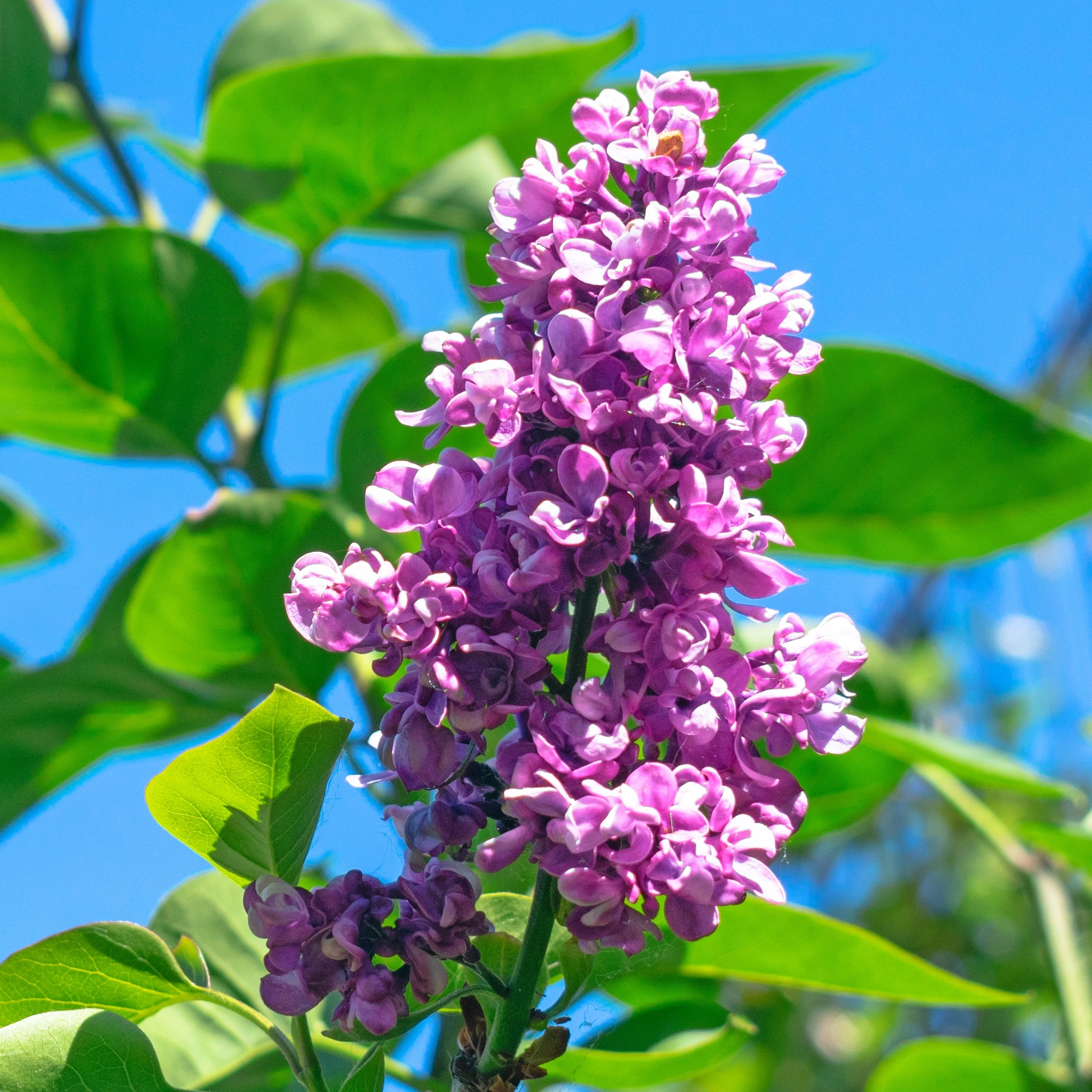
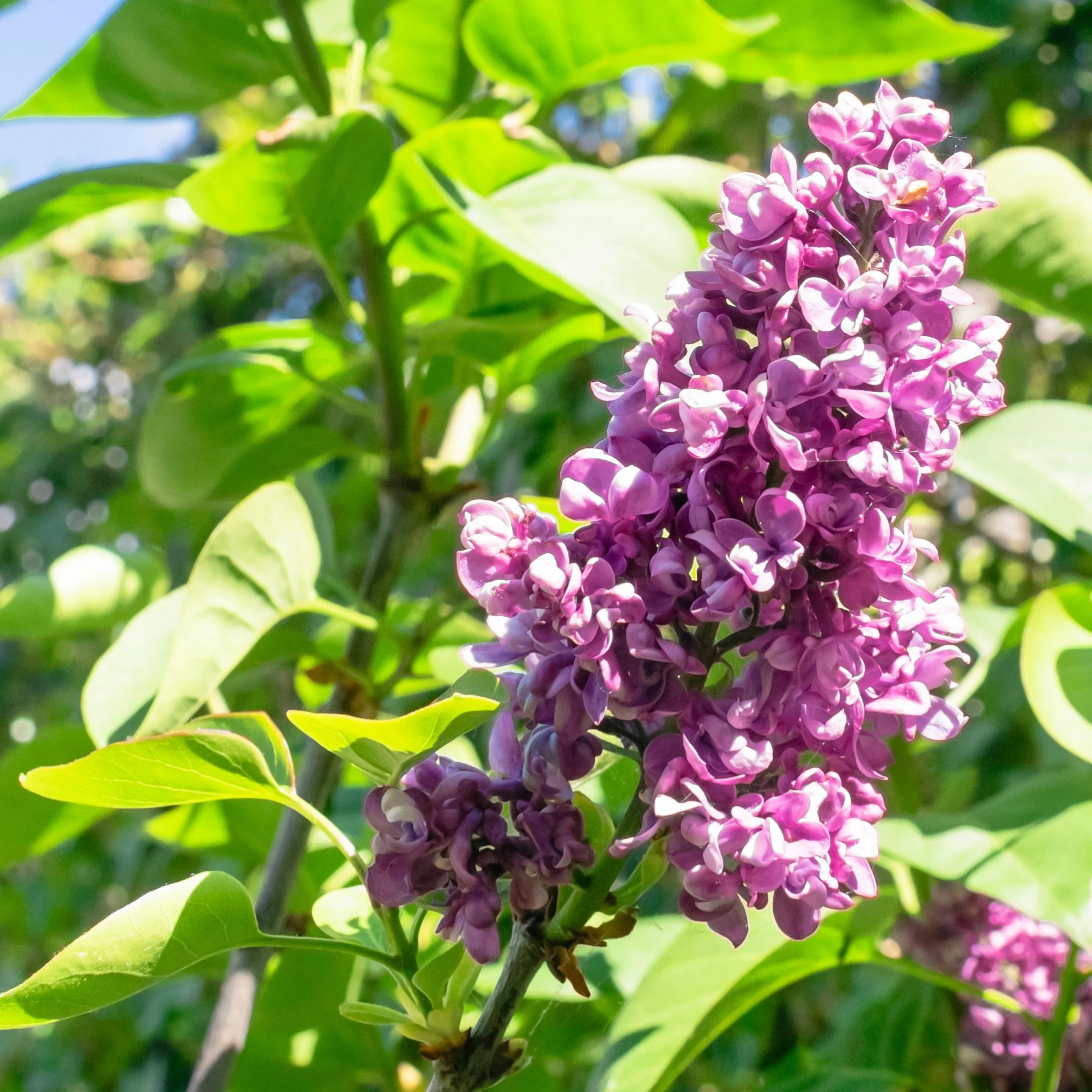





Syringa 'Charles Joly' - Double Purple Lilac
Overview
Syringa 'Charles Joly' is a magnificent double-flowered lilac variety that stands as one of the most beloved cultivars in British gardens. This stunning deciduous shrub produces abundant clusters of richly coloured, double purple flowers that fill the spring air with their classic lilac fragrance. Named after the French nurseryman who developed it in the early 1900s, this variety has proven itself to be both beautiful and reliable for generations of gardeners.
Key Features
-
Flower Type: Double purple blooms with white undersides
-
Flowering Period: Late spring to early summer (May-June)
-
Mature Height: 4.0-8.0 metres
-
Mature Spread: 4.0-8.0 metres
-
Growth Rate: Moderate
-
Hardiness: Fully hardy (RHS H6)
-
Soil Type: Well-drained, alkaline to neutral soil
-
Aspect: Full sun to partial shade
Flower Description
The double flowers of 'Charles Joly' are truly spectacular, appearing as dense, cone-shaped panicles up to 20cm long. Each individual flower consists of multiple layers of petals in a deep purple-magenta colour with pale undersides, creating a beautiful bicolour effect. The blooms are intensely fragrant with the classic sweet lilac scent that makes them perfect for cutting and bringing indoors. The flowering display typically lasts for 3-4 weeks in late spring.
Foliage and Growth Habit
This lilac forms a upright, vase-shaped shrub with sturdy branches that support the weight of the heavy flower clusters without drooping. The heart-shaped leaves are mid-green in colour, providing an attractive backdrop to the purple blooms. The foliage remains healthy throughout the growing season, turning yellow-green in autumn before dropping.
Growing Requirements
Soil Conditions
'Charles Joly' thrives in well-drained soil with a pH between 6.0-7.5. Like most lilacs, it particularly appreciates slightly alkaline conditions. Heavy clay soils should be improved with organic matter and grit to ensure good drainage, whilst sandy soils benefit from the addition of compost or well-rotted manure.
Light Requirements
For the best flowering performance, plant in a position that receives at least 6 hours of direct sunlight daily. Whilst it will tolerate partial shade, reduced light levels may result in fewer flowers and a more open growth habit.
Watering
Once established, this lilac is quite drought tolerant. Water regularly during the first growing season to establish a strong root system. Thereafter, supplementary watering is only needed during prolonged dry spells.
Planting and Care
Planting
Plant container-grown specimens at any time of year when soil conditions are suitable, though autumn and early spring are ideal. Dig a planting hole twice the width of the root ball and plant at the same depth as it was growing in the container. Space plants 2-3 metres apart to allow for mature spread.
Pruning
Lilacs require minimal pruning but benefit from the removal of spent flower heads immediately after flowering to encourage next year's blooms. Remove any dead, damaged, or crossing branches in late winter. Avoid hard pruning as lilacs flower on old wood and severe cutting may reduce flowering for several years.
Feeding
Apply a balanced fertiliser in early spring around the base of the plant. A mulch of well-rotted compost or manure will help retain moisture and provide nutrients throughout the growing season.
Uses in the Garden
'Charles Joly' is versatile enough for various garden situations:
Mixed Borders: Creates a stunning backdrop for perennials and provides structure to informal plantings.
Specimen Planting: Makes an excellent focal point when planted as a standalone feature.
Wildlife Gardens: The flowers attract bees, butterflies, and other beneficial insects.
Cut Flower Gardens: The fragrant blooms are perfect for indoor arrangements and last well in water.
Cottage Gardens: Fits perfectly into traditional English garden styles with its old-world charm.
Companion Plants
Pairs beautifully with other spring-flowering shrubs such as:
-
Forsythia
-
Flowering currants (Ribes)
-
Deutzia
-
Mock orange (Philadelphus)
-
Underplant with spring bulbs like daffodils and tulips
Seasonal Interest
-
Spring: Magnificent double purple flowers with intense fragrance
-
Summer: Attractive green foliage provides good background structure
-
Autumn: Leaves turn yellow before falling
-
Winter: Bare branches reveal attractive bark structure
Growing Tips for Success
-
Choose a sheltered spot to protect flowers from strong winds
-
Mulch around the base to retain moisture and suppress weeds
-
Remove suckers that appear from the base to maintain shape
-
Be patient - lilacs can take 2-3 years to become fully established and flower well
-
Avoid planting in waterlogged conditions as this can lead to root problems
Expected Lifespan
With proper care, Syringa 'Charles Joly' can live for 50+ years, becoming more beautiful with age as it develops into a mature specimen. This makes it an excellent investment for any garden where space permits.
Perfect for gardeners seeking a low-maintenance shrub that delivers spectacular spring colour and fragrance year after year.
Buying Shrubs from Jacksons Nurseries
At Jacksons Nurseries we sell a variety of shrubs both evergreen and deciduous with a variety of flowering times throughout the year. At certain times of the year our shrubs you buy from us may not look like the images shown on our website when deciduous leaves have fallen, the shrub has finished flowering or has been trimmed back.
Some leaves on evergreen shrubs can be damaged in winter by frost or harsh winds but in spring new leaves will readily replace those damaged. This is quite normal on many evergreen varieties and is preferable to plants grown with excessive protection that show cold shock once planted out and establish less satisfactory initially.
Availability: Stock availability figures are provided as a guide only. There is a delay between orders being placed and the plants being gathered by our pulling team. During this time it may be possible for a member of the public to purchase these plants from our Garden Centre, while this is rare it is a possibility and we will notify you of any problems as soon as possible. This figure may also include plants that have not yet be flagged as unsaleable.
Pre-order: Pre-order times are given as a guide only and may vary dependent on the growing season. Orders containing Pre-ordered products will be shipped as a single order when all items become available. Large orders may be part shipped, please contact us on 01782 502741 or email sales@jacksonsnurseries.co.uk.
* Please Note: Shrubs in 20 litre pots and above might require a pallet delivery starting at £79.99 per pallet. Depending on the exact pot size and height it may be possible to get approximately 5 plants per pallet at no extra cost. The maximum height we can dispatch on a pallet is 2.0m, this includes the height of the pallet and pot.
Shrubs are deciduous or evergreen woody plants, and often provide fragrant flowers, berries and foliage. They are good for structural framework, and they can provide a wonderful shelter and food source for wildlife.
Planting and Conditions
Container grown shrubs can be grown at any time of year. It is a little known fact that shrubs planted in the autumn and winter will be easier to look after than those planted in the spring and summer, because they will have time to establish and become hardy in the cooler months.
Plant the shrub at the same depth as it was in its original pot. Planting too deeply can result in root and stem rot.
One of the biggest causes of death in new shrubs is drought stress, so keep it well watered until it’s established.
Make sure you loosen the soil prior to planting. Most shrubs are tolerant of most soil types as long as it is fairly well draining.
Most shrubs will grow happily in containers, but they will be much more demanding on feeding and watering than shrubs in the ground would be. They will also need potting on every couple of years so that they don’t suffocate or become stunted in their pot.
Aftercare and Pruning
Once established, shrubs generally do not require much water. However, at first they need careful, frequent watering and should not be left to dry out.
Shrubs in the ground are generally not demanding and in most cases, annual feeding with general purpose fertilizer will suffice. Shrubs in containers may need more feeding; usually from early spring until late summer.
Shrubs also benefit from mulching in order to supress weeds, conserve moisture and provide vital nutrients. Mulch also greatly improves soil conditions. Shrubs can be mulched in late winter, after fertiliser has been applied, but it can be mulched through autumn to late spring as long as the ground is damp.
All shrubs benefit from dead-heading once spent flowers become apparent. Rhododendrons and Lilac especially benefit from the removal of dead flowers.
Some shrubs may show signs of reverted growth or ‘sporting’. This is where random shoots of different leaves associated with the plant’s parentage begin to appear. Most commonly this is where plants with variegated leaves sprout pure green growths instead of variegated ones.
To control reversion, remove reverted shoots promptly to discourage them. Reverted shoots are usually much more vigorous than the variegated ones, and thus should be completely pruned out and cut back into wood containing variegated foliage.
Potential Issues
Although shrubs are usually very robust garden plants, they can sometimes start to decline with no apparent or obvious reason.
This will start with browning leaves, which could indicate plant stress due to lack of water or waterlogging, an establishment failure or, in the worst case scenario, honey fungus. Another cause of leaf browning is a high salt content in the soil. This could be a natural occurrence, especially if you live near the ocean, or it could be from over fertilisation.
To remedy a high salt content, cut back on fertiliser and step up your watering regime for the next few weeks. If you live by the ocean, this will be harder to remedy—but stepping up your watering will help to wash some of the salt away all the same.
No posts found
| Size | Availability | Price | ||
|---|---|---|---|---|

|
In stock
|
£17.99 |