

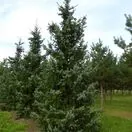
Serbian Spruce Christmas Tree Bare Root (Picea Omorika)
The Serbian Spruce is often described as the most elegant and graceful of all spruce trees, combining a distinctive narrow, spire-like form with sweeping, drooping branches that create a unique architectural silhouette. This beautiful evergreen conifer offers an excellent alternative to the traditional Norway Spruce, being more compact, slower-growing, and significantly more adaptable to challenging growing conditions including urban pollution, alkaline soils, and restricted spaces. These bare root trees establish reliably when planted during the dormant season, making them an outstanding choice for gardeners seeking a refined Christmas tree that can grace smaller gardens, or a striking evergreen specimen that brings year-round elegance and wildlife value.
Key Features
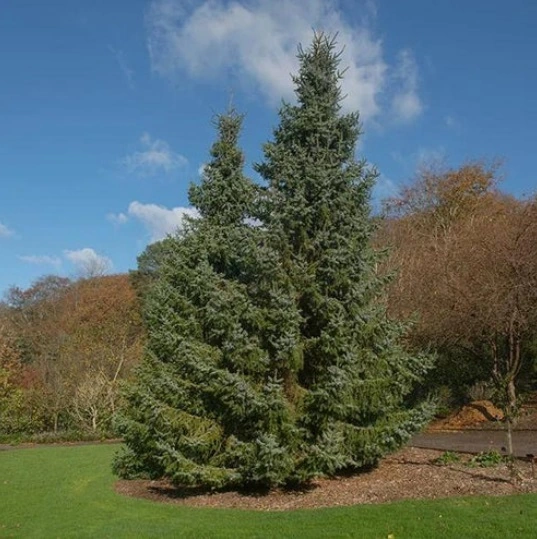
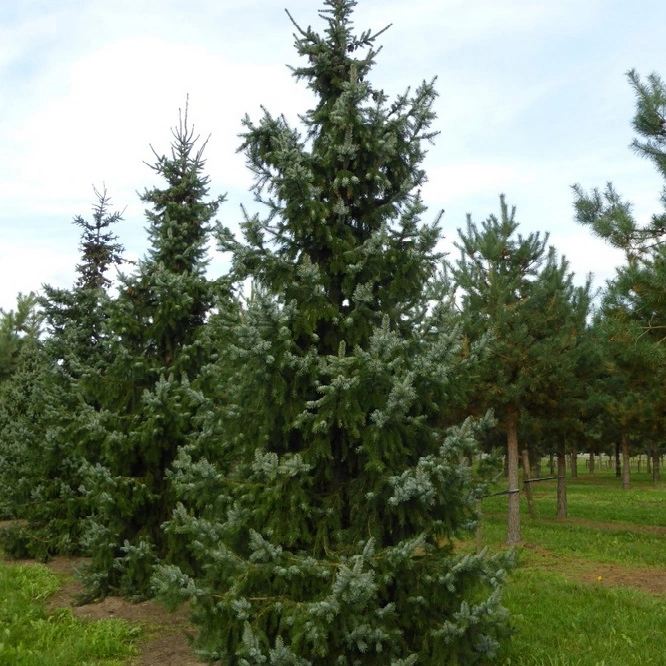
Picea omorika is instantly recognisable by its remarkably slender, columnar form with a gracefully tapered spire-like crown. The tree naturally maintains a narrow profile, typically growing just 2-3 metres wide even when fully mature, whilst reaching 15-20 metres in height over several decades – considerably more compact than Norway Spruce. This narrow habit makes it suitable for gardens where space is at a premium.
The branches have a distinctive and beautiful habit: they arch downwards along their length, then curve upwards at the tips, creating an elegant, slightly drooping appearance that gives the tree exceptional grace and character. This unique branching pattern is one of the Serbian Spruce's most attractive features and sets it apart from other conifers.
The needles are flattened rather than four-sided, measuring 1-2 cm long, and display an attractive two-toned effect. The upper surface is dark glossy green, whilst the underside has two prominent white bands, creating a subtle blue-green shimmer as the branches move in the breeze. This bicoloured effect is particularly striking and adds visual interest throughout the year. The needles emit a pleasant, mild resinous scent when crushed.
Young trees have smooth, copper-brown bark that becomes darker and develops attractive scaling with age. Mature trees (typically from 15-20 years onwards) produce small, pendulous cones that are initially deep purple-blue before maturing to cinnamon-brown – these attractive cones add ornamental interest and provide food for wildlife.
The growth rate is moderate rather than fast, typically 20-30 cm per year, making this a more manageable option than the vigorous Norway Spruce. This slower growth also means the tree takes longer to reach Christmas tree size, but it's far better suited to long-term garden planting.
Growing Conditions
Serbian Spruce is remarkably adaptable and tolerant, growing successfully in a much wider range of conditions than most other spruces. It thrives in moist, well-drained soils and performs best in neutral to slightly acidic conditions (pH 5.5-7.0). However – and this is crucial – unlike Norway Spruce, Picea omorika tolerates alkaline and chalky soils extremely well, making it suitable for gardens across Britain where Norway Spruce would struggle.
The tree grows in most soil types including clay, loam, and sandy soils, provided drainage is reasonable. It appreciates consistent moisture but, once established, has better drought tolerance than Norway Spruce. Good drainage is important to prevent root rot, particularly on heavy clay soils.
Serbian Spruce performs best in full sun but tolerates light shade better than many conifers, though the form may become less dense in deeper shade. It thrives in cool, temperate climates and is fully hardy throughout the UK, tolerating temperatures well below -25°C without damage.
One of this tree's greatest assets is its exceptional tolerance of urban conditions. Unlike Norway Spruce, Serbian Spruce withstands atmospheric pollution, urban air quality, and industrial environments remarkably well, making it an excellent choice for town and city gardens. It also tolerates wind exposure once established and performs reasonably well in coastal locations, though it appreciates some shelter from the harshest salt-laden winds.
The tree's adaptability, tolerance of difficult conditions, and compact habit make it one of the most garden-worthy spruces available.
Planting Instructions
Bare root Serbian Spruce should be planted between November and March whilst the trees are dormant and the ground is workable – not frozen solid or waterlogged. This dormant period planting is essential for successful establishment. Upon arrival, unwrap the tree immediately and check the roots are moist. If they appear dry, stand the roots in a bucket of water for 1-2 hours (but not longer), then plant as soon as possible. Conifers don't tolerate delayed planting as well as deciduous trees.
Spacing: For individual specimen trees, allow at least 3-4 metres from buildings, boundaries, and other trees to accommodate the mature width (whilst narrow, the tree still needs space). For screening or windbreaks, space trees 2-3 metres apart. For Christmas tree plantations or small groves, space 1.5-2 metres apart.
Choose your planting position carefully, considering the mature height of 15-20 metres. Whilst the narrow form means it won't dominate horizontally, the vertical presence is substantial. Avoid planting near overhead cables, too close to buildings (where it might eventually block light), or directly over underground services. The narrow habit makes this tree particularly suitable for positions where width is restricted but height is acceptable – perhaps near boundaries, in narrow side gardens, or as vertical accents.
Dig a generous planting hole approximately 60-80 cm wide and 40-50 cm deep, or at least twice the width and 1.5 times the depth of the root ball. Keep the darker topsoil separate from the paler subsoil. Break up the soil at the bottom of the hole thoroughly with a fork to improve drainage and encourage roots to penetrate deeply – this is particularly important on clay soils.
If your soil is heavy clay, improve drainage by incorporating grit or sharp sand along with organic matter. If it's very free-draining and sandy, add well-rotted compost or leaf mould to improve moisture retention. If your soil is chalky (which is fine for Serbian Spruce, unlike other spruces), just ensure good drainage and add some organic matter for moisture retention. Mix a handful of slow-release fertiliser or bone meal into the excavated topsoil.
Carefully examine the roots and trim away any that are damaged, broken, or dead using clean, sharp secateurs. Handle the roots gently as conifer roots are quite brittle and delicate.
Position the tree in the centre of the hole, ensuring it sits at the same depth it was growing previously – look for the soil mark on the stem. Planting conifers too deep is a common cause of failure. Spread the roots out naturally in the hole.
For trees over 90 cm tall or in exposed positions, drive a robust wooden stake into the hole before positioning the tree, angled at approximately 45 degrees and facing the prevailing wind direction (usually south-west in the UK). The stake should extend about 40-50 cm above ground level.
Backfill the hole with the topsoil mixture, working it carefully around the roots to eliminate air pockets. Add the soil gradually, firming gently but thoroughly every few inches with your hands or fist – avoid heavy stamping which can damage the delicate roots. Once filled to ground level, firm once more and create a shallow saucer shape around the tree to help direct water to the roots.
Water thoroughly after planting – provide at least 10-20 litres even if the weather is wet. This is crucial for settling the soil around the roots and ensuring good contact, which is essential for successful establishment.
If using a stake, attach the tree with a proper tree tie that includes a spacer (to prevent rubbing), positioned about two-thirds up the stake. The tie should be secure but not overly tight, allowing slight movement which encourages strong root and trunk development.
Apply a generous 7-10 cm layer of organic mulch such as composted bark, pine needles, leaf mould, or well-rotted compost in a circle 60-90 cm in diameter around the base. Keep the mulch 10-15 cm clear of the trunk itself to prevent rot and discourage rodents. This mulch helps maintain moisture, suppress weeds, and keep the roots cool – all beneficial for establishment.
Care and Maintenance
Watering: Regular watering is essential during the first 2-3 years whilst the tree establishes its root system. Water generously during the growing season, providing 15-25 litres per week during dry spells in spring and summer. Serbian Spruce appreciates consistent moisture and, whilst more drought-tolerant than Norway Spruce once established, still performs best when the soil doesn't dry out completely. Even after establishment, water during prolonged droughts, particularly in free-draining soils or during hot summers.
Feeding: Apply a balanced slow-release fertiliser suitable for conifers in early spring to encourage healthy growth and maintain the attractive bicoloured foliage. Alternatively, use blood, fish and bone or a general-purpose tree and shrub fertiliser. Top up the mulch layer annually with fresh organic matter, which gradually breaks down to provide nutrients whilst maintaining beneficial soil conditions.
Staking: Check the tree tie every 2-3 months, loosening it as the trunk expands to prevent it cutting into the bark. Remove the stake after 2-3 years once the tree is firmly established – continued staking beyond this point can actually weaken trunk development.
Pruning: Serbian Spruce requires virtually no pruning and is best left to develop its naturally elegant, narrow form. The tree naturally maintains a single strong central leader and well-spaced, gracefully drooping branches without any intervention. This natural habit is one of the tree's greatest assets, so avoid unnecessary pruning.
If the central leader is damaged by weather or animals, select the strongest vertical side shoot near the top of the tree and train it upwards using a cane tied to the main trunk to form a new leader, whilst removing any competing shoots that might create a double leader.
Lower branches occasionally die back naturally as the tree matures and becomes shaded – these can be removed flush with the trunk in late spring if desired for aesthetic reasons or to maintain clear trunk.
Never top or heavily prune Serbian Spruce as it will not regenerate attractive growth from old wood. Severe pruning permanently destroys the tree's elegant natural form. Very light tip pruning of young growth in late spring can be done if you wish to encourage slightly denser growth, but this is rarely necessary or recommended.
Mulching: Maintain the mulch layer around young trees for the first 5 years, topping it up annually. This helps maintain moisture, suppress competing weeds, and keep roots cool during hot weather.
Weed Control: Keep a weed and grass-free circle of at least 60 cm diameter around young trees for the first 3-5 years. Grass and weeds compete significantly for water and nutrients during the critical establishment period.
Pest and Disease: Serbian Spruce is generally very healthy and trouble-free, with good natural resistance to most problems. Occasionally it may be affected by:
-
Aphids: May cause some honeydew dripping but rarely serious damage. Usually not worth treating.
-
Red spider mite: Can cause bronzing in hot, dry conditions. Improve watering and avoid water stress.
-
Needle cast: Rare but can cause needle browning. Ensure good air circulation and avoid overhead watering.
-
Honey fungus: Can affect stressed trees. Maintain tree health through proper care.
Generally, Serbian Spruce is considerably healthier and more problem-free than Norway Spruce, particularly when grown in suitable conditions with adequate moisture.
Uses in the Garden
Specimen Tree: The primary use for Serbian Spruce is as an elegant specimen tree that provides year-round vertical accent and architectural interest. Its narrow, graceful form makes it particularly suitable as a focal point in formal gardens, near entrances, or in positions where vertical emphasis is desired.
Small Garden Conifer: The compact width makes this one of the best choices for smaller gardens where a full-sized evergreen is desired but space is limited. It provides the presence and scale of a large tree without overwhelming the space.
Christmas Tree: Excellent as a living Christmas tree that can be decorated outdoors each year, or grown in a large container for indoor use whilst young. The elegant form, attractive needles, and moderate growth rate make it particularly suitable for this purpose.
Screening: The narrow, upright form is ideal for creating vertical screens or green boundaries where horizontal space is restricted. Particularly effective near property boundaries where width must be limited.
Formal Gardens: The naturally symmetrical, spire-like form suits formal garden designs beautifully, providing evergreen structure alongside clipped hedges and geometric layouts.
Avenue Planting: When planted in pairs or rows, Serbian Spruce creates impressive formal avenues with strong vertical emphasis.
Windbreak: Whilst narrower than traditional windbreak trees, groups of Serbian Spruce provide effective wind filtering whilst taking up minimal ground space.
Wildlife Habitat: Provides nesting sites, winter shelter, and food (from cones) for birds and other wildlife.
Urban Gardens: The pollution tolerance makes this an excellent choice for town and city gardens where other conifers might struggle.
Containers: Young trees can be grown in very large containers for several years, making them suitable for patios, formal entrances, and spaces where in-ground planting isn't possible.
Advantages Over Norway Spruce
Serbian Spruce offers several significant advantages that make it often a better choice for garden planting:
Size: Much more compact (2-3 m wide vs 6-8 m wide at maturity), making it suitable for smaller gardens and restricted spaces.
Soil tolerance: Grows well in alkaline and chalky soils where Norway Spruce fails.
Urban tolerance: Withstands pollution, making it suitable for town and city gardens.
Form: Naturally narrow and elegant, requiring no pruning to maintain attractive shape.
Drought tolerance: Better tolerance of dry conditions once established.
Disease resistance: Generally healthier and more trouble-free.
Growth rate: Slower, more manageable growth.
Adaptability: Succeeds in a wider range of conditions.
Choose Serbian Spruce over Norway Spruce if you have limited width space, alkaline soil, urban pollution, or want a more refined, elegant form that requires less maintenance.
Growing as a Christmas Tree
Serbian Spruce makes an excellent living Christmas tree:
For outdoor decoration: The naturally elegant, narrow form is perfect for decorating in situ in the garden. The tree maintains its shape beautifully and the gracefully drooping branches create an attractive display when decorated with lights and ornaments. Use outdoor-rated LED lights and weather-resistant decorations.
For indoor use (temporary): Young trees up to approximately 1.5 metres can be grown in very large containers (at least 50 cm diameter) and brought indoors for 7-10 days during Christmas. However, keep the tree cool (ideally below 18°C), away from radiators and heat sources, water regularly to keep the root ball moist, and return it outdoors as soon as possible after the festive season. The stress of indoor conditions shortens the tree's life, so this practice is only suitable for a few years.
Growth timeline: Serbian Spruce grows more slowly than Norway Spruce, typically taking 6-10 years to reach a good Christmas tree size of 1.5-2 metres. This slower growth is actually beneficial for long-term garden planting as the tree remains manageable for longer.
Needle retention: The needles are held well even when the tree experiences some dryness, better than Norway Spruce, making it more practical for both indoor and outdoor Christmas decoration.
Shape: The naturally narrow, symmetrical form requires no special training or shearing to achieve an attractive Christmas tree shape – it develops this naturally.
Wildlife Value
Serbian Spruce provides valuable wildlife habitat throughout the year:
For birds: The dense evergreen foliage provides crucial winter roosting sites and sheltered nesting locations for goldcrests, coal tits, firecrests, and other small birds. The cones provide seeds for crossbills, siskins, and other finches. The narrow, columnar form with drooping branches creates particularly good protected microclimates.
For mammals: Red squirrels and grey squirrels feed on the seeds from mature cones. The dense cover provides shelter for small mammals, and bats may roost in the tree structure as it matures.
For invertebrates: The tree supports various specialist conifer-feeding insects, whilst the sheltered microclimate beneath the drooping branches provides habitat for numerous invertebrate species.
Year-round value: The evergreen nature means the tree provides constant shelter and habitat, particularly valuable during harsh winter weather when deciduous trees are bare.
Companion Planting
Serbian Spruce's narrow, elegant form works beautifully in various planting schemes:
-
Shade-tolerant evergreen shrubs like rhododendrons, pieris, and skimmia beneath the canopy
-
Spring bulbs such as snowdrops, crocuses, and early narcissi around the base for seasonal colour
-
Heathers, dwarf conifers, and alpine plants for contrasting textures in formal settings
-
Ornamental grasses that complement the vertical form
-
Ferns and woodland perennials in the dappled shade beneath mature trees
-
Other conifers with contrasting forms (spreading junipers, rounded pines) for textural variety
-
Deciduous trees like birch or amelanchier for seasonal contrast
The dark green foliage provides excellent backdrop for lighter colours and the narrow form means it doesn't dominate companion plants horizontally.
Conservation Interest
Serbian Spruce is native only to a small area of limestone mountains in Serbia and Bosnia, where it grows naturally in steep river valleys. In its native habitat, it's considered endangered due to restricted range and limited population. By growing this beautiful tree in gardens, we help maintain genetic diversity and appreciation for this rare species, though garden trees don't contribute directly to wild conservation.
The tree was introduced to Britain in 1889 and has proven remarkably well-adapted to British conditions, often thriving better here than many native European conifers.
Special Considerations
Ultimate height: Whilst narrow, Serbian Spruce still reaches 15-20 metres tall over several decades. Ensure you have adequate vertical space and won't create future problems with overhead cables, blocking light, or other height-related issues.
Slow initial growth: Don't expect rapid results – this is a slower-growing tree than Norway Spruce. However, this moderate pace makes it more manageable and suitable for gardens.
Lower branch retention: Unlike Norway Spruce, Serbian Spruce often retains lower branches well into maturity, maintaining its elegant form right to ground level for many years.
Shallow roots: Mature trees develop fairly shallow, spreading root systems. Whilst less aggressive than Norway Spruce, still allow adequate space from paths, utilities, and foundations.
Narrow but still substantial: Whilst the width is restricted (2-3 m), remember this is still a large tree that will have significant presence. It's suitable for small gardens but not tiny spaces.
Top Tips for Success
-
Choose Serbian Spruce over Norway Spruce for smaller gardens, alkaline soils, or urban locations
-
Plant between November and March whilst dormant – timing is crucial for conifers
-
Ensure good drainage but maintain consistent moisture, especially for first 3 years
-
Water generously and regularly – don't let the tree dry out during establishment
-
Allow the naturally elegant form to develop – don't prune unnecessarily
-
Mulch well to maintain moisture and suppress weeds
-
Perfect for narrow spaces where vertical accent is needed
-
Excellent for outdoor Christmas decoration year after year
-
More tolerant and adaptable than most spruces – a forgiving choice
-
Be patient with the moderate growth rate – quality over speed
-
Ideal if you want a "proper" Christmas tree that won't outgrow your garden too quickly
-
Works beautifully in formal settings or as architectural specimens
Create elegant vertical drama with Serbian Spruce bare root – a refined, narrow evergreen conifer that combines graceful beauty with exceptional adaptability, making it one of the most garden-worthy spruces available. Perfect for smaller gardens, urban locations, and anyone seeking a distinguished living Christmas tree that brings year-round architectural interest and wildlife value to gardens throughout Britain.
Please see our bare root plant guides for more information. We've put together a collect of help and advice articles covering what bare root plants are, why they are a good choice, which plants are available bare root, when and where to plant.
Bare Root is usually dispatched between early November and late March. Exact dates vary year to year depending on the weather. We cannot guarantee availability for a certain date at the beginning or end of the season.
Important Bare Root Care
As soon as you receive your bare root plants place the items upright in a bucket of clean water immediately leaving them for at least 2 hours. Only take plants out as you need them for planting.
Q: When is bare root season?
A: Our bare root season usually runs from November to March but it can depend on the weather conditions, we'd always recommend buying at the end of autumn rather than waiting for spring.
Q: Does the plant size include the roots?
A: No, all bare root plant sizes quoted exclude the roots.
Q: What size plants will I receive?
A: Stock size varies through the season, our 'Plant Size' are give as a guide and you will receive plants somewhere in that range. We are unable to specify exactly how tall the plants will be within that range.
Q: How old will the plants be?
A: Most of our 'Plant Sizes' include the age of the plant, this is shown as a sum e.g. 1+2 which in this case would indicate that the plants are 3 years old. The first number is how long the plant has spent in the seedbed and the second is the number of year it has spent lined out in the field. Where the sum starts with a 0+ this indicates that the plants were grown from a rooted cutting.
Q: Can I get a discount for bulk purchases?
A: We offer a discount banding on bare root plants making them cheaper the more you buy, see the table on each page for details of the price within each band.
Q: Do I need canes?
A: Bamboo canes are perfect for giving young saplings, hedging plants, climbers and other tall shrubs the support they need when they start to establish. Unless you are planting in a completely sheltered spot with very little chance of wind then we would always recommend using a cane for support.
Q: Do I need rabbit guards?
A: Spiral Rabbit Guards are the most popular, low cost tree protection for young saplings, seedlings, transplants and hedging plants from browsing animals such as voles, mice, rabbits and hares. Spiral Rabbit Guards have the ability to grow and expand with the growing tree, providing a sheltered environment for the tree. It's hard to say for certain if you will require the extra protection a rabbit guard provides, if your are aware of a particular pest problem in your planting location then we would recommend using them. Rabbit Guards are not suitable for 'evergreens' please see 'Shrub Shelters' for a suitable evergreen protection method.
Q: What is a shrub/tree shelter?
A: Shrub/Tree Shelters are similar to rabbit guards but are designed for use on evergreens that would sweat and die in rabbit guards. We supply shrub/tree shelters as a kit which includes the shelter, 1 Stake and 2 cable ties, one kit is required per plant.
Q: Do I need shrub/tree shelters?
A: If you are aware of any specific pest problems in your planting area then we would recommend using a shrub/tree shelter to give your young trees or hedging plants that extra protection.