
Weigela 'Bristol Ruby' Bare Root - Red Weigela
Weigela 'Bristol Ruby' is a show-stopping deciduous shrub that guarantees a spectacular floral display each spring. This classic garden favourite produces masses of tubular, ruby-red flowers that smother the arching branches, creating a fountain of colour that's simply irresistible to both gardeners and pollinators alike. Extremely easy to grow and remarkably unfussy about conditions, 'Bristol Ruby' is perfect for adding vibrant colour to mixed borders, cottage gardens, or as an informal flowering hedge. Once established, this reliable shrub will reward you with years of effortless beauty.
Key Features
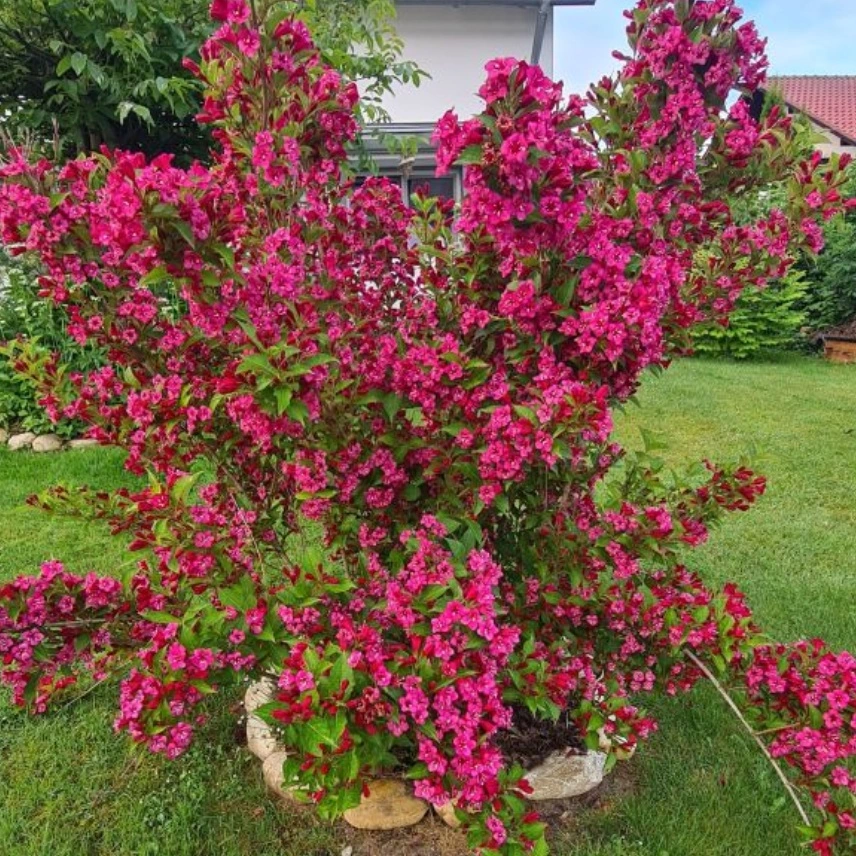
- Height & Spread: Grows 2-2.5 metres tall with a similar spread
- Hardiness: Fully hardy (RHS H6) – tolerates temperatures down to -20°C
- Soil: Adaptable to most soil types
- Aspect: Full sun to partial shade (best flowering in sun)
- Growth Rate: Fast-growing, quickly establishing into a substantial shrub
What to Expect
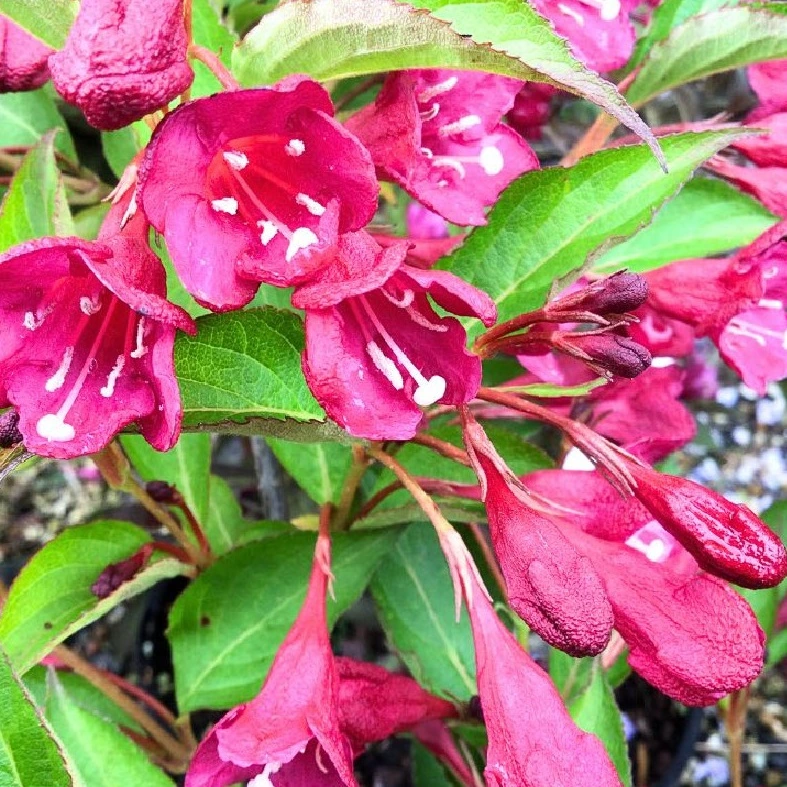
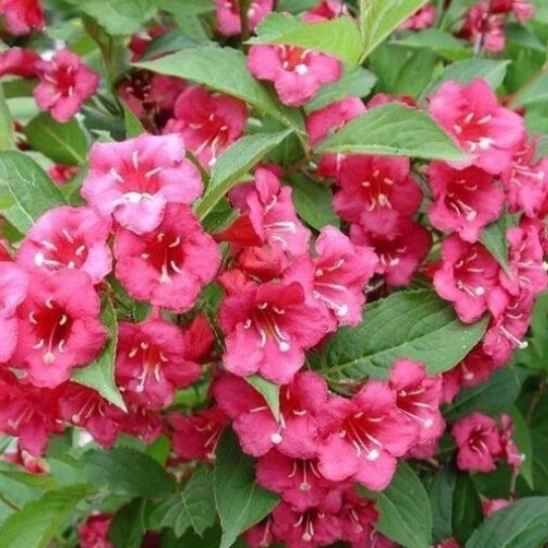
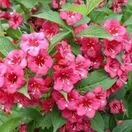
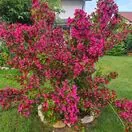
Late Spring Extravaganza From May to June, the entire shrub becomes absolutely covered in vibrant ruby-red, trumpet-shaped flowers. The blooms are produced in such profusion along the arching stems that they practically obscure the foliage – a truly breathtaking sight that marks the transition from spring to summer.
Bonus Blooms 'Bristol Ruby' often produces a lighter flush of flowers in late summer or early autumn, extending the flowering season and providing an unexpected treat.
Graceful Habit The naturally arching branches create an elegant, fountain-like shape that adds movement and structure to planting schemes. The green, pointed leaves provide a pleasant backdrop when the shrub isn't in flower.
Pollinator Magnet The tubular flowers are particularly attractive to bees and hoverflies, making this an excellent choice for wildlife-friendly gardens.
Ideal Uses
- Mixed borders for spectacular spring colour
- Cottage gardens – perfect traditional choice
- Informal flowering hedging
- Foundation planting near buildings
- Pollinator gardens – excellent nectar source
- Specimen shrub in smaller gardens
- Container growing (in large pots)
- Bank or slope planting
Planting & Care
Planting Your Bare Root Plant between November and March whilst dormant. Soak roots in water for 2-3 hours before planting. Dig a hole twice the width of the root system and mix some well-rotted compost into the excavated soil. Position the plant so the previous soil mark sits at ground level. Backfill, firm in thoroughly, and water well. For hedging, space plants 75-90cm apart.
Initial Establishment
-
Water regularly during the first growing season
-
Apply a mulch around the base to retain moisture and suppress weeds
-
Keep the area around young plants weed-free
Ongoing Maintenance
-
Once established, Weigela is remarkably drought-tolerant and low-maintenance
-
Water during prolonged dry spells to maintain flowering performance
-
Feed with a general-purpose fertiliser in early spring to encourage prolific blooms
-
Generally pest and disease-free
Pruning – The Key to Success Weigela flowers on the previous year's wood, so timing is crucial:
-
After flowering (June/July): This is the best time to prune. Cut back flowered stems by about one-third to strong shoots lower down
-
Remove about one-third of the oldest stems right to the base every few years to encourage vigorous new growth
-
Never prune in winter or early spring – you'll remove all the flower buds
-
Minimal pruning is fine if you prefer a larger, more natural shape
Regular pruning after flowering keeps the plant compact, encourages abundant blooms, and prevents it becoming leggy.
Growing Conditions
Soil Requirements Very adaptable and unfussy. Grows well in clay, loam, chalk, and sandy soils. Prefers moist but well-drained conditions but tolerates drier soils once established. Thrives in slightly acidic to slightly alkaline soils.
Sun & Shade Best flowering occurs in full sun, but Weigela tolerates partial shade well – though you may get slightly fewer flowers in shadier positions. Avoid deep shade.
Position Shelter from strong winds is beneficial, particularly for the flowers. The arching stems can be damaged by very exposed, windy sites.
Why Choose 'Bristol Ruby'?
If you want guaranteed impact in late spring, 'Bristol Ruby' delivers in spades. The sheer profusion of vibrant red flowers creates a wow-factor that few shrubs can match, yet this plant asks for very little in return. It's the perfect shrub for busy gardeners who want maximum effect with minimum fuss.
'Bristol Ruby' is particularly valued for its intense flower colour – deeper and more vibrant than many other red Weigelas. The fast growth means you'll enjoy a full display within just a couple of years of planting.
This variety has stood the test of time since its introduction in the 1940s and remains one of the most popular Weigelas for good reason – it's simply reliable, beautiful, and easy. The cottage garden charm combined with robust constitution makes it suitable for both traditional and contemporary planting schemes.
The bonus of occasional late-summer flowers is a delightful surprise that extends the season of interest beyond the main spring flush.
Perfect for: Cottage gardens, mixed borders, low-maintenance schemes, pollinator gardens, gardeners wanting guaranteed spring colour, informal hedging, and anyone seeking a reliable, easy-to-grow flowering shrub with real impact.
RHS Award of Garden Merit: 'Bristol Ruby' has received the Royal Horticultural Society's Award of Garden Merit, recognising its outstanding garden performance, reliability, and ease of cultivation.
Top Tip: Plant near a path or seating area where you can fully appreciate the abundant flowers and watch the parade of visiting pollinators on warm spring days.
Bare Root is usually dispatched between early November and late March. Exact dates vary year to year depending on the weather. We cannot guarantee availability for a certain date at the beginning or end of the season.
Important Bare Root Care
As soon as you receive your bare root plants place the items upright in a bucket of clean water immediately leaving them for at least 2 hours. Only take plants out as you need them for planting.
Q: When is bare root season?
A: Our bare root season usually runs from November to March but it can depend on the weather conditions, we'd always recommend buying at the end of autumn rather than waiting for spring.
Q: Does the plant size include the roots?
A: No, all bare root plant sizes quoted exclude the roots.
Q: What size plants will I receive?
A: Stock size varies through the season, our 'Plant Size' are give as a guide and you will receive plants somewhere in that range. We are unable to specify exactly how tall the plants will be within that range.
Q: How old will the plants be?
A: Most of our 'Plant Sizes' include the age of the plant, this is shown as a sum e.g. 1+2 which in this case would indicate that the plants are 3 years old. The first number is how long the plant has spent in the seedbed and the second is the number of year it has spent lined out in the field. Where the sum starts with a 0+ this indicates that the plants were grown from a rooted cutting.
Q: Can I get a discount for bulk purchases?
A: We offer a discount banding on bare root plants making them cheaper the more you buy, see the table on each page for details of the price within each band.
Q: Do I need canes?
A: Bamboo canes are perfect for giving young saplings, hedging plants, climbers and other tall shrubs the support they need when they start to establish. Unless you are planting in a completely sheltered spot with very little chance of wind then we would always recommend using a cane for support.
Q: Do I need rabbit guards?
A: Spiral Rabbit Guards are the most popular, low cost tree protection for young saplings, seedlings, transplants and hedging plants from browsing animals such as voles, mice, rabbits and hares. Spiral Rabbit Guards have the ability to grow and expand with the growing tree, providing a sheltered environment for the tree. It's hard to say for certain if you will require the extra protection a rabbit guard provides, if your are aware of a particular pest problem in your planting location then we would recommend using them. Rabbit Guards are not suitable for 'evergreens' please see 'Shrub Shelters' for a suitable evergreen protection method.
Q: What is a shrub/tree shelter?
A: Shrub/Tree Shelters are similar to rabbit guards but are designed for use on evergreens that would sweat and die in rabbit guards. We supply shrub/tree shelters as a kit which includes the shelter, 1 Stake and 2 cable ties, one kit is required per plant.
Q: Do I need shrub/tree shelters?
A: If you are aware of any specific pest problems in your planting area then we would recommend using a shrub/tree shelter to give your young trees or hedging plants that extra protection.