
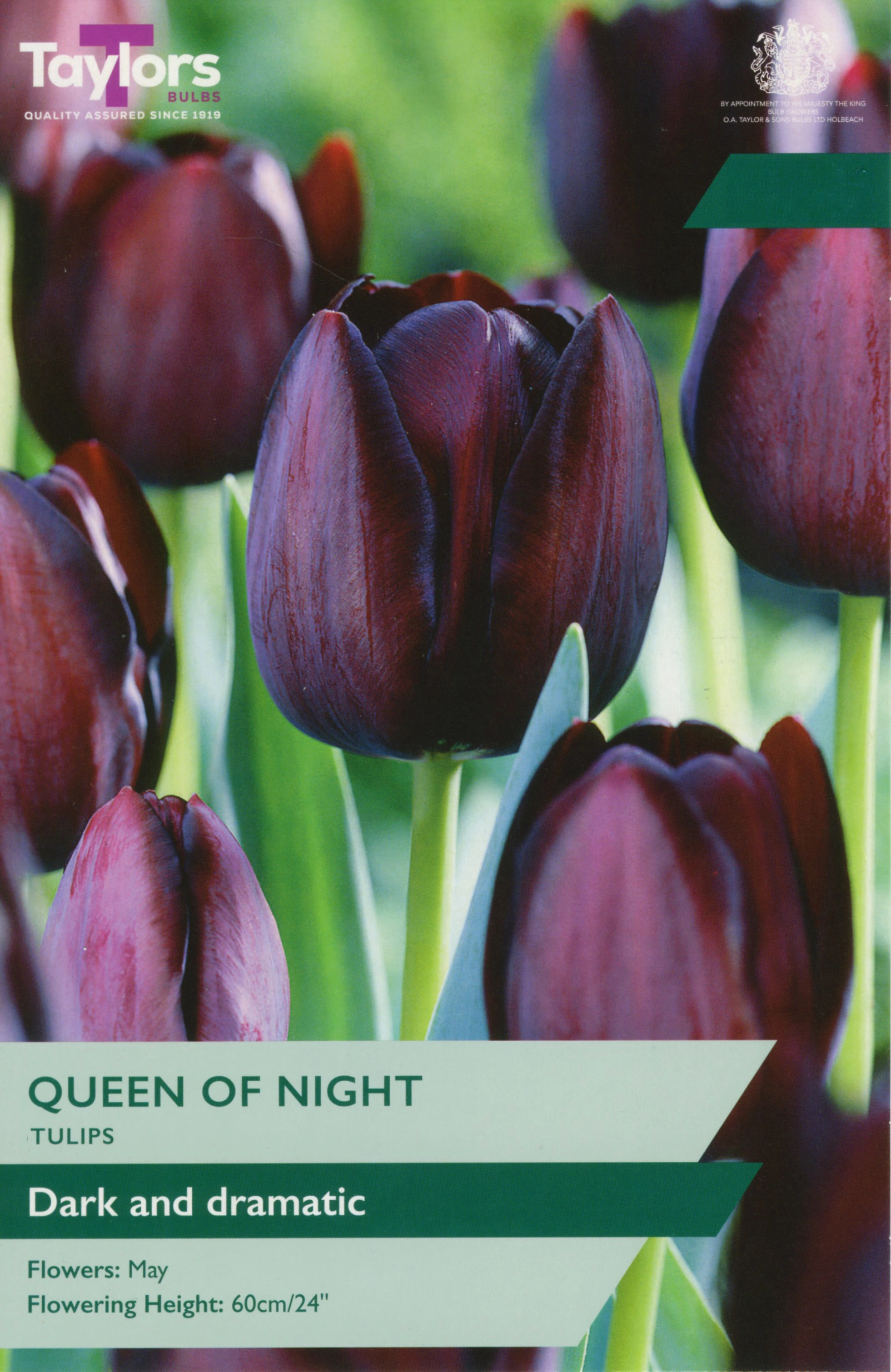
Tulip Queen of Night
Overview
The Tulip Queen of Night is a striking and sophisticated tulip variety that brings dramatic elegance to any garden. This remarkable bulb produces deep, velvety maroon-black blooms that appear almost jet black in certain lighting conditions, making it one of the most sought-after "black" tulips amongst gardeners. The contrast between its dark petals and bright yellow stamens creates a truly captivating display that stands out beautifully against lighter-coloured flowers and green foliage.
Botanical Details
Scientific Name: Tulipa 'Queen of Night'
Type: Single Late Tulip
Height: 60-65cm (24-26 inches)
Spread: 10-15cm (4-6 inches)
Bloom Time: Late spring (April-May in the UK)
Flower Size: Large, 8-10cm across
Hardiness: Fully hardy (RHS H7)
Appearance and Characteristics
The Queen of Night produces elegant, cup-shaped flowers with six broad petals that open to reveal a stunning deep maroon colour so dark it appears nearly black. The blooms sit atop sturdy, upright stems with blue-green, lance-shaped leaves that provide an attractive backdrop. Each flower measures approximately 8-10cm across when fully open, creating an impressive display that lasts for 2-3 weeks.
The colour is most intense in cooler weather and can appear lighter in very warm conditions. The contrast with the bright golden-yellow stamens and dark purple-black anthers creates a particularly striking effect.
Growing Conditions
Soil Requirements
-
Soil Type: Well-draining, fertile soil
-
pH Level: Neutral to slightly alkaline (6.0-7.0)
-
Drainage: Essential - tulips will not tolerate waterlogged conditions
-
Soil Preparation: Add compost or well-rotted manure before planting
Light and Position
-
Sunlight: Full sun to partial shade (minimum 6 hours direct sunlight)
-
Position: Sheltered spot protected from strong winds
-
Aspect: South or west-facing positions ideal
Climate Tolerance
-
Hardiness: Fully hardy to -20°C
-
Suitable Regions: Throughout the UK and similar temperate climates
-
Weather Resistance: Good tolerance to spring frosts
Planting Guide
When to Plant
Plant bulbs in autumn, ideally between October and December, before the soil freezes. In milder areas, planting can continue into early January.
Planting Depth and Spacing
-
Depth: 15-20cm deep (approximately three times the bulb's height)
-
Spacing: 10-15cm apart
-
Orientation: Pointed end facing upwards
Step-by-Step Planting
-
Choose a sunny, well-draining location
-
Dig holes or prepare a planting area to the correct depth
-
Add a handful of general-purpose fertiliser or bone meal to each hole
-
Place bulbs with the pointed end upwards
-
Cover with soil and water thoroughly if conditions are dry
-
Mark the planting area to avoid accidental disturbance
Care and Maintenance
Watering
-
Water regularly during the growing season if rainfall is insufficient
-
Reduce watering after flowering as foliage begins to die back
-
Avoid overwatering, particularly in heavy soils
Fertilising
-
Apply a balanced fertiliser (such as 10-10-10) when shoots first emerge
-
Feed again after flowering to help build up the bulb for next year
-
Bone meal can be applied in autumn during planting
Post-Flowering Care
-
Deadheading: Remove spent flowers immediately to prevent seed formation
-
Foliage: Allow leaves to die back naturally (approximately 6 weeks after flowering)
-
Lifting: Bulbs can be left in the ground in well-draining soils, or lifted and stored in warm, dry conditions
Garden Design and Companion Planting
Design Applications
-
Formal Gardens: Excellent for structured planting schemes
-
Mixed Borders: Creates dramatic focal points amongst lighter flowers
-
Cut Flower Gardens: Outstanding for bouquets and arrangements
-
Container Growing: Suitable for large pots and planters
Companion Plants
-
Spring Bulbs: Daffodils, white tulips, muscari (grape hyacinths)
-
Perennials: White or yellow primrose, forget-me-nots, wallflowers
-
Annuals: White or yellow pansies, polyanthus
-
Background Planting: Silver-leaved plants like artemisia or lamb's ear
Troubleshooting Common Issues
Pests
-
Slugs and Snails: Can damage emerging shoots - use organic pellets or barriers
-
Aphids: May attack developing buds - treat with insecticidal soap if necessary
Diseases
-
Tulip Fire: Prevent by ensuring good drainage and air circulation
-
Bulb Rot: Usually caused by poor drainage - improve soil conditions
Growth Problems
-
Poor Flowering: Often due to insufficient sunlight or poor soil drainage
-
Short Stems: May indicate bulbs planted too shallow or poor growing conditions
Storage and Propagation
Lifting and Storing Bulbs
If you choose to lift bulbs annually:
-
Wait until foliage has completely died back
-
Carefully lift bulbs and clean off soil
-
Store in a cool, dry, well-ventilated place
-
Check regularly and remove any soft or damaged bulbs
Natural Propagation
Mature bulbs will produce small offset bulbs over time. These can be separated during the dormant period and grown on to flowering size (typically takes 2-3 years).
Expected Results and Longevity
With proper care, Tulip Queen of Night bulbs will flower reliably for 3-5 years in most garden conditions. In ideal conditions with good drainage and annual feeding, they may continue flowering for even longer. Each bulb typically produces one main flower stem, with mature bulbs occasionally producing a secondary smaller flower.
The deep colour and late flowering time make this variety particularly valuable for extending the tulip season and creating sophisticated colour schemes in the spring garden.
Buying Bulbs from Jacksons Nurseries
Bulbs are supplied either in pre-packaged retail packs or in some cases they are loosly picked and sent bagged.