
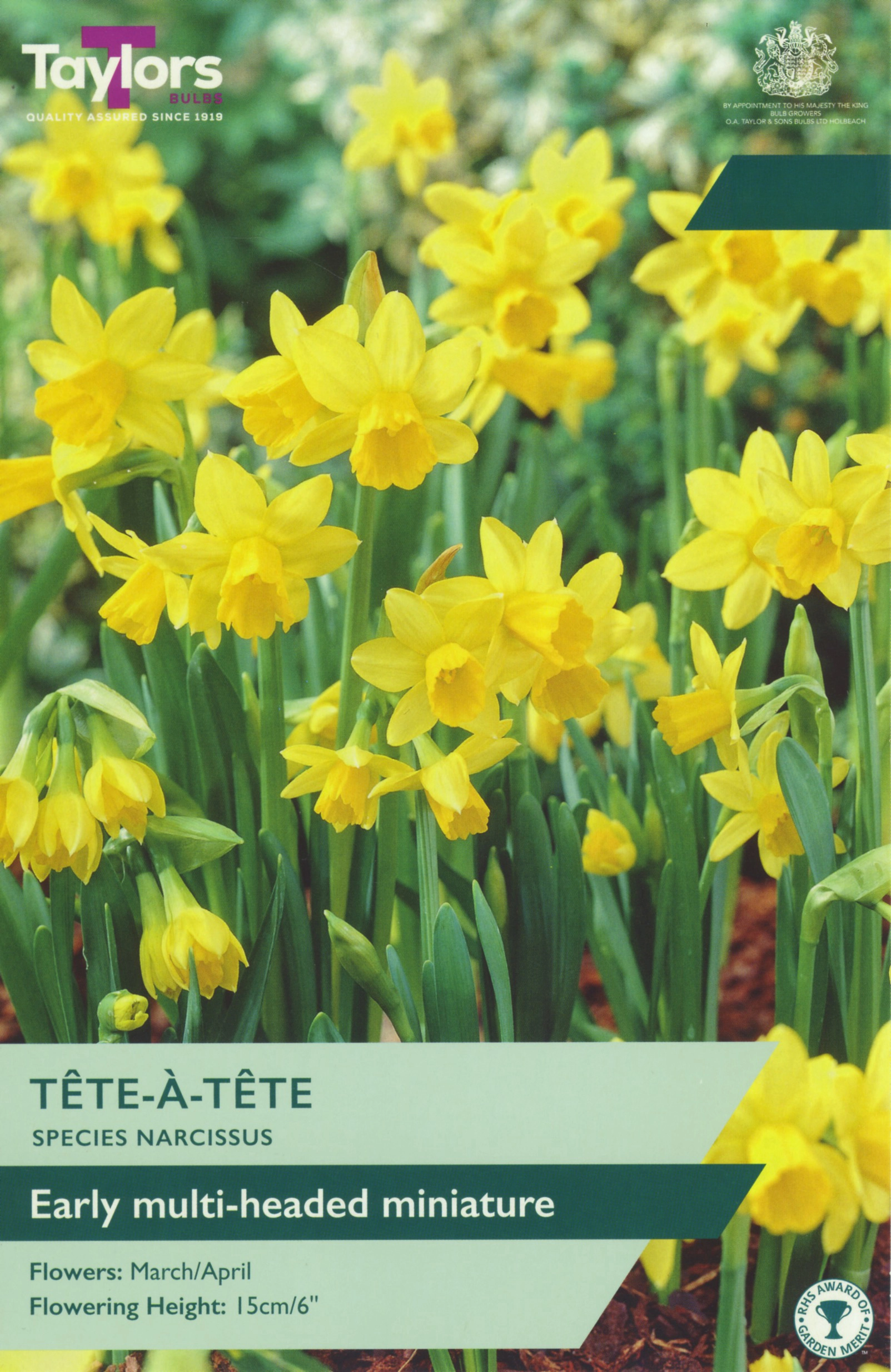
Narcissus 'Tête-à-Tête' - Miniature Daffodil
Overview
Narcissus 'Tête-à-Tête' is a charming dwarf daffodil that brings delightful early spring colour to gardens, containers, and naturalised areas. This compact variety produces cheerful golden-yellow flowers that are perfectly proportioned for smaller spaces whilst maintaining all the classic appeal of traditional daffodils.
Key Features
Height: 10-15cm (4-6 inches)
Spread: 5-8cm (2-3 inches)
Flowering Period: February to March
Hardiness: Fully hardy (RHS H7)
Flower Colour: Bright golden-yellow
Fragrance: Lightly scented
Flower Description
Each bulb typically produces 1-2 stems, with each stem bearing 1-2 small but perfectly formed flowers. The blooms feature the classic daffodil trumpet shape with six pointed petals surrounding a slightly darker golden trumpet. Despite their diminutive size (approximately 2-3cm across), the flowers pack a visual punch with their vibrant colouring and neat, symmetrical form.
Growing Conditions
Soil Requirements
-
Type: Well-draining soil of average fertility
-
pH: Neutral to slightly alkaline (6.0-7.5)
-
Drainage: Essential - avoid waterlogged conditions
-
Preparation: Add gritty compost to heavy clay soils
Light Requirements
-
Preferred: Full sun to partial shade
-
Minimum: 4-6 hours of sunlight daily
-
Note: More sun produces stronger stems and better flowering
Climate Tolerance
-
Temperature: Tolerates temperatures down to -20°C
-
Exposure: Sheltered to moderately exposed positions
-
Rainfall: Average garden conditions suitable
Planting Guide
When to Plant
Plant bulbs between September and November for spring flowering. Earlier planting (September-October) allows better root establishment before winter.
Planting Depth and Spacing
-
Depth: 8-10cm deep (roughly three times the bulb height)
-
Spacing: 5-8cm apart for natural drifts
-
Container planting: 2-3cm apart for fuller displays
Planting Method
- Choose a well-draining location
- Dig holes to the correct depth
- Place bulbs pointed end upwards
- Backfill with soil and water gently
- Mark the area to avoid accidental disturbance
Care Instructions
Watering
-
Establishment: Water after planting if soil is dry
-
Growing season: Natural rainfall usually sufficient
-
Post-flowering: Reduce watering as foliage dies back
-
Summer dormancy: Keep dry during summer months
Feeding
-
Autumn: Apply balanced bulb fertiliser when planting
-
Spring: Light feed with low-nitrogen fertiliser after flowering
-
Frequency: Annual feeding is usually adequate
Maintenance
-
Deadheading: Remove spent flowers to prevent seed formation
-
Foliage care: Allow leaves to die back naturally (6-8 weeks post-flowering)
-
Division: Lift and divide clumps every 4-5 years if flowering declines
Best Uses in the Garden
Container Growing
Excellent for pots, window boxes, and hanging baskets. Combines beautifully with other early spring bulbs like crocuses and snowdrops. Use multipurpose compost with added grit for drainage.
Rock Gardens and Alpine Areas
Perfect scale for rock gardens where their neat habit won't be overwhelmed by larger plants. Thrives in the well-draining conditions typical of rockeries.
Naturalising
Ideal for naturalising in grass, under deciduous trees, or in woodland gardens. Will gradually multiply to form attractive colonies over time.
Border Edging
Creates charming early season interest along path edges or at the front of mixed borders. Their low height makes them perfect for this purpose.
Companion Plants
-
Early bulbs: Snowdrops, crocuses, winter aconites
-
Perennials: Primulas, pulmonarias, ajuga
-
Shrubs: Hamamelis, daphne, early-flowering camellias
-
Ground cover: Vinca minor, lamium
Common Issues and Solutions
Poor Flowering
Cause: Overcrowding, insufficient sunlight, or premature foliage removal
Solution: Divide congested clumps, ensure adequate light, allow foliage to complete its cycle
Bulb Rot
Cause: Poor drainage or waterlogged conditions
Solution: Improve soil drainage, avoid overwatering, plant in raised beds if necessary
Pest Problems
Cause: Narcissus fly or bulb eelworm (rare in home gardens)
Solution: Good garden hygiene, avoid damaged bulbs when planting
Why Choose 'Tête-à-Tête'?
This variety offers all the charm of larger daffodils in a perfectly scaled-down package. Its reliable flowering, easy care requirements, and versatility make it an excellent choice for both novice and experienced gardeners. The early flowering period extends the garden's season of interest, whilst the compact size makes it suitable for even the smallest gardens.
Purchasing Tips
- Choose firm, plump bulbs without soft spots or mould
- Buy from reputable suppliers for guaranteed variety trueness
- Purchase in autumn for immediate planting
- Consider buying in bulk for naturalising projects
Expected lifespan: Many years with proper care, often increasing in number through natural multiplication
Buying Bulbs from Jacksons Nurseries
Bulbs are supplied either in pre-packaged retail packs or in some cases they are loosly picked and sent bagged.
No posts found