
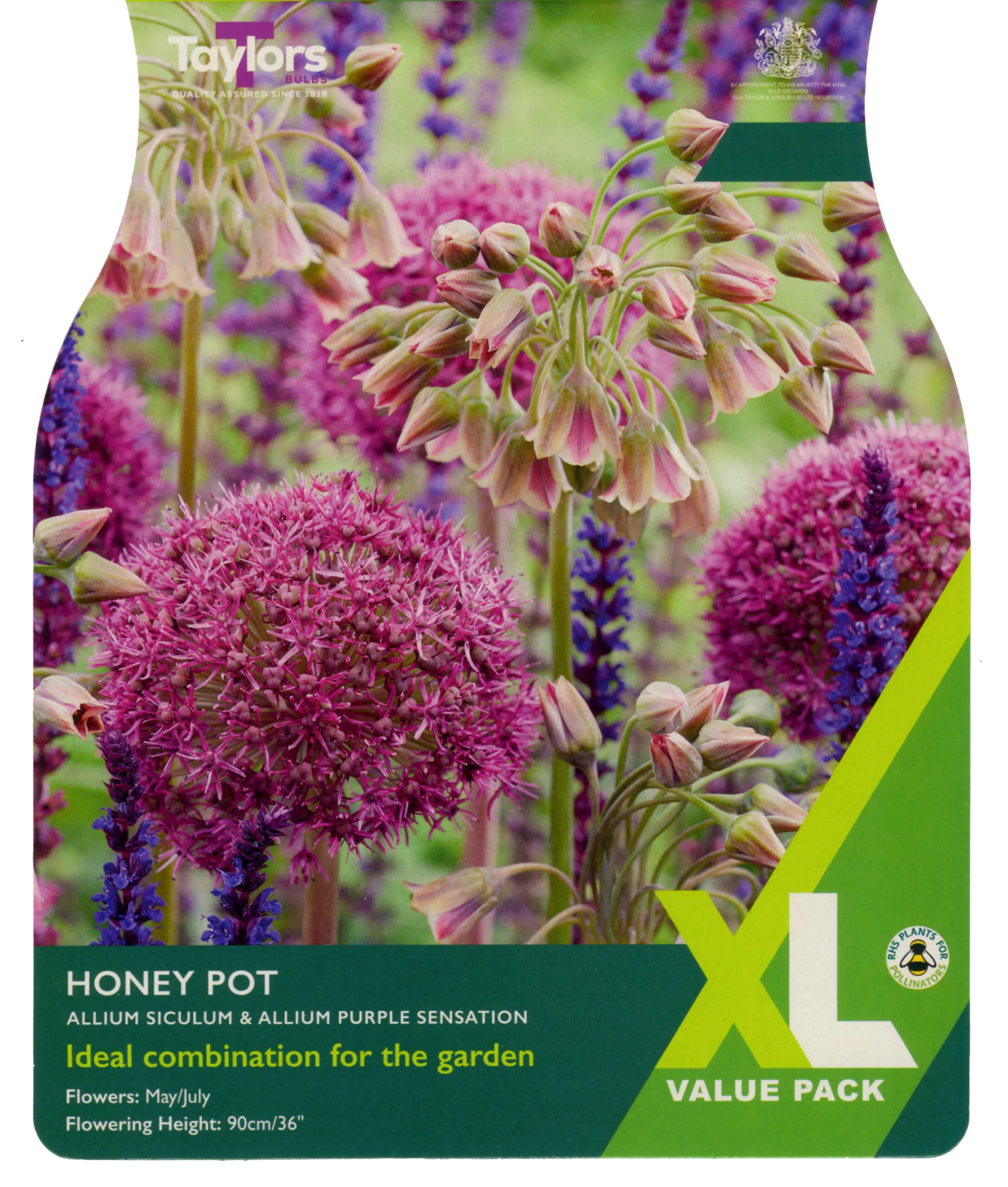
Allium Honey Pot
Overview
The Allium Honey Pot is a charming dwarf ornamental onion that brings delightful colour and texture to any garden setting. This compact bulbous perennial produces distinctive golden-yellow flower heads that resemble miniature honey pots, making it an excellent choice for both novice and experienced gardeners seeking reliable, low-maintenance blooms.
Key Features
Botanical Name: Allium siculum 'Honey Pot' & Allium 'Purple Sensation'
Common Names: Honey Pot Allium, Dwarf Ornamental Onion
Plant Type: Hardy perennial bulb
Mature Height: 15-25cm (6-10 inches)
Spread: 10-15cm (4-6 inches)
Flowering Period: Late spring to early summer (May-June)
Flower Characteristics
The Honey Pot Allium produces charming spherical flower heads measuring 3-4cm across. Each bloom consists of tiny star-shaped flowers in warm honey-yellow tones, creating a delightful globe-like appearance. The flowers emerge on sturdy, upright stems above neat clumps of narrow, grey-green foliage. As the blooms mature, they develop attractive bronze undertones that add depth and interest to the display.
Growing Requirements
Soil Conditions
- Soil Type: Well-draining, fertile soil
- pH Level: Neutral to slightly alkaline (6.0-7.5)
- Drainage: Essential - will not tolerate waterlogged conditions
- Soil Preparation: Incorporate grit or sand into heavy clay soils to improve drainage
Light Requirements
- Sunlight: Full sun to partial shade
- Optimal Conditions: At least 6 hours of direct sunlight daily
- Tolerance: Will cope with morning shade but requires afternoon sun
Planting Guidelines
- Planting Depth: 8-10cm deep
- Spacing: 10-15cm apart
- Best Planting Time: Autumn (September-November)
- Bulb Orientation: Plant pointed end upwards
Care Instructions
Watering
Water moderately during the growing season, allowing soil to dry slightly between waterings. Reduce watering significantly after flowering when foliage begins to die back naturally.
Fertilising
Apply a balanced, slow-release fertiliser in early spring as new growth emerges. A light top-dressing of compost in autumn will provide nutrients for the following year's display.
Maintenance
- Allow foliage to die back naturally to feed the bulb
- Deadhead spent flowers to prevent self-seeding (unless seed collection is desired)
- Divide clumps every 3-4 years to maintain vigour
- Mulch around plants in winter for added protection
Garden Uses
Border Planting
Excellent for front-of-border positions where the compact size won't be overwhelmed by larger perennials. Combines beautifully with lavender, catmint, and ornamental grasses.
Container Growing
Perfectly suited to pots, window boxes, and small containers. Ensure containers have adequate drainage holes and use a gritty, well-draining compost mix.
Rock Gardens
Ideal for alpine and rock garden settings where the free-draining conditions suit its Mediterranean origins. Looks particularly effective planted amongst sedums and other drought-tolerant perennials.
Naturalising
Can be planted in drifts to create natural-looking displays. Works well in gravel gardens and Mediterranean-style plantings.
Companion Plants
- Lavender (Lavandula)
- Ornamental grasses (Festuca, Stipa)
- Sedum varieties
- Thyme (Thymus)
- Catmint (Nepeta)
- Hardy geraniums (Geranium)
Wildlife Benefits
The nectar-rich flowers attract bees, butterflies, and other beneficial pollinators, making this an excellent choice for wildlife-friendly gardens. The seed heads also provide food for birds later in the season.
Hardiness and Longevity
Hardiness Zone: RHS H5 (hardy to -15°C)
Longevity: Long-lived perennial that will return reliably year after year
Naturalising: Will slowly increase through offsets and self-seeding in suitable conditions
Seasonal Interest
- Spring: Fresh green foliage emerges
- Late Spring/Early Summer: Golden-yellow flower display
- Summer: Attractive seed heads develop
- Autumn/Winter: Foliage dies back, bulbs rest underground
Purchasing and Planting Tips
When purchasing bulbs, select firm, plump specimens without soft spots or signs of mould. Plant as soon as possible after purchase for best results. If planting must be delayed, store bulbs in a cool, dry, well-ventilated location.
The Allium Honey Pot is an exceptional choice for gardeners seeking a reliable, attractive, and low-maintenance addition to their planting scheme. Its compact size, beautiful flowers, and excellent garden performance make it suitable for a wide range of garden styles and growing conditions.
Buying Bulbs from Jacksons Nurseries
Bulbs are supplied either in pre-packaged retail packs or in some cases they are loosly picked and sent bagged.