
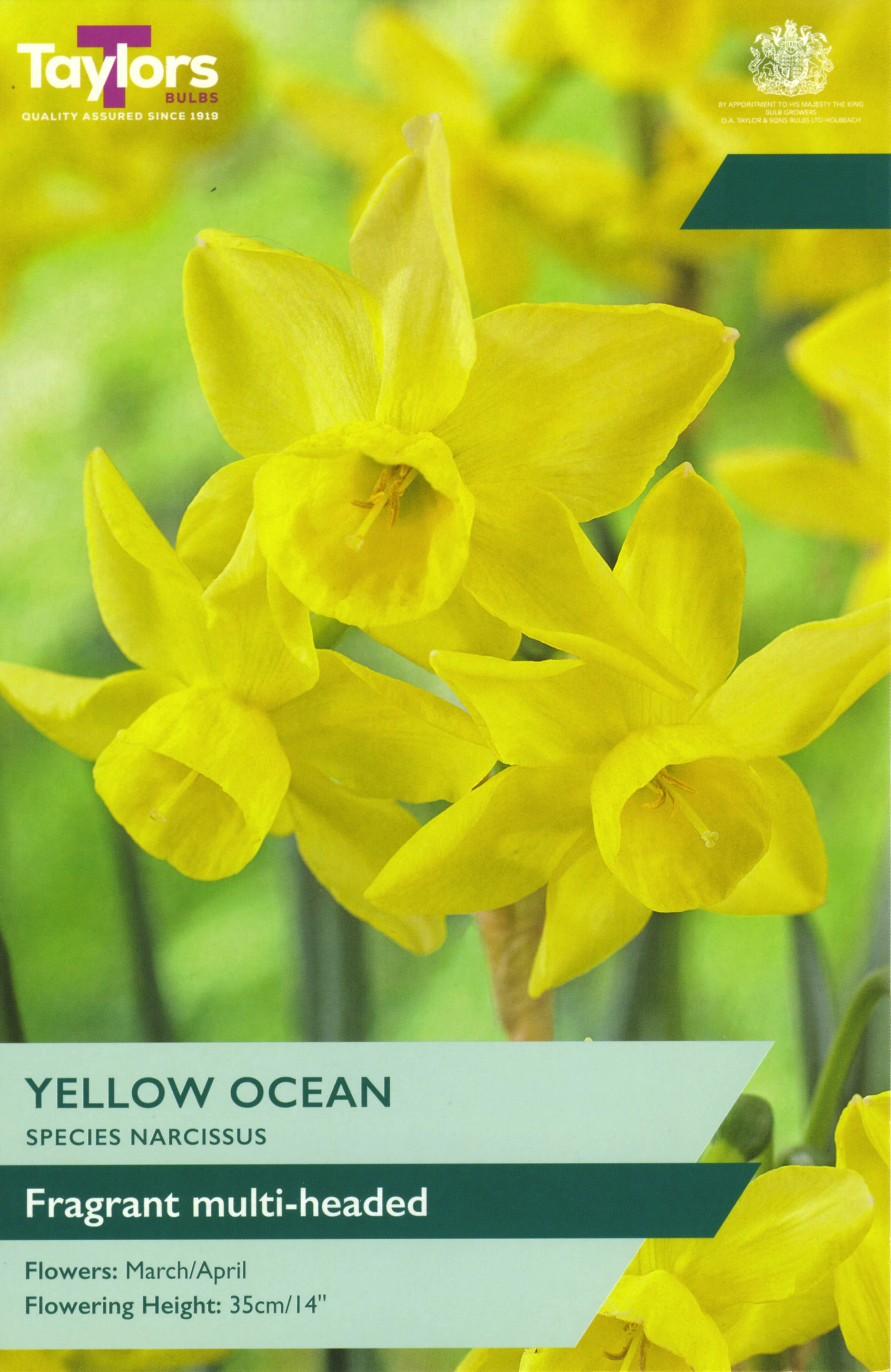
Narcissus Yellow Ocean
Overview
Yellow Ocean is a stunning mid-season daffodil that brings waves of golden sunshine to your spring garden. This reliable perennial bulb produces masses of cheerful, medium-sized blooms with crisp white petals surrounding bright yellow coronas, creating a delightful two-tone effect that resembles sunshine dancing on ocean foam.
Key Features
- Flower colour: Pure white petals with vibrant yellow trumpet-shaped corona
- Bloom time: Mid to late spring (March-April)
- Height: 35-40cm (14-16 inches)
- Spread: 10-15cm (4-6 inches)
- Flower size: 6-8cm across
- Fragrance: Light, sweet scent
Growing Conditions
Soil Requirements Yellow Ocean thrives in well-draining soil with a neutral to slightly alkaline pH (6.0-7.5). Heavy clay soils should be improved with compost or grit to prevent waterlogging, which can cause bulb rot.
Light Requirements Plant in full sun to partial shade. Whilst these daffodils will tolerate some shade, they produce the most prolific blooms and strongest growth in positions receiving at least 6 hours of morning sunlight.
Hardiness Fully hardy in UK zones (RHS H7), withstanding temperatures down to -15°C. Suitable for growing throughout Britain and Ireland.
Planting Guide
When to Plant Plant bulbs from September to November for spring flowering. Earlier planting allows better root establishment before winter.
Planting Depth Plant bulbs 10-15cm deep (roughly three times the bulb's height) and 10cm apart. In heavier soils, plant slightly shallower; in light, sandy soils, plant deeper.
Spacing For natural drifts, plant in irregular groups of 7-15 bulbs. For formal displays, space bulbs 10cm apart in rows.
Garden Uses
Naturalising Yellow Ocean is excellent for naturalising in grass, woodland edges, or wild garden areas. The bulbs will multiply over time, creating expanding drifts of spring colour.
Border Planting Perfect for spring borders, cottage gardens, and mixed perennial plantings. Combines beautifully with other spring bulbs like crocuses, grape hyacinths, and tulips.
Container Growing Suitable for large pots and containers. Plant 5-7 bulbs in a 30cm pot for best effect.
Care and Maintenance
Watering Water during dry spells in spring whilst actively growing. Reduce watering after flowering when foliage begins to yellow.
Feeding Apply a balanced bulb fertiliser in early spring as shoots emerge. Avoid high-nitrogen feeds which can encourage soft growth at the expense of flowers.
After Flowering Allow foliage to die back naturally (usually 6-8 weeks after flowering). This feeds the bulb for next year's display. Deadhead spent flowers to prevent energy going into seed production.
Division Clumps can be lifted and divided every 4-5 years in summer when dormant. Replant immediately or store in a cool, dry place until autumn.
Companion Planting
Yellow Ocean pairs beautifully with:
- Blue muscari (grape hyacinth)
- Purple crocuses
- White snowdrops
- Primroses and polyanthus
- Early perennials like bergenia and pulmonaria
Pests and Problems
Generally trouble-free. Occasional issues include:
- Narcissus fly: Small brown flies whose larvae tunnel into bulbs. Remove affected bulbs.
- Bulb rot: Usually caused by poor drainage or damaged bulbs at planting.
- Slugs: May damage emerging shoots in wet conditions.
Wildlife Value
Excellent early nectar source for bees, hoverflies, and other beneficial insects. The bulbs are naturally deer and rodent resistant due to their toxic alkaloids.
Storage and Handling
Store unplanted bulbs in a cool, dry, well-ventilated place. Plant as soon as possible after purchase for best results. Handle bulbs with gloves as they can cause skin irritation in sensitive individuals.
Buying Bulbs from Jacksons Nurseries
Bulbs are supplied either in pre-packaged retail packs or in some cases they are loosly picked and sent bagged.
No posts found