
Overview
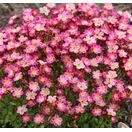
Saxifraga 'Pixie Rose' is a compact, ground-hugging perennial that produces a vivid flush of deep rose-pink flowers each spring. Belonging to the mossy saxifrage group (Saxifraga × arendsii), it forms a dense, low cushion of fresh green, finely divided foliage that stays attractive long after the blooms have faded.
Beloved by gardeners for its easy-going nature and reliable performance, 'Pixie Rose' thrives in cool, partially shaded spots — making it particularly well suited to the British climate. Whether tucked into a rockery, planted along the edge of a border, or spilling out of a container, it delivers a cheerful splash of colour at a time of year when the garden can still feel bare.
A perennial favourite for rockeries and alpine troughs — 'Pixie Rose' rewards minimal effort with a generous spring display that returns faithfully year after year.
Appearance & Flowers
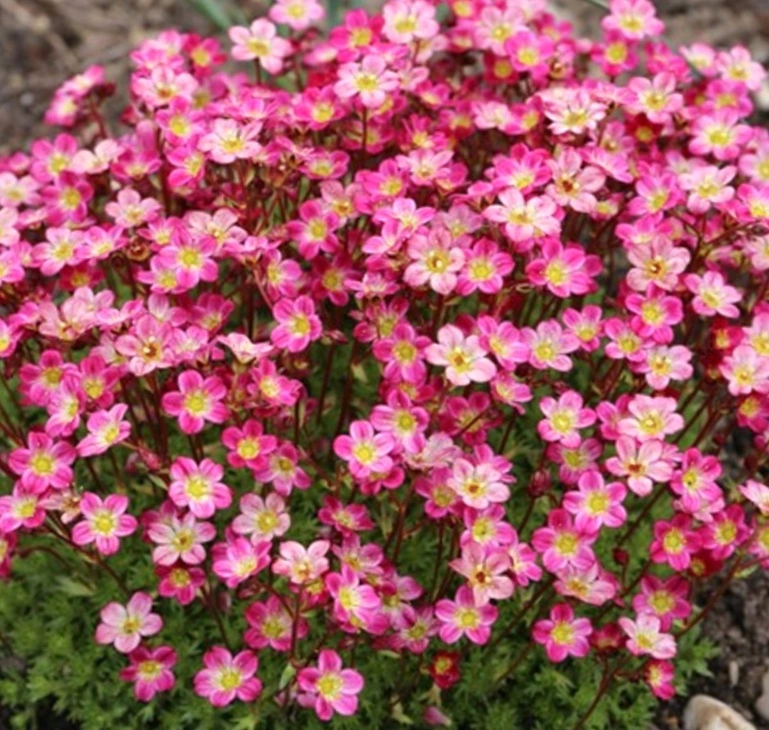
The flowers are a warm, clear rose-pink — deeper in colour than many saxifrages — with five rounded petals arranged in a classic, open cup shape. They are carried on slender, upright stems that rise just above the foliage, creating a delicate hovering effect when the plant is in full bloom. Each flower is small but produced in considerable numbers, so the overall display is impressively showy for such a petite plant.
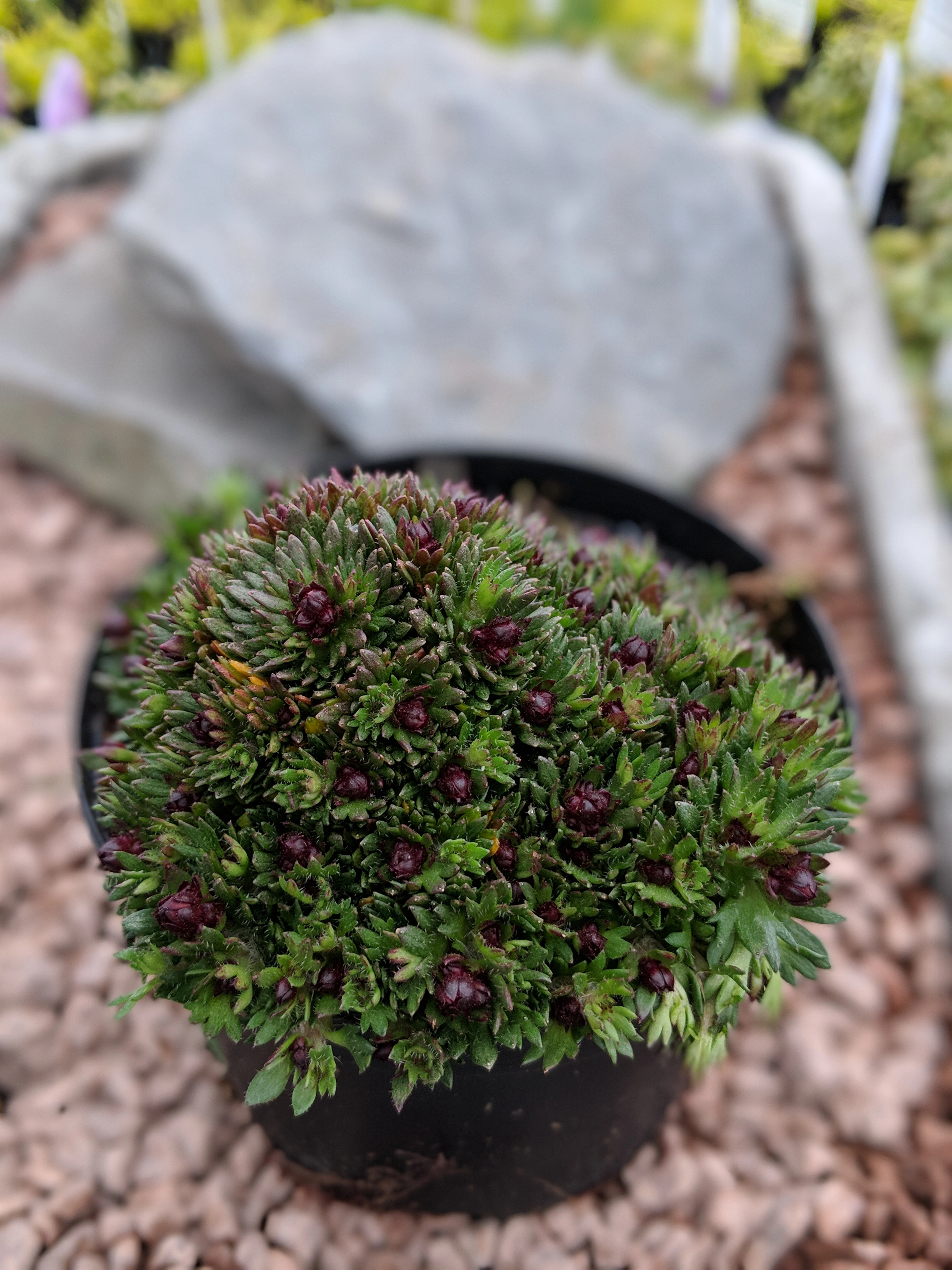
The foliage forms a neat, spreading cushion of bright green, moss-like leaves that are deeply lobed and slightly sticky to the touch. This evergreen mound remains tidy throughout the year, providing ground-level interest even in winter when most other plants have died back.
Growing Conditions
Mossy saxifrages such as 'Pixie Rose' perform best in a cool, lightly shaded position. In the UK, a spot that receives morning sun and afternoon shade — such as the north- or east-facing side of a wall or rockery — is ideal. Strong summer sun can scorch the foliage and cause it to dry out, so avoid south-facing positions with no shade relief.
- LightPartial shade to dappled sun
- SoilMoist, humus-rich, well-drained
- Soil pHNeutral to slightly alkaline
- WateringModerate; avoid waterlogging
- HardinessHardy to −15 °C (H5)
- OriginGarden hybrid (Europe)
Planting Guide
Plant 'Pixie Rose' in autumn or early spring for the best establishment. Space plants around 20–25 cm apart to allow them room to spread and form their characteristic cushions, whilst still achieving good coverage fairly quickly.
- Prepare the planting area by digging in grit and leaf mould to improve drainage and moisture retention simultaneously — saxifrages dislike both waterlogged and bone-dry conditions.
- Plant at the same depth as the original pot, ensuring the crown sits at soil level and is not buried.
- Water thoroughly after planting, then allow the soil surface to partially dry between waterings during the first growing season.
- In containers, use a John Innes No. 2 compost mixed with approximately one part horticultural grit to improve drainage. Ensure the pot has adequate drainage holes.
- Top-dress rockery plantings with a layer of fine gravel or stone chippings around the base of each plant to keep the crown dry and discourage slugs.
Care & Maintenance
'Pixie Rose' is refreshingly low-maintenance once established. Aside from occasional watering during prolonged dry spells, it requires very little attention to perform well.
- Deadheading:Remove spent flower stems once blooming has finished to keep the cushion looking tidy. This also directs the plant's energy back into the foliage.
- Feeding:An annual top-dressing of well-rotted garden compost or a light application of balanced granular fertiliser in early spring is all that is needed. Avoid high-nitrogen feeds, which promote leafy growth at the expense of flowers.
- Dividing:Every three to four years, clumps can become congested and bare in the centre. Lift and divide in early autumn, replanting healthy outer sections and discarding the old central growth. This rejuvenates the plant and keeps it vigorous.
- Pests:Generally trouble-free, though vine weevil larvae can occasionally damage roots in containers. Vine weevil biological controls applied in late summer are an effective preventative measure.
- Winter care:No special protection is required in most parts of the UK. The evergreen foliage may look a little dishevelled after a harsh frost, but it typically recovers well in spring.
Garden Uses
The compact, spreading habit of 'Pixie Rose' makes it remarkably versatile in the garden. Its natural home is the rockery or alpine garden, where it nestles between stones and softens hard edges with its cushiony growth. It is equally at home planted along the front of a shaded border, where it creates a low, weed-suppressing mat of attractive foliage.
In containers, troughs, and raised beds, 'Pixie Rose' is an excellent choice for adding early spring colour. It works beautifully paired with spring bulbs such as miniature narcissi and species tulips, which emerge through its foliage. Wall crevices and gaps in paving can also be planted up with 'Pixie Rose', as long as some moisture is retained at the roots.
Its modest size makes it particularly well suited to small gardens, courtyard gardens, and patio containers where space is limited but impact is desired.
Companion Plants
For a cohesive spring planting scheme, combine 'Pixie Rose' with the following plants, which share similar growing conditions and complement its rose-pink flowers:
Aubrieta deltoideaArabis alpinaAlyssum saxatilePrimula vulgarisMuscari armeniacumNarcissus 'Tête-à-tête'Pulsatilla vulgarisHelleborus nigerAjuga reptans
The silver foliage of low-growing sedums and the fine texture of alpine thyme also contrast beautifully with the emerald cushions of 'Pixie Rose' when plants are out of flower.
Buying Alpines from Jacksons Nurseries
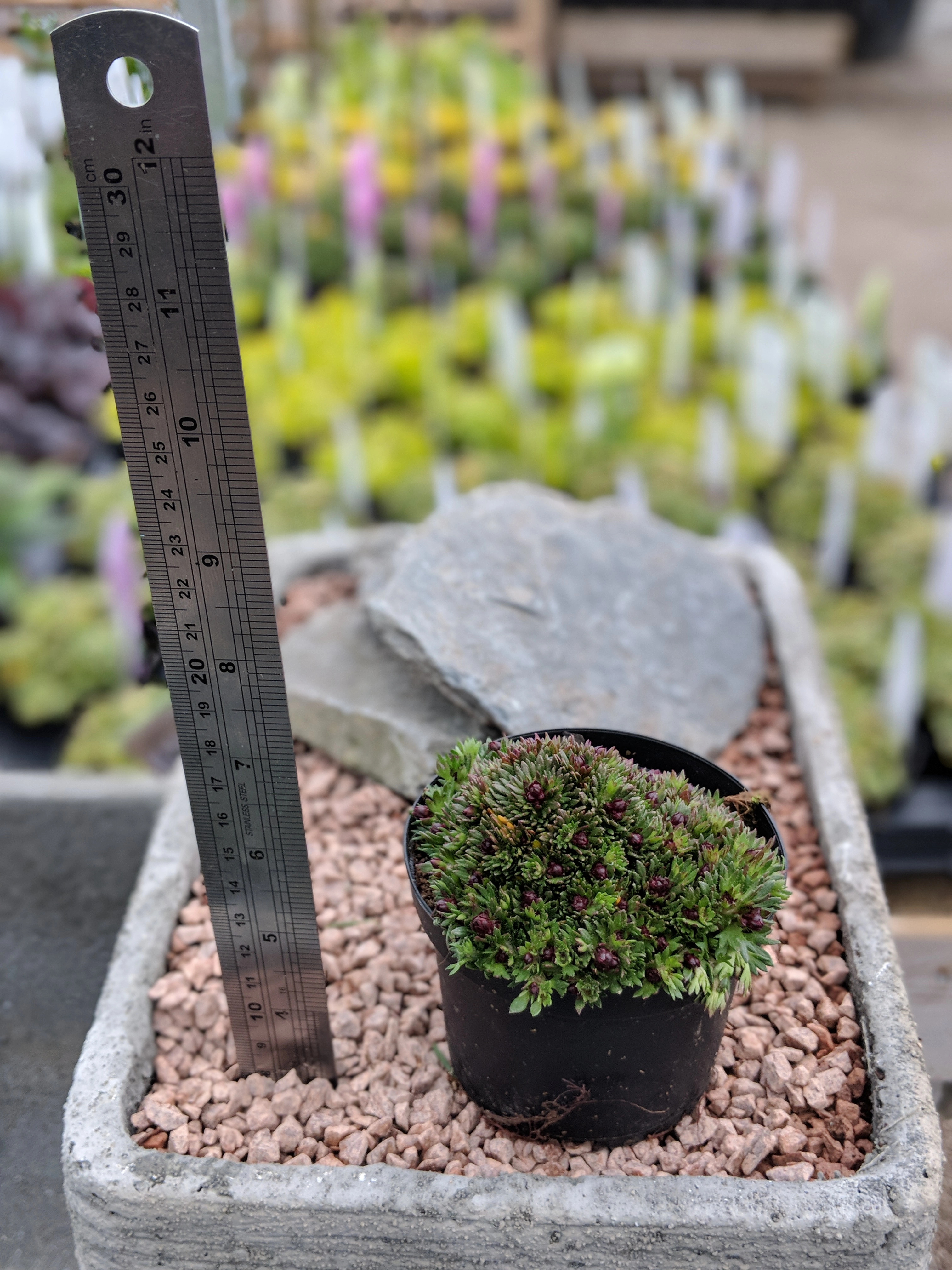
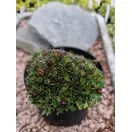
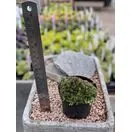
At Jacksons Nurseries we lightly trim back our alpines after flowering to ensure that the plants remain neat and tidy whilst in the pot. The more tender the plant the less we cut back to help protect exposed stems from winter frost. Depending on the plant variety we will then prune back further in spring once the risk of the more severe frosts is over.
As a result, depending on the time of year you buy alpines, they may not look like images showing their ‘prime time’ in flower and looking at their best.
Availability: Stock availability figures are provided as a guide only. There is a delay between orders being placed and the plants being gathered by our pulling team. During this time it may be possible for a member of the public to purchase these plants from our Garden Centre, while this is rare it is a possibility and we will notify you of any problems as soon as possible. This figure may also include plants that have not yet be flagged as unsaleable.
Pre-order: Pre-order times are given as a guide only and may vary dependent on the growing season. Orders containing Pre-ordered products will be shipped as a single order when all items become available. Large orders may be part shipped, please contact us on 01782 502741 or email
orders@jacksonsnurseries.co.uk.
From late autumn onwards and dependant on variety, there may be very little visible above the soil except for a few cut back dormant leaves or stems. It is perfectly normal for dormant plants to look like this from autumn onwards, they will however burst back into life in spring.
Alpines are a group of perennials that generally grow in rocky conditions at high altitudes.
As for all plants, soil preparation is time well spent. Dig over the area to be planted ensuring that the ground is free draining. If not then you may wish to either consider planting in a different spot or raising the level of the planting area by adding additional topsoil, well rotted garden compost and/or well rotted manure. Add ‘Fish, Blood and Bone’ fertiliser or a high potash fertiliser to encourage good root growth and development.
It’s always a good idea to plant a few of the same plant together, we recommend planting in 3’s or 5’s to provide a bold effect but allowing them plenty of room to develop.
By using this simple guide and a little time, alpines can make an absolutely spectacular difference to your garden.
No posts found
| Size | Availability | Price | ||
|---|---|---|---|---|

|
In stock
|
£5.99 |