







Rose Mundi - Shrub Rose
Rose Mundi (Rosa gallica 'Versicolor') is one of the most historic and instantly recognisable roses in cultivation, with a heritage stretching back to at least the sixteenth century. This captivating Gallica rose is celebrated for its extraordinary striped blooms that combine deep pink and white in a seemingly hand-painted pattern. Compact, hardy, and steeped in garden history, Rose Mundi offers everyday gardeners a touch of romance and tradition without demanding specialist care.
Appearance and Characteristics
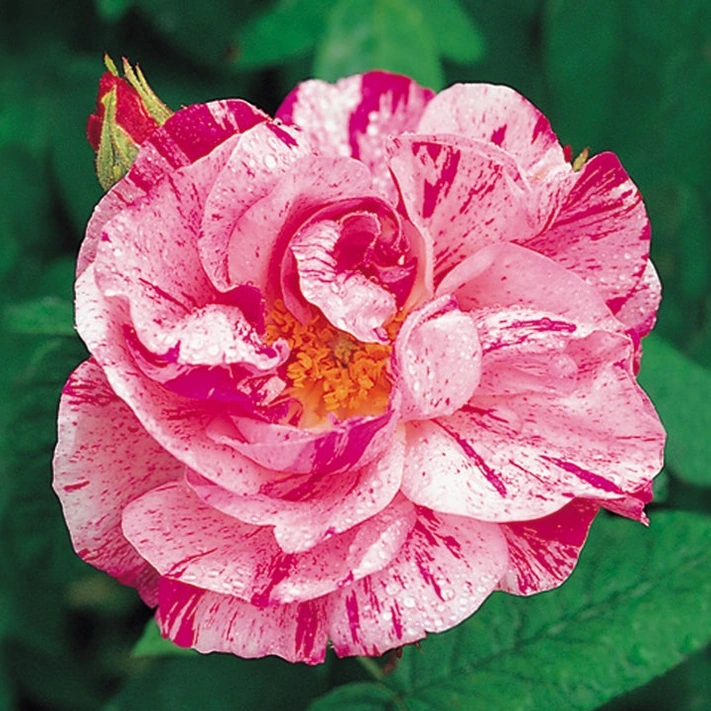
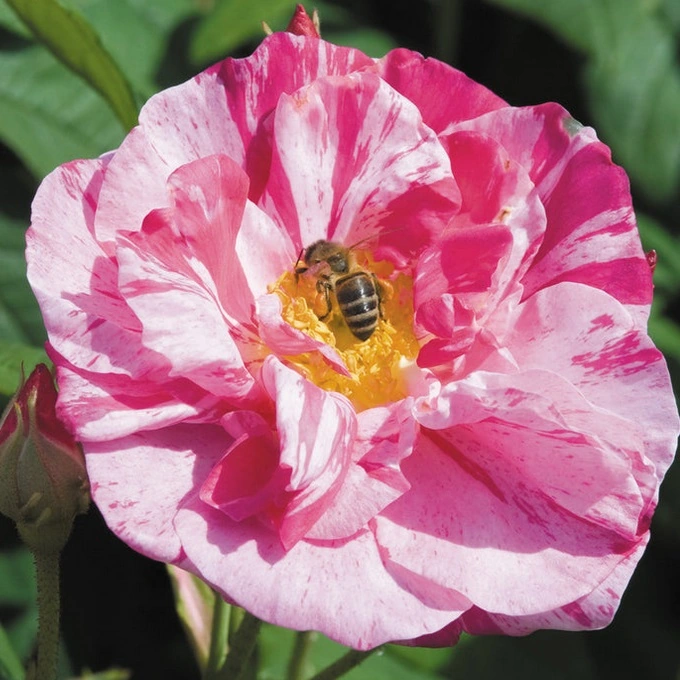
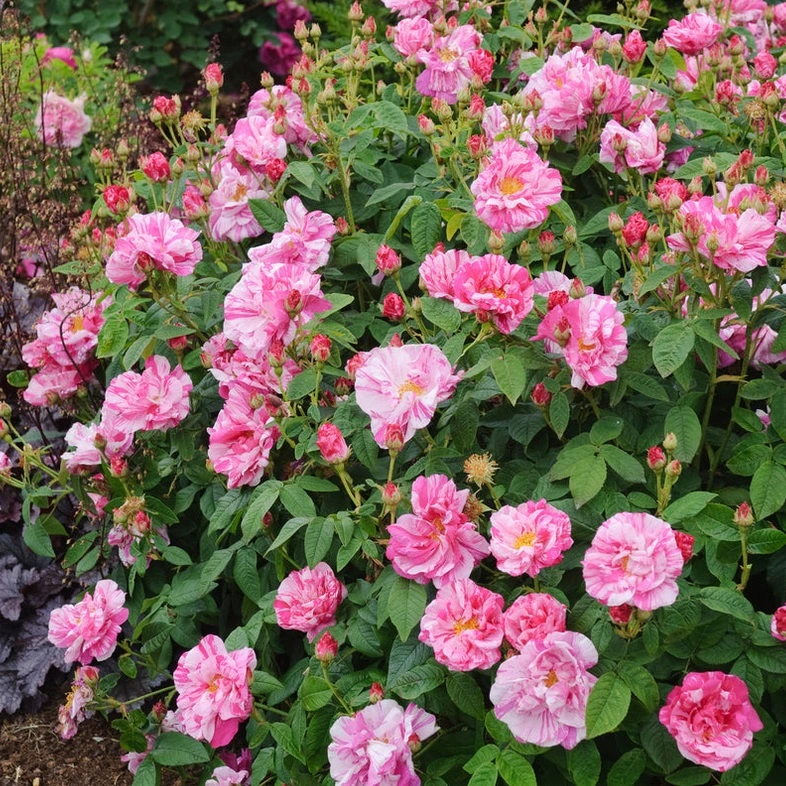
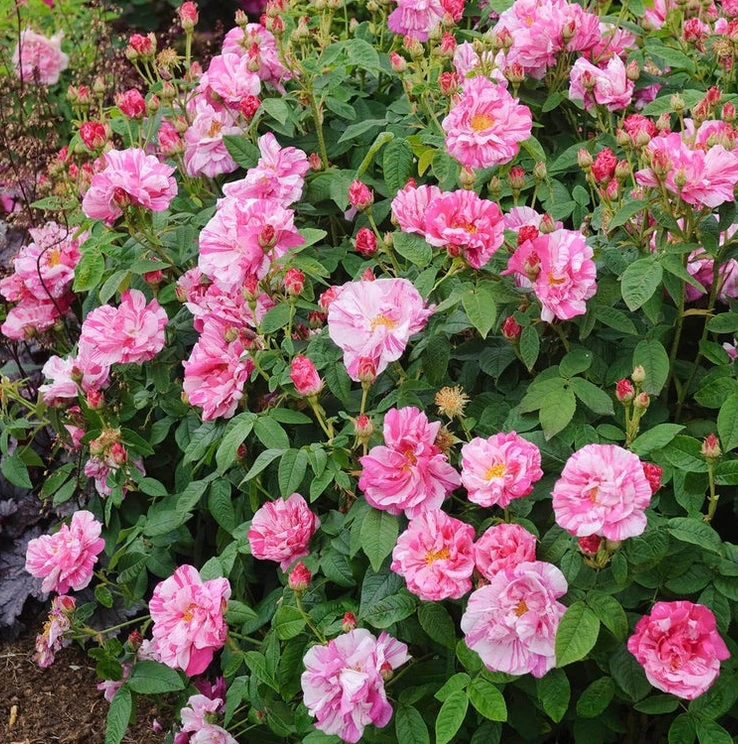
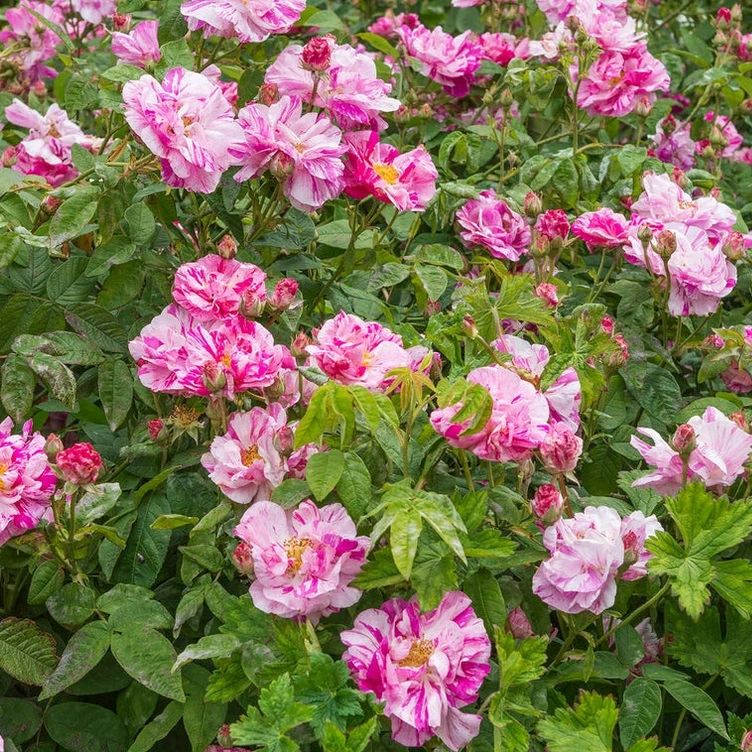
The flowers of Rose Mundi are nothing short of spectacular. Each semi-double bloom displays bold crimson-pink stripes and splashes on a pale pink to white background, with no two flowers exactly alike. This unique variegation creates an eye-catching display that appears almost too perfect to be natural. The blooms measure approximately 6-8 centimetres across and open flat to reveal golden stamens at the centre, presenting a classic old rose form.
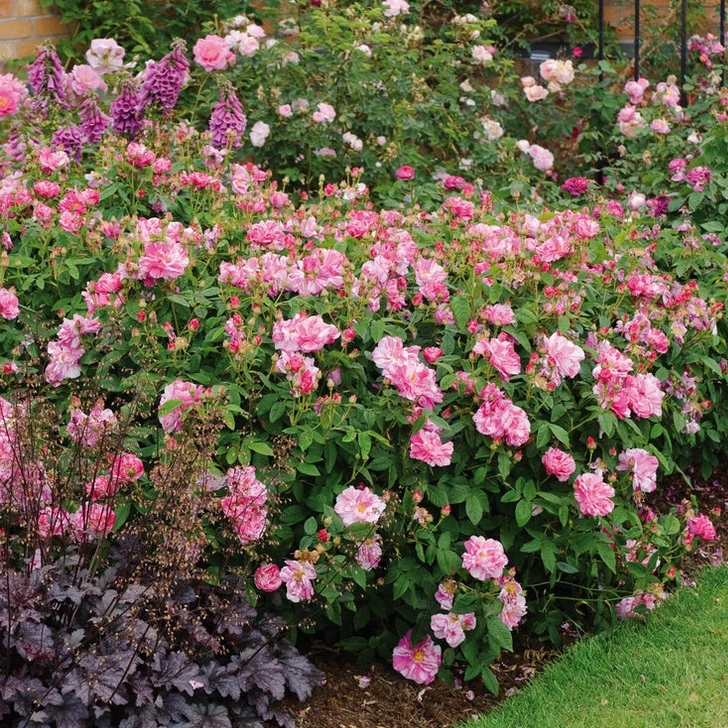
The foliage is matt mid-green with a slightly coarse texture—typical of Gallica roses—and provides a handsome backdrop to the flamboyant flowers. The plant forms a neat, bushy shrub with an upright to slightly spreading habit, typically reaching 90-120 centimetres in height with a similar spread. The stems carry few thorns compared to many roses, making handling and deadheading more pleasant.
Historical Significance
Rose Mundi holds the distinction of being one of the oldest striped roses still widely grown. Legend romantically attributes its name to Fair Rosamund, the mistress of King Henry II in the twelfth century, though the rose was actually recorded in the 1580s. It arose as a natural sport (mutation) of Rosa gallica officinalis, the ancient Apothecary's Rose. This rich heritage makes Rose Mundi a wonderful choice for period gardens, cottage gardens, or anywhere a sense of history is desired.
Flowering Performance
Rose Mundi is a once-flowering rose, producing its magnificent display in early to midsummer over approximately four to six weeks. During this period, the plant is absolutely smothered in blooms, creating one of the most lavish spectacles in the rose world. The sheer abundance of flowers more than compensates for the single flowering season.
The fragrance is gloriously rich and sweet with the classic damask rose scent—heady, intoxicating, and redolent of old-fashioned rose perfume. This powerful fragrance carries well on the air, making Rose Mundi ideal for planting near seating areas, doorways, or windows where the scent can be fully appreciated.
After flowering, the plant occasionally produces small, round hips, though these are not particularly ornamental. The foliage remains reasonably attractive through summer and autumn.
Growing Requirements
Light: Performs best in full sun but tolerates partial shade better than many roses. Requires at least 4-5 hours of direct sunlight for good flowering.
Soil: Adaptable to most soil types including heavy clay, which it tolerates particularly well. Prefers fertile, moisture-retentive soil but isn't overly demanding. Thrives in slightly alkaline to neutral conditions.
Water: Requires moderate watering, especially during establishment and dry spells. Once established, shows reasonable drought tolerance, though flowering benefits from consistent moisture.
Hardiness: Exceptionally hardy, tolerating temperatures well below -20°C (USDA Zone 4). One of the toughest roses available, suitable for cold, exposed gardens.
Care and Maintenance
Rose Mundi is remarkably resilient and low-maintenance, particularly when compared to modern hybrid roses. As a Gallica rose, it possesses natural vigour and disease resistance that makes it suitable for organic growing.
Disease Resistance: Shows good resistance to most rose diseases, though in humid conditions or very sheltered spots, it may occasionally develop mildew late in the season. Good air circulation helps prevent this, but overall, it's a healthy, robust rose.
Pruning: Prune immediately after flowering in midsummer rather than in spring. Remove dead or damaged wood and reduce stems by about one-third to maintain shape and encourage strong growth for next year's flowers. Gallica roses flower on the previous year's wood, so avoid heavy spring pruning which would sacrifice the flower display. Every few years, remove some of the oldest stems at ground level to rejuvenate the plant.
Feeding: Apply a balanced rose fertiliser or well-rotted manure in early spring. A light feed after flowering can help build strong growth for the following season.
Suckering: Rose Mundi can produce suckers from the roots, which will be identical to the parent plant (unlike grafted roses where suckers are undesirable). These can be left to form a spreading colony, or removed if a single specimen is preferred.
Garden Uses
The compact size and historical character of Rose Mundi make it incredibly versatile. It's perfect for cottage gardens where its old-fashioned charm feels entirely at home. The plant works beautifully in mixed borders, holding its own among herbaceous perennials, and the manageable height means it won't overshadow neighbouring plants.
Rose Mundi is excellent for creating low hedges or edging, particularly in formal or period gardens. Plant in groups of three or more for substantial impact, or use single specimens as focal points. The compact size also makes it suitable for larger containers, though ensure adequate watering if growing in pots.
This rose is ideal for historically-themed gardens including Tudor, medieval, or apothecary gardens, where its authenticated heritage adds authenticity.
Companion Planting
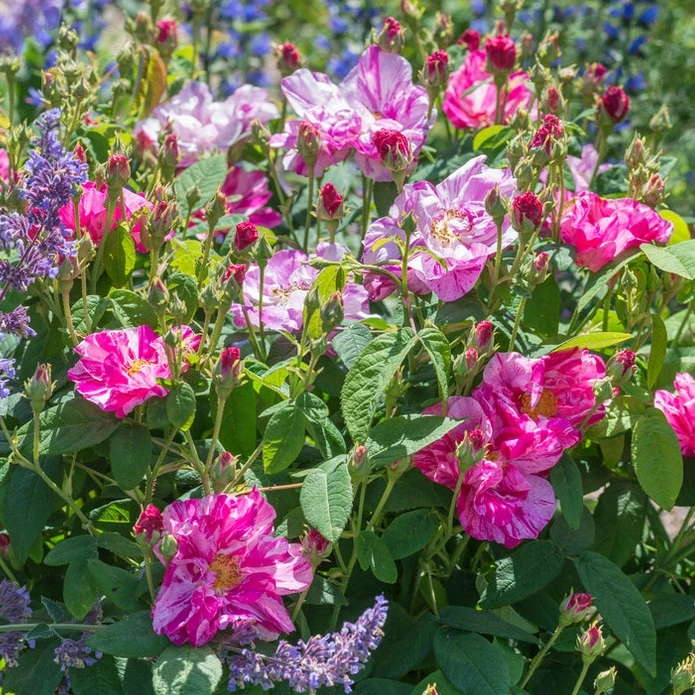
The bold striped flowers pair beautifully with soft blues and purples. Consider companions such as catmint, lavender, hardy geraniums in blue shades, or delphiniums. Silver-foliaged plants like artemisia or Stachys byzantina create elegant harmonies, whilst the chartreuse flowers of lady's mantle (Alchemilla mollis) provide a fresh contrast.
For extending the season, underplant with spring bulbs and combine with later-flowering perennials such as Japanese anemones or asters to provide interest after Rose Mundi's flowering period concludes.
Why Choose Rose Mundi?
Rose Mundi offers a combination of spectacular beauty, historical significance, and practical reliability that few roses can match. The unique striped blooms create an unforgettable display, whilst the compact habit suits gardens of all sizes. Its hardy constitution and minimal care requirements make it ideal for busy gardeners or those new to rose growing.
For the everyday gardener seeking a rose with character, fragrance, and proven performance across centuries, Rose Mundi is an outstanding choice. This is a rose that has delighted gardeners for over four hundred years—testament to its enduring appeal and garden-worthiness. Plant Rose Mundi and become part of a long tradition of gardeners who have treasured this remarkable striped beauty.
Reasons to Buy Roses from Jacksons Nurseries
(1) ‘Excellent’ on Trustpilot
Buy with confidence from the only online rose grower rated ‘Excellent’ 4.9* on Trustpilot. We have been a trusted supplier of roses for 3 generations. We take pride in growing our own roses in the field before potting them up, allowing for meticulous quality control to sale.

(2) Best Prices Guaranteed – Direct from the Grower
Save £££s by buying direct from a grower you can trust. We’ve already price checked all of our roses against competitors so you don’t have to. We are so confident we offer the best value, if you find a rose of the same type and grade elsewhere, we’ll beat it by 10%.

(3) 12 Month Plants Guarantee
We offer a 12 month guarantee on every plant that you buy from us that we have classified as Fully Hardy. If a plant you've bought from us fails in the first year, we will either replace it or refund you. See our satisfaction guarantee page for more details and conditions.

(4) Third generation family-owned nursery specialising in roses
Jackson’s Nurseries is a 3rd generation family owned business which has been growing roses for over 60 years. Roses have always been our specialty, as you can see from the colourful array of blooms in the background to the old family photo below. Today, we offer over 200 different varieties of floribundas, hybrid teas, patio, shrub and David Austin roses. Our roses are initially grown in the field before being potted up for website dispatch.

(5) Grown at altitude to produce strong, healthy plants
Our North Staffordshire nursery is situated at 250 metres above sea level, producing strong, hardy plants that will thrive in your garden. Our nursery sits on clay, so you can be sure our roses can handle heavy soil too.

(6) Help & Advice and Aftercare
We are help to help you with any help and advice you need in choosing, planting and growing your roses before, during and after your purchase from us. The help and advice section of our website has extensive information, see below some examples of articles you may find useful:
- Different types of roses and what they each mean
- Guide to climbing roses
- Guide to floribunda roses
- Guide to hybrid tea roses
- How to plant a climbing rose
- How to grow hybrid tea roses

How our roses are supplied through the seasons
All our roses are cultivated in an open field and are carefully dug up when the weather is optimal, typically in October or November. While other nurseries supply roses bare root, once our field-grown roses have been potted up we supply them freshly potted. This better protects the roots and helps keep them moist in transit, ensuring your roses arrive as healthy as when they left our nursery. So don’t be alarmed if the compost comes away from the roots when you remove them from the pot.

The roses can remain in their pots over the winter, as long as they are properly watered and fed, but it's best to plant them out as soon as possible. If you do plant them straight away make sure the planting mix is prepared first, hold the root close to the top of the hole as you tip the pot upside down and try to keep as much compost as possible from falling away. They will already be pruned, so no additional pruning is needed except for trimming any dead tips. Regular pruning can start in late winter, the year after planting.

Rose Types
Hybrid Tea Roses (HT)
Hybrid Tea roses are probably the most popular group of roses, available in both bush and standard form they have long flower stems and shapely blooms. Blooms are typically medium to large in size, with many petals which form a distinct central cone.
Floribunda Roses (FL)
Floribunda roses bears its flowers in clusters or trusses, with several blooms open at time in each truss. A popular choice the Floribunda rose group is unrivalled for colour, reliability and longevity as a bedding display however the flower form in generally inferior to the Hybrid Tea.
Patio Roses (PATIO)
Patio roses were introduced in the 1980’s and the group now contains several popular varieties. Generally low-growing roses that were once grouped with the Floribuna group but have now been put in their own group of compact versions. Usually growing about 50cm high they make excellent plants for patio containers or at the front of borders.
Climbing Roses (CLM)
Climbing roses as the name suggests are the perfect choice for covering a wall or screen. Often grouped together with Ramblers, Climbers tend to have stiffer stems, larger flowers but smaller trusses than Ramblers.
Rambling Roses (RAM)
Rambling roses are often grouped with Climbing Roses but the ramblers tend to have a more pliable stems that can be used to run along the soil to use as groundcover or can be used to make weeping standards.
Miniature Roses (MINI)
Miniature roses have increased in popularity in recent years due to their versatility, even grown indoors as temporary pot plants that grow to a maximum height of 40cm. An ideal choice for planting in tubs, edging beds and rockeries.
English Roses (ENG)
Often referred to as Austin or David Austin Roses, English roses are hybrids of old English roses and more modern varieties bread by David Austin to provide the best of both, mixing old rose shapes and scents with more modern colour range, compact habits and repeat flowering.

Planting Advice
Roses like a generous root space, so dig a deep hole approximately twice as wide as the current root system, preferably adding composted organic matter to the soil. Never plant into frozen soil – in winter, await a frost-free period. Carefully remove the pot and gently tease the roots apart to spread them around the hole. Position the plant so that the ‘bud point’ (the place where the shoots emerge from, where the cultivated rose was grafted onto the rootstock) is at soil level. Replace the soil, firming it down gently, then water copiously. Ideally, a general purpose fertiliser should be applied to the surrounding soil as a top dressing. We also highly recommend the use of Rose Rootgrow, which provides a friendly fungus that prevents ‘rose replant syndrome’.

Buying our Roses
Pot Size
Most of our roses are supplied in a 4 litre pot although this may vary slightly depending on rose variety. If the size of pot differes significatly from 4 litres then we will make this clear somewhere on the product page.
Seasonality
Our roses are grown outdoors and as such are subject to seasonal changes. As we sell potted stock throughout the year your rose may not arrive and look like you expect it to. If you are uncertain how your rose will arrive (especially if buying for a gift) then we suggest you contact us prior to making a purchase.
Freshly Potted
Each year a new batch of roses is potted up ready for the following season. Once potted (usually November/December time) they go on sale as 'Freshly Potted'. If you purchase a freshly potted rose and plant it soon after you will find that when removing the rose from the pot there will be a lot of loose soil as the roots will not have had time to grow and bind the compost.

Pruned/Cut Back
In autumn the majority of our roses have finished flowering and begin to look untidy, at this point we prune them quite hard in preparation for the following season. We continue to sell roses throughout the year, when a rose has been pruned in such a way we will identify it has being so. If you are not sure what to expect then please ask prior to making a purchase. Some garden centres/supermarkets sell stock that has been grown abroad or in poly-tunnels so they look 'picture perfect' out of season, while this is ideal for a gift they are short lived once planted.
Aftercare

No posts found
| Size | Availability | Price | ||
|---|---|---|---|---|

|
In stock
|
£9.79 |