
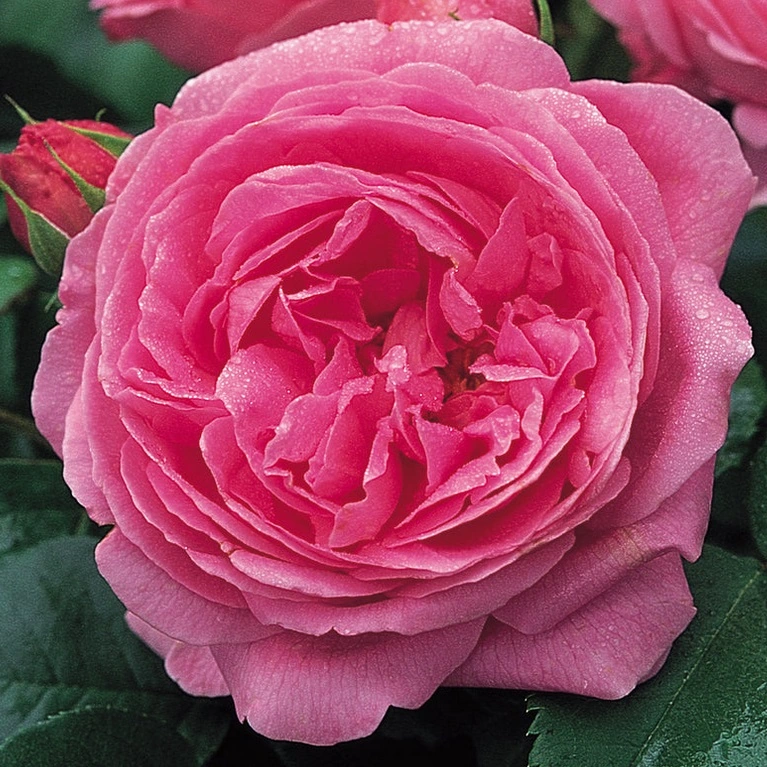
Rose 'Louise Odier' - Shrub Rose
Rose 'Louise Odier' is an exquisite Bourbon rose introduced in France in 1851, and it remains one of the most beloved and reliable old roses nearly two centuries later. This enchanting shrub rose produces perfectly formed, camellia-like blooms in the most beautiful shade of warm pink, combined with an intoxicating fragrance that perfumes the entire garden. Renowned for its exceptional repeat-flowering performance, elegant growth habit, and relatively easy-going nature, 'Louise Odier' offers everyday gardeners the romance and charm of a historic rose without the temperamental behaviour that can challenge some heritage varieties. It's a true garden treasure that combines timeless beauty with practical reliability.
Flower Characteristics
The blooms of 'Louise Odier' are utterly exquisite and display the classic old rose form at its finest. Each flower measures 8-10 cm across and exhibits a perfectly cupped shape with numerous petals (60-70) arranged in a precise, symmetrical pattern that's often compared to a camellia. The petals are beautifully reflexed at the edges, creating an almost architectural quality. The colour is enchanting—a warm, rich pink that can appear anywhere from rose-pink to lilac-pink depending on weather conditions and soil, with deeper tones towards the centre and paler edges. The colour intensifies in cooler weather and softens in heat.
The flowers are produced both singly and in small clusters of 3-5 blooms on strong stems. They open from perfectly formed, rounded buds and hold their shape beautifully throughout their life. The fragrance is outstanding—rich, sweet, and intensely perfumed with classic damask rose notes and hints of lemon. The scent is strong enough to fill the garden on still days and is particularly noticeable in the morning and evening. These romantic blooms are exceptional for cutting and last well in water, bringing both beauty and fragrance indoors.
Flowering Period
'Louise Odier' is one of the most reliable repeat-flowering old roses you can grow—a quality that makes it far more garden-worthy than many once-flowering heritage varieties. The first magnificent flush appears in June and is spectacular, covering the plant in perfectly formed blooms. After a relatively brief pause, the rose continues to produce flowers steadily throughout summer, often building to another generous display in autumn that can rival the spring performance. In mild conditions, blooms may continue into November. Regular deadheading of spent flowers significantly encourages continuous flowering and helps maintain the plant's neat appearance throughout the season.
Growth Habit and Size
'Louise Odier' forms an upright, vigorous shrub with slightly arching stems that typically reaches 1.5-1.8 metres in height with a spread of approximately 1.2 metres. The growth habit is pleasingly vertical without being stiff, and the stems are strong enough to support the abundant flowers without flopping—a real advantage over some old roses. In favourable conditions or with support, 'Louise Odier' can be grown as a short climber, reaching 2.5-3 metres on a wall, pillar, or pergola.
The foliage is attractive and plentiful—smooth, medium green leaves with a slightly matte finish that create a perfect backdrop for the warm pink flowers. The plant maintains good leaf coverage and an attractive shape throughout the growing season, looking handsome even between flowering flushes. The stems are moderately thorny.
Hardiness and Climate Suitability
This rose is fully hardy throughout the UK and similar temperate climates, reliably tolerating winter temperatures down to -20°C (USDA Zone 5). 'Louise Odier' performs exceptionally well in British conditions, thriving in the cool, temperate climate. It shows good tolerance of varied weather conditions and adapts well to different regions, from northern Scotland to southern England. The Bourbon rose heritage gives it robust constitution and the ability to flourish in real garden conditions rather than only in perfect situations.
Ideal Growing Conditions
Sunlight: 'Louise Odier' flowers most abundantly in full sun—at least six hours of direct sunlight daily. However, it's more shade-tolerant than many roses and will perform creditably with 4-5 hours of sun, making it useful for gardens with less than ideal light. Some afternoon shade in very hot climates can actually help preserve the beautiful pink colouring.
Soil: This rose prefers rich, fertile, moisture-retentive soil with good drainage. Bourbon roses appreciate generous feeding and good soil, so it's worth preparing the planting area well. Improve heavy clay soils with organic matter and grit to enhance drainage, whilst lighter sandy soils benefit from generous additions of compost or well-rotted manure to increase water retention and fertility. Aim for a slightly acidic to neutral pH (6.0-7.0).
Water: Maintain consistent soil moisture, particularly during establishment and dry periods. 'Louise Odier' appreciates regular watering during summer to support its generous flowering. Water deeply at the base of the plant rather than overhead to minimise disease risk and prevent damage to the delicate flowers.
Spacing: Allow 1.2-1.5 metres between plants to accommodate the mature spread and ensure good air circulation, which is important for maintaining plant health.
Planting and Care
Planting: The optimal planting time for bare-root roses is during the dormant season from November through March, though container-grown plants can be planted at any time if kept well watered. Dig a generous hole approximately 45-60 cm wide and deep, and incorporate plenty of well-rotted organic matter—Bourbon roses reward good preparation. Position the graft union just below the soil surface. If planning to train as a climber, plant 30-40 cm away from walls or fences to allow air circulation.
Feeding: 'Louise Odier' appreciates generous feeding to support its prolific flowering. Apply a balanced rose fertiliser or general-purpose fertiliser in early spring as growth begins, then feed again after the first flush of flowers to encourage continued blooming. A third light feed in mid-summer can be beneficial. Apply a generous spring mulch of well-rotted manure or garden compost, which provides slow-release nutrients whilst improving soil structure and moisture retention.
Pruning: Prune in late winter or early spring (February-March) whilst the plant is dormant. Remove any dead, diseased, damaged, or weak stems, then reduce the remaining healthy growth by approximately one-third to one-half, cutting to outward-facing buds. This encourages an open, balanced structure with good air circulation. For growing as a climber, prune less severely—simply remove dead wood and thin congested growth, then tie in long shoots to supports. Regular deadheading throughout the growing season—cutting back to the first set of healthy leaves below the spent bloom—significantly promotes continuous flowering.
Mulching: Apply a 5-7 cm layer of organic mulch each spring, keeping it clear of the base of the stems to prevent collar rot. Mulch helps conserve moisture, suppresses weeds, moderates soil temperature, and gradually improves soil fertility.
Disease Resistance
'Louise Odier' has moderate disease resistance, which is typical for Bourbon roses. It can be susceptible to blackspot and powdery mildew, particularly in humid conditions, during wet seasons, or if planted in areas with poor air circulation. However, many gardeners find that with good cultural practices, disease issues remain manageable and don't significantly impact the rose's performance or beauty. Preventative measures make a real difference: ensure adequate spacing for good air flow, remove and dispose of fallen leaves (especially in autumn), avoid overhead watering, and maintain plant vigour through appropriate feeding and watering. In areas prone to disease or during particularly wet seasons, preventative spraying with an organic or conventional fungicide may be worthwhile. Despite these considerations, the spectacular flowers and excellent repeat-flowering make any minor disease management well worth the effort.
Garden Uses
This elegant rose excels in various garden situations:
-
Mixed borders: The upright habit and warm pink blooms combine beautifully with perennials and other shrubs
-
Cottage gardens: The romantic, old-fashioned flowers suit informal, relaxed planting schemes perfectly
-
Formal gardens: The neat habit and refined flowers work well in structured designs
-
Rose borders: Makes an excellent companion to other old roses and harmonises with modern varieties
-
Small climbers: Can be trained on pillars, obelisks, tripods, or against walls with support
-
Foundation plantings: Excellent near house walls, pathways, or seating areas where the fragrance can be appreciated
-
Cutting gardens: The perfectly formed, fragrant blooms are exceptional for flower arrangements
-
Scent gardens: Essential for fragrance-focused plantings—the perfume is outstanding
-
Courtyard gardens: The upright habit suits more confined spaces
-
Traditional gardens: The historic pedigree and classic form suit period properties and formal layouts
Companion Planting
'Louise Odier' pairs beautifully with:
-
Purple and blue flowers such as lavender, catmint (Nepeta), hardy geraniums, or salvias for classic colour harmony
-
Silver foliage plants like artemisia, santolina, or lamb's ears (Stachys byzantina) to enhance the warm pink tones
-
White flowers such as white roses, white Japanese anemones, or Shasta daisies for elegant contrast
-
Deep purple foliage like purple sage (Salvia officinalis 'Purpurascens') or Heuchera 'Palace Purple' for dramatic effect
-
Clematis viticella varieties in complementary colours to scramble through the rose
-
Delphiniums in blue or purple shades for spectacular early summer contrast
-
Penstemon in pink or purple tones for continuous colour
-
Lady's mantle (Alchemilla mollis) to soften the base and pick up the lime-green tones in the foliage
-
Phlox paniculata in harmonising pink or white shades for summer continuity
-
Ornamental grasses for textural contrast and movement
Why Choose 'Louise Odier'?
'Louise Odier' offers everyday gardeners one of the most beautiful combinations of form, colour, and fragrance available in any rose. The perfectly symmetrical, camellia-like blooms are genuinely stunning—the kind of flowers that make people stop in their tracks and ask what rose it is. Each bloom is a little work of art, displaying the precision and beauty that old rose breeders achieved at their best. The warm, rich pink colouring is sophisticated and versatile, working beautifully in virtually any colour scheme without ever looking garish or overwhelming.
The outstanding fragrance is reason enough to grow this rose—on warm summer evenings, a single plant can perfume an entire seating area or patio with its rich, romantic scent. Plant it near doorways, windows, pathways, or garden seats where you can fully appreciate the intoxicating perfume.
The excellent repeat-flowering is what truly sets 'Louise Odier' apart from many other old roses. Whilst numerous heritage varieties bloom briefly then rest on their laurels, 'Louise Odier' keeps producing its exquisite flowers from June through to autumn, giving you months of beauty and fragrance rather than a brief display. This reliable performance makes it far more valuable in the garden than once-flowering varieties, however beautiful their single flush might be.
The upright, manageable habit is another practical advantage. Unlike some old roses that sprawl untidily or need extensive support, 'Louise Odier' grows in a neat, vertical manner that fits well into borders without taking over. The strong stems hold the flowers upright for viewing rather than hiding them face-down amongst the foliage. The versatility to grow it as either a shrub or a short climber adds to its usefulness.
Whether you're creating a cottage garden and want quintessential old rose beauty, planning a formal garden and need refined elegance, seeking a fragrant rose for near seating areas, wanting reliable repeat-flowering from a heritage variety, looking for a beautiful climber for a pillar or wall, or simply desiring one of the most perfectly formed roses in cultivation, 'Louise Odier' is an outstanding choice. It's a rose that delivers everything lovers of old roses treasure—romantic form, rich colour, intoxicating fragrance, and historic charm—combined with the practical virtues of repeat-flowering and manageable growth that modern gardeners need. With appropriate care and regular deadheading, this distinguished Bourbon rose will reward you with armfuls of exquisite, fragrant blooms for many years to come. It's a true classic that fully deserves its enduring popularity.
Reasons to Buy Roses from Jacksons Nurseries
(1) ‘Excellent’ on Trustpilot
Buy with confidence from the only online rose grower rated ‘Excellent’ 4.9* on Trustpilot. We have been a trusted supplier of roses for 3 generations. We take pride in growing our own roses in the field before potting them up, allowing for meticulous quality control to sale.

(2) Best Prices Guaranteed – Direct from the Grower
Save £££s by buying direct from a grower you can trust. We’ve already price checked all of our roses against competitors so you don’t have to. We are so confident we offer the best value, if you find a rose of the same type and grade elsewhere, we’ll beat it by 10%.

(3) 12 Month Plants Guarantee
We offer a 12 month guarantee on every plant that you buy from us that we have classified as Fully Hardy. If a plant you've bought from us fails in the first year, we will either replace it or refund you. See our satisfaction guarantee page for more details and conditions.

(4) Third generation family-owned nursery specialising in roses
Jackson’s Nurseries is a 3rd generation family owned business which has been growing roses for over 60 years. Roses have always been our specialty, as you can see from the colourful array of blooms in the background to the old family photo below. Today, we offer over 200 different varieties of floribundas, hybrid teas, patio, shrub and David Austin roses. Our roses are initially grown in the field before being potted up for website dispatch.

(5) Grown at altitude to produce strong, healthy plants
Our North Staffordshire nursery is situated at 250 metres above sea level, producing strong, hardy plants that will thrive in your garden. Our nursery sits on clay, so you can be sure our roses can handle heavy soil too.

(6) Help & Advice and Aftercare
We are help to help you with any help and advice you need in choosing, planting and growing your roses before, during and after your purchase from us. The help and advice section of our website has extensive information, see below some examples of articles you may find useful:
- Different types of roses and what they each mean
- Guide to climbing roses
- Guide to floribunda roses
- Guide to hybrid tea roses
- How to plant a climbing rose
- How to grow hybrid tea roses

How our roses are supplied through the seasons
All our roses are cultivated in an open field and are carefully dug up when the weather is optimal, typically in October or November. While other nurseries supply roses bare root, once our field-grown roses have been potted up we supply them freshly potted. This better protects the roots and helps keep them moist in transit, ensuring your roses arrive as healthy as when they left our nursery. So don’t be alarmed if the compost comes away from the roots when you remove them from the pot.

The roses can remain in their pots over the winter, as long as they are properly watered and fed, but it's best to plant them out as soon as possible. If you do plant them straight away make sure the planting mix is prepared first, hold the root close to the top of the hole as you tip the pot upside down and try to keep as much compost as possible from falling away. They will already be pruned, so no additional pruning is needed except for trimming any dead tips. Regular pruning can start in late winter, the year after planting.

Rose Types
Hybrid Tea Roses (HT)
Hybrid Tea roses are probably the most popular group of roses, available in both bush and standard form they have long flower stems and shapely blooms. Blooms are typically medium to large in size, with many petals which form a distinct central cone.
Floribunda Roses (FL)
Floribunda roses bears its flowers in clusters or trusses, with several blooms open at time in each truss. A popular choice the Floribunda rose group is unrivalled for colour, reliability and longevity as a bedding display however the flower form in generally inferior to the Hybrid Tea.
Patio Roses (PATIO)
Patio roses were introduced in the 1980’s and the group now contains several popular varieties. Generally low-growing roses that were once grouped with the Floribuna group but have now been put in their own group of compact versions. Usually growing about 50cm high they make excellent plants for patio containers or at the front of borders.
Climbing Roses (CLM)
Climbing roses as the name suggests are the perfect choice for covering a wall or screen. Often grouped together with Ramblers, Climbers tend to have stiffer stems, larger flowers but smaller trusses than Ramblers.
Rambling Roses (RAM)
Rambling roses are often grouped with Climbing Roses but the ramblers tend to have a more pliable stems that can be used to run along the soil to use as groundcover or can be used to make weeping standards.
Miniature Roses (MINI)
Miniature roses have increased in popularity in recent years due to their versatility, even grown indoors as temporary pot plants that grow to a maximum height of 40cm. An ideal choice for planting in tubs, edging beds and rockeries.
English Roses (ENG)
Often referred to as Austin or David Austin Roses, English roses are hybrids of old English roses and more modern varieties bread by David Austin to provide the best of both, mixing old rose shapes and scents with more modern colour range, compact habits and repeat flowering.

Planting Advice
Roses like a generous root space, so dig a deep hole approximately twice as wide as the current root system, preferably adding composted organic matter to the soil. Never plant into frozen soil – in winter, await a frost-free period. Carefully remove the pot and gently tease the roots apart to spread them around the hole. Position the plant so that the ‘bud point’ (the place where the shoots emerge from, where the cultivated rose was grafted onto the rootstock) is at soil level. Replace the soil, firming it down gently, then water copiously. Ideally, a general purpose fertiliser should be applied to the surrounding soil as a top dressing. We also highly recommend the use of Rose Rootgrow, which provides a friendly fungus that prevents ‘rose replant syndrome’.

Buying our Roses
Pot Size
Most of our roses are supplied in a 4 litre pot although this may vary slightly depending on rose variety. If the size of pot differes significatly from 4 litres then we will make this clear somewhere on the product page.
Seasonality
Our roses are grown outdoors and as such are subject to seasonal changes. As we sell potted stock throughout the year your rose may not arrive and look like you expect it to. If you are uncertain how your rose will arrive (especially if buying for a gift) then we suggest you contact us prior to making a purchase.
Freshly Potted
Each year a new batch of roses is potted up ready for the following season. Once potted (usually November/December time) they go on sale as 'Freshly Potted'. If you purchase a freshly potted rose and plant it soon after you will find that when removing the rose from the pot there will be a lot of loose soil as the roots will not have had time to grow and bind the compost.

Pruned/Cut Back
In autumn the majority of our roses have finished flowering and begin to look untidy, at this point we prune them quite hard in preparation for the following season. We continue to sell roses throughout the year, when a rose has been pruned in such a way we will identify it has being so. If you are not sure what to expect then please ask prior to making a purchase. Some garden centres/supermarkets sell stock that has been grown abroad or in poly-tunnels so they look 'picture perfect' out of season, while this is ideal for a gift they are short lived once planted.
Aftercare

No posts found
| Size | Availability | Price | ||
|---|---|---|---|---|

|
In stock
|
£9.79 |