
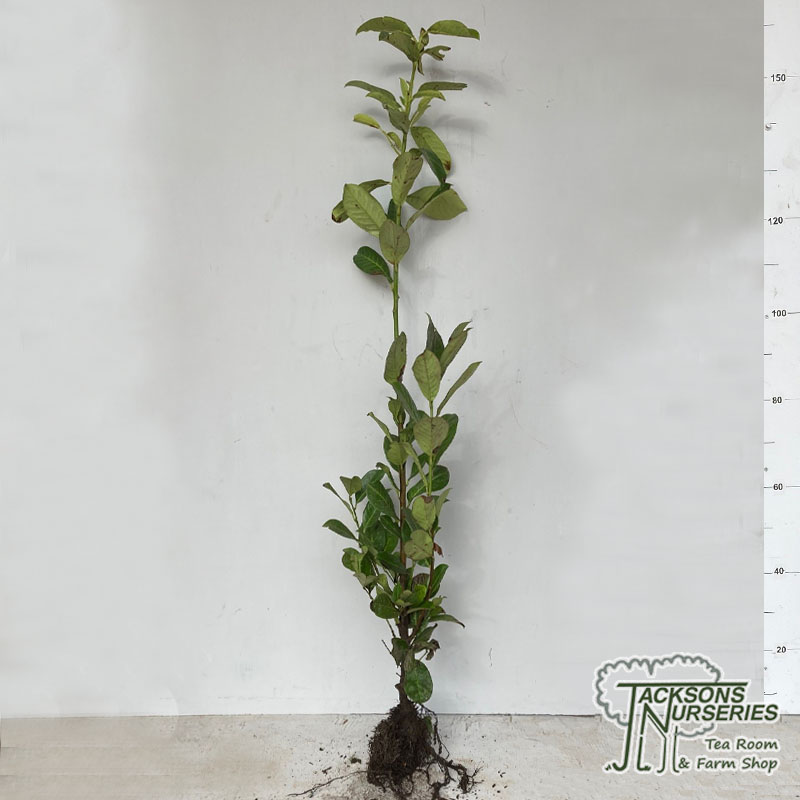
Buy Prunus laurocerasus 'Rotundifolia' Bare Root

Cherry Laurel (Prunus Rotundifolia) Bare Root/Root Ball

Cherry laurel

Available potted
(All year round)

click here

£3.80
12329
177 item(s)
+
Save with quantity discounts
(Discounted price will be reflected on checkout):
Quantity 25+ 50+ 100+ 250+
Price £3.42 £3.08 £2.77 £2.50

Minimum quantity for "Cherry Laurel (Prunus Rotundifolia) Bare Root/Root Ball" is 10.

Wishlist

At a Glance

Cherry Laurel Bare Root and Rootballed (Prunus laurocerasus 'Rotundifolia')

Prunus laurocerasus 'Rotundifolia', commonly known as Round-Leaved Cherry Laurel or simply Cherry Laurel, is Britain's most popular and widely planted evergreen hedging shrub, and for excellent reasons. This vigorous, reliable variety combines fast growth with exceptionally large, glossy leaves, creating dense, luxuriant hedges that provide year-round privacy, structure, and verdant beauty. With its remarkable tolerance of shade, pollution, poor soil, and challenging conditions, combined with rapid establishment and minimal fuss, 'Rotundifolia' has been the go-to choice for generations of British gardeners seeking robust, attractive evergreen screening. These bare root plants establish quickly when planted during the dormant season, offering outstanding value for gardeners needing to create substantial hedges, screens, or windbreaks that deliver impressive results within just a few years whilst requiring relatively little maintenance once established.


Key Features

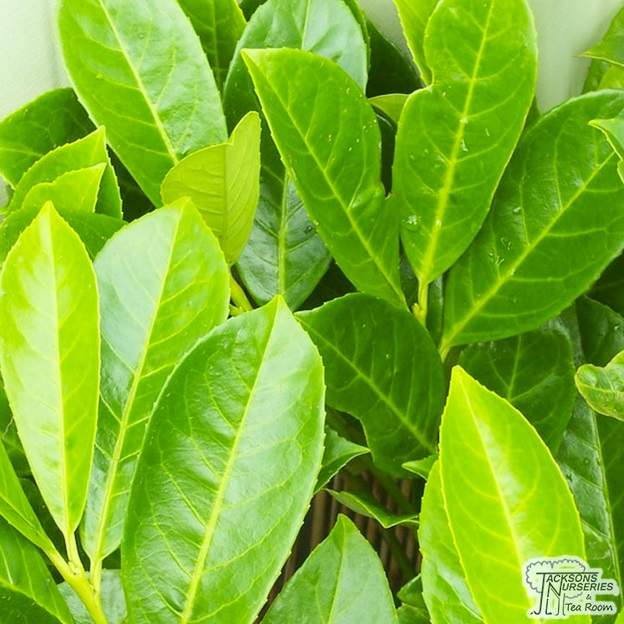
'Rotundifolia' produces some of the largest and most impressive leaves of any laurel variety. The leaves are broadly oval to rounded (hence the name), typically measuring 15-25 cm long and 8-12 cm wide – significantly larger than common cherry laurel. This substantial foliage creates a bold, luxuriant appearance that looks lush and well-established even on relatively young plants.

The leaves are thick, leathery, and exceptionally glossy with a rich, deep dark green colour that appears almost polished, creating an attractive light-reflecting quality that brightens gardens and adds sophistication to plantings. The large leaf size means hedges look particularly dense and solid, with fewer gaps between leaves than finer-foliaged alternatives. The foliage is evergreen, providing constant coverage, privacy, and structure throughout the year, including during winter when gardens desperately need greenery and form.

In spring (April-May), the plant produces upright spikes of small, creamy-white flowers that emerge from the leaf axils. These flower racemes are typically 10-12 cm long, lightly fragrant, and attractive to bees and other early pollinators. However, regular hedge trimming usually prevents flowering, and 'Rotundifolia' is primarily grown for its magnificent foliage rather than flowers. If flowers are allowed to develop and are successfully pollinated, clusters of small black cherry-like fruits appear in late summer, though these too are usually prevented by trimming.

The growth habit is vigorous, upright, and naturally dense with strong, sturdy branching. 'Rotundifolia' is one of the fastest-growing laurel varieties, typically achieving 40-60 cm of growth per year in good conditions – faster than common laurel (30-40 cm) but slightly slower than the exceptionally vigorous 'Novita' (50-75 cm). This fast growth means hedges establish rapidly and reach useful screening heights within 3-4 years rather than 5-7 years for slower alternatives.

At maturity, 'Rotundifolia' typically reaches 4-6 metres in height if left untrimmed, though it's easily maintained at any desired height from 1.5 metres upwards through regular pruning. The spread is usually 2.5-3 metres, though again this is easily controlled. The plant naturally produces dense growth from ground level upwards, creating solid, gap-free hedges that provide complete privacy and excellent screening.

'Rotundifolia' has been a garden favourite for over a century and remains the standard against which other laurel varieties are judged – a testament to its reliability, vigour, and exceptional garden performance.


Growing Conditions

Prunus laurocerasus 'Rotundifolia' is exceptionally adaptable and will thrive in virtually any reasonably well-drained soil. It grows successfully in clay, loam, sandy, chalky, and even quite poor soils, and tolerates both acidic and alkaline conditions (pH 4.5-8.5). The plant isn't particularly demanding regarding soil fertility and will perform adequately even in impoverished ground, though the impressive growth rate is naturally maximized in reasonably fertile soil with adequate moisture.

Good drainage is beneficial but the plant is remarkably forgiving – it tolerates brief waterlogging without problems and also has excellent drought tolerance once established. This exceptional adaptability makes it suitable for an enormous range of garden situations from heavy clay to free-draining sandy soils.

One of 'Rotundifolia's greatest assets is its outstanding shade tolerance. The plant thrives in full sun, partial shade, or even quite deep shade, making it invaluable for difficult, shady positions beneath trees, on the north side of buildings, in courtyards, or along shady boundaries where many hedging plants would struggle or fail completely. The large, glossy leaves look impressive in both sun and shade, though growth is naturally most vigorous in sun or light shade. This shade tolerance is one of the key reasons cherry laurel has become so ubiquitous in British gardens.

The shrub is fully hardy throughout most of the UK (USDA zones 6-9) and tolerates temperatures down to approximately -15°C without significant damage, though severe winters may cause some leaf browning in very exposed positions. It withstands urban pollution excellently, making it ideal for town and city gardens where atmospheric quality might affect more sensitive plants. The plant also tolerates coastal conditions reasonably well, though it benefits from some shelter from the harshest direct salt spray in very exposed maritime locations.

'Rotundifolia' copes extremely well with root competition from nearby trees and will grow successfully beneath established tree canopies where grass fails and most other plants struggle. This tolerance of difficult conditions – shade, dry soil, root competition, pollution, poor soil – combined with the fast growth and large attractive leaves makes cherry laurel one of the most reliable and versatile evergreen hedging plants available.


Planting Instructions

Bare root Prunus laurocerasus 'Rotundifolia' should be planted between November and March whilst the plants are dormant and the ground is workable – neither frozen solid nor waterlogged. Upon arrival, unwrap the plants immediately and check the roots are moist. If they appear dry, soak them in a bucket of water for 1-2 hours before planting. Plant as soon as possible after receipt for best establishment and to capitalize on the plant's vigorous growth potential.

Spacing: For formal hedging, space plants 60-75 cm apart for a hedge that fills in well within 3-4 years. Given 'Rotundifolia's vigorous growth and large leaves, this spacing is perfectly adequate and more economical than closer planting. For a particularly dense hedge that establishes even faster, space at 50-60 cm apart (approximately two plants per metre). For very tall hedges or screens (over 3 metres), space at 75-90 cm apart. For specimen shrubs in mixed borders, allow 3-4 metres between plants to accommodate the substantial mature spread.

Dig a trench for hedging (approximately 50-60 cm wide and 40-50 cm deep) or individual holes for specimen planting (twice the width of the root system and deep enough to accommodate roots comfortably). Keep the darker, more fertile topsoil separate from the paler subsoil. Loosen the soil at the bottom of the trench or hole thoroughly with a fork to improve drainage and encourage deep rooting, particularly important on heavy clay soils where laurel's vigorous growth can be affected by poor drainage.

If your soil is particularly poor, heavy clay, or very free-draining, incorporate generous amounts of well-rotted compost or manure into the excavated topsoil – 'Rotundifolia's vigorous growth benefits from good soil preparation and responds well to reasonable fertility. Mix in a generous handful of general-purpose fertiliser, blood, fish and bone, or bone meal per metre of hedging to provide nutrients during establishment. However, cherry laurel is remarkably tolerant and will grow adequately even in unimproved soil.

Position each plant in the trench or hole so that the previous soil mark on the stem sits level with the surrounding ground surface. Planting too deep can cause problems with establishment, collar rot, and reduced vigour. Spread the roots out naturally and evenly without cramping, bending, or circling them.

Backfill with the topsoil mixture, working it carefully around the roots to eliminate air pockets which can cause roots to dry out and fail to establish properly. Firm gently but thoroughly with your heel as you go – good, firm contact between roots and soil is absolutely crucial for establishment, particularly with vigorous evergreen hedging. Once filled to ground level, firm once more and level off, creating a very slight depression along the hedge line to help direct water to the roots.

Water extremely thoroughly after planting – provide at least 15-20 litres per metre of hedging even if the weather is wet. This initial watering is crucial for settling soil around roots, eliminating air pockets, and ensuring good contact. Don't skimp on this step as it significantly affects establishment success.

Apply a generous 7-10 cm layer of organic mulch such as bark chips, well-rotted compost, or leaf mould along the entire hedge line or around specimen plants, keeping it 10-15 cm clear of the stems themselves to prevent collar rot and discourage rodents from gnawing bark. This mulch is particularly important for laurel as it helps retain the moisture needed to support vigorous growth whilst suppressing competing weeds during the critical establishment period.


Care and Maintenance

Watering: Water generously and regularly during the first growing season, particularly during dry spells – vigorous hedging plants like 'Rotundifolia' have higher water requirements during establishment to support their rapid growth. Provide approximately 15-25 litres per metre of hedging per week during dry weather in spring and summer. This generous watering supports the fast growth rate and helps establish the deep root system needed to sustain ongoing vigour.

Once established (typically after the first full year), 'Rotundifolia' is remarkably drought-tolerant and requires watering only during prolonged droughts. However, hedges will naturally grow faster and look more lush with adequate moisture during dry summers, so occasional watering during extended dry periods maintains the best appearance and growth rate.

Feeding: Apply a general-purpose fertiliser or blood, fish and bone in early spring (March) along the hedge line or around specimen plants to encourage vigorous growth and maintain the large, glossy, dark green leaves that make 'Rotundifolia' so attractive. An additional feed in early summer (June) can support continued rapid growth if maximum speed is desired.

Top up the mulch layer annually in spring with well-rotted manure or compost, which provides gentle, continuous nutrition whilst suppressing weeds and retaining moisture. This annual mulch is particularly beneficial for vigorous hedging as it supports the nutrient demands of fast growth and large leaf production.

Trimming: For formal hedges, trim once or twice during the growing season to maintain a neat appearance and control the vigorous growth. The best times are late spring (late May to early June) after any flowering, and again in late summer (late August to early September) if needed. Given 'Rotundifolia's fast growth rate (40-60 cm per year), most hedges will benefit from two cuts annually once they've reached the desired height – this keeps growth manageable and maintains the dense, formal appearance.

Always use sharp hedge shears or a hedge trimmer to ensure clean cuts that heal quickly. For a more natural finish on smaller hedges or specimens, secateurs can be used to cut individual stems just above a leaf, though this is considerably more time-consuming and impractical for long hedges. With 'Rotundifolia's large leaves, try to avoid cutting through the middle of leaves as the cut edges turn brown and look unsightly – aim to cut just above where leaves join stems, though this is admittedly challenging with vigorous growth and large foliage.

Immediately after planting, cut back the top growth by about one-third to encourage bushy, dense growth from the base upwards. This initial hard pruning is essential for developing a thick, well-clothed hedge from ground level. Don't be afraid to prune quite hard – 'Rotundifolia' responds vigorously and the temporary sacrifice in height results in much better long-term hedge quality and density.

In subsequent years, continue trimming to gradually shape the hedge to the desired height and width. A slight taper (wider at the base, narrower at the top) ensures lower branches receive adequate light and remain well-clothed right to the ground, preventing the bare base that can develop on hedges trimmed with vertical sides.

If an old hedge becomes overgrown, bare at the base, or has significantly outgrown its space, 'Rotundifolia' responds excellently to hard renovation pruning. Cut back hard in spring (April-May), even to within 30-60 cm of the ground if necessary, and the vigorous growth will regenerate strongly. This may look drastic, but the hedge will recover within 2-3 growing seasons and will be much improved. This excellent response to hard pruning is one of cherry laurel's great advantages.

Mulching: Maintain the mulch layer for at least the first 3-5 years, topping it up annually. This is particularly important for vigorous hedging which benefits from the moisture retention, weed suppression, and gradual nutrient release that mulch provides.

Weed Control: Keep a weed and grass-free strip of at least 60-90 cm along the hedge base for the first 3 years. Weeds and grass compete significantly for water and nutrients, which can noticeably slow growth rates in vigorous species during establishment.

Pest and Disease: Prunus laurocerasus 'Rotundifolia' is generally very healthy and trouble-free. Occasionally affected by:

  • Powdery mildew: Can cause white powdery coating on leaves, particularly in dry conditions with poor air circulation. Ensure adequate spacing and water during droughts. Usually cosmetic rather than serious.

  • Shothole disease: Causes small circular holes in leaves as affected tissue drops out. Usually doesn't affect plant health significantly. Good air circulation helps.

  • Leaf spot: May cause brown spots on leaves but rarely harmful to overall plant health. Remove badly affected leaves.

  • Bay sucker: Can cause leaf edge distortion. Usually minor and doesn't warrant treatment.

  • Vine weevil: Adults may notch leaf edges but damage is usually cosmetic.

Generally, 'Rotundifolia' is remarkably healthy when grown in suitable conditions with adequate spacing for air circulation and proper watering during establishment. Most problems are cosmetic and don't affect the plant's vigour or hedging performance.


Uses in the Garden

Fast Privacy Screening: The primary use for 'Rotundifolia' is creating substantial evergreen screens that provide privacy quickly – ideal for new gardens, overlooked properties, or boundary hedging where rapid results and year-round coverage are needed.

Formal Hedging: Creates impressive formal hedges at any desired height from 1.5-4 metres, providing year-round structure, privacy, boundary definition, and verdant beauty.

Windbreaks and Shelter Belts: The vigorous growth, dense foliage, and substantial size make it excellent for windbreaks and shelter belts that protect gardens from prevailing winds whilst creating beneficial microclimates for more tender plants.

Security Hedging: The dense, substantial growth creates solid barriers suitable for security hedging along property boundaries where an impenetrable, permanent screen is desired.

Sound Barrier: Dense evergreen hedges help reduce traffic noise, neighbourhood sounds, and other unwanted noise pollution, creating quieter, more peaceful gardens – particularly effective when hedges reach 2-3 metres tall.

Screening Unsightly Views: The fast growth and large leaves make it ideal for quickly screening bins, sheds, oil tanks, neighbouring buildings, industrial areas, or other eyesores.

Shady Boundaries: Outstanding for shady boundary hedging where many alternatives would struggle – one of the very few evergreen hedging plants that genuinely thrives in deep shade.

Urban Gardens: The excellent pollution tolerance makes it ideal for town and city gardens where atmospheric quality might affect more sensitive plants.

Background Planting: Provides an excellent dark green backdrop for mixed borders, making colourful flowers and lighter foliage stand out dramatically whilst providing year-round structure.

Property Boundaries: Ideal for marking property boundaries with substantial, permanent, evergreen hedging that clearly defines spaces whilst providing privacy.

Specimen Shrubs: Can be grown as large individual specimens in spacious borders, though the vigorous growth means this is less common than hedging use.


Advantages of 'Rotundifolia'

Exceptionally large leaves: At 15-25 cm long, the leaves are among the largest of any laurel variety, creating a particularly lush, luxuriant, solid appearance that looks impressive and well-established.

Fast growth: At 40-60 cm per year, hedges establish rapidly and reach useful screening heights within 3-4 years, faster than most evergreen alternatives.

Outstanding shade tolerance: One of the few evergreen hedging plants that genuinely thrives in deep shade, making it invaluable for shady boundaries and difficult positions.

Extremely reliable: Proven performance over more than a century of cultivation in British gardens – the standard against which other laurels are judged.

Tolerates challenging conditions: Thrives in shade, poor soil, pollution, root competition, clay, chalk, and difficult situations where many plants fail.

Dense growth: Naturally produces thick, gap-free hedges from ground level upwards without becoming bare at the base if properly maintained.

Year-round privacy: Evergreen foliage provides constant coverage and screening even in the depths of winter.

Responds to hard pruning: Excellent recovery from renovation pruning allows overgrown hedges to be restored rather than replaced.

Cost-effective: The fast growth means you can plant smaller, less expensive plants and still achieve substantial hedges quickly.

Widely available: As the most popular laurel, it's readily available from most suppliers, making replacements or additions easy.

Proven hardiness: Reliable throughout most of Britain with good frost tolerance to -15°C.


'Rotundifolia' vs Other Laurel Varieties

'Rotundifolia': Very fast growth (40-60 cm/year), very large rounded leaves (15-25 cm), vigorous upright habit (4-6 m), excellent shade tolerance, traditional choice, most popular variety.

'Novita': Exceptionally fast growth (50-75 cm/year), large leaves, superior cold tolerance (-25°C), slightly more vigorous than 'Rotundifolia', best for coldest areas or fastest results.

Common Laurel (Prunus laurocerasus): Moderate to fast growth (30-40 cm/year), medium-large leaves, upright habit (4-6 m), reliable standard variety, less vigorous than 'Rotundifolia'.

'Etna': Compact slow growth (20-30 cm/year), narrow leaves, refined upright habit (2-3 m), best for smaller gardens or compact hedging, much less vigorous.

'Otto Luyken': Compact spreading habit (1-1.2 m tall, 1.5-2 m wide), slow growth (15-25 cm/year), exceptional flowers, best for low hedging and ground cover, spreading rather than upright.

'Caucasica': Moderate growth (30-40 cm/year), narrow upright habit, good for narrow spaces, less vigorous than 'Rotundifolia'.

Portugal Laurel (Prunus lusitanica): Slow growth (15-30 cm/year), small dark leaves, more formal refined appearance, considerably slower and more expensive, different species.

Choose 'Rotundifolia' if you want fast-growing, substantial hedging with large attractive leaves that establishes quickly and tolerates shade, poor soil, and challenging conditions – it's the classic choice for good reasons.


Companion Planting

Prunus laurocerasus 'Rotundifolia' provides an excellent dark green backdrop for a wide range of plants:

In shade (beneath or in front of laurel hedges):

  • Hostas for bold contrasting foliage and summer flowers

  • Ferns for delicate texture and naturalistic effects

  • Epimediums for ground cover and spring flowers

  • Hellebores for winter and early spring interest

  • Astilbes for feathery summer flowers

  • Brunneras for spring forget-me-not flowers and attractive leaves

  • Japanese anemones for late summer and autumn colour

  • Hydrangeas for substantial summer flowers

In sun or partial shade:

  • Spring bulbs like daffodils, tulips, and alliums along the hedge base

  • Climbing roses or clematis trained against the hedge for colour and scent

  • Hardy geraniums for long-flowering ground cover

  • Lavender for fragrance and cottage garden charm

  • Ornamental grasses for contrasting texture and movement

  • Sedums for late summer and autumn interest

  • White or pastel flowers which stand out beautifully against dark green

  • Colourful perennials that benefit from the unifying backdrop

The large, dark, glossy foliage creates an excellent canvas that makes bright colours pop dramatically and provides a sophisticated, unifying element in mixed plantings.


Seasonal Interest

Spring: Fresh new growth emerges bright, vibrant green, creating attractive contrast with older dark green foliage. This new growth is particularly vigorous and noticeable on 'Rotundifolia', with large leaves expanding rapidly. Upright spikes of creamy-white flowers appear in April-May if the hedge hasn't been trimmed, providing light fragrance and attracting bees and other early pollinators.

Summer: Dense, lush, glossy dark green foliage provides substantial presence, solid privacy, and impressive structure. The large leaves look particularly healthy and luxuriant. The vigorous growth is most evident during summer months when hedges can add 20-30 cm or more between spring and late summer trimming.

Autumn: The evergreen foliage continues to provide structure, privacy, and rich colour as deciduous plants fade. Small clusters of black cherry-like fruits may appear if flowering wasn't prevented by trimming. Growth slows as temperatures cool and days shorten.

Winter: The evergreen nature truly shines in winter, providing essential structure, colour, greenery, and privacy when deciduous hedging is bare and many gardens look bleak and colourless. The large, glossy leaves look particularly impressive in winter light, especially when glistening with rain or rimmed with frost. The substantial presence provides valuable visual weight and structure during the garden's leanest months.


Special Considerations

Vigorous growth: 'Rotundifolia's exceptional vigour (40-60 cm per year) is its greatest asset but requires awareness – hedges need trimming twice annually once they reach desired height, and can quickly outgrow their space if neglected. Not suitable for gardeners wanting ultra-low maintenance or very slow-growing hedges.

Space requirements: Allow adequate space for the mature width of 2.5-3 metres if left untrimmed, though this is easily controlled through pruning. The vigorous roots can compete with nearby plantings, so avoid planting very close to choice specimen plants or shallow-rooted neighbours.

Toxicity: All parts of Prunus laurocerasus are toxic if ingested, containing cyanogenic glycosides that release hydrogen cyanide when plant tissue is damaged. The leaves, stems, and fruits can cause stomach upset, nausea, and more serious symptoms in humans and pets if eaten in quantity. The seeds are particularly toxic. Plant with care in gardens used by young children or pets who might chew vegetation.

The foliage releases hydrogen cyanide when bruised, cut, or damaged, giving a distinctive almond-like smell – this is harmless in normal garden situations and open air, but avoid composting large quantities of prunings in enclosed spaces. Some people find the smell unpleasant when trimming.

Large leaf litter: The large leaves create noticeable leaf litter, particularly in autumn/winter when some older leaves are naturally shed and replaced. This can be a minor nuisance on lawns, paths, or ponds near hedges.

Winter damage in severe conditions: In very severe winters or extremely exposed positions, some leaf browning may occur, particularly on young growth. Generally hardy to -15°C, but exceptionally cold winters below this may cause damage. Damaged leaves can be trimmed away in spring.

Can become overgrown: Neglected 'Rotundifolia' hedges can become very large and overwhelming if not trimmed regularly. However, the excellent response to hard renovation pruning means overgrown hedges can be restored.


Top Tips for Success

  • Best choice for fast evergreen hedging with large attractive leaves

  • Outstanding shade tolerance – one of the few evergreens that genuinely thrives in deep shade

  • Plant at 60-75 cm spacing for hedging that fills in within 3-4 years

  • Water generously during first year to support vigorous growth

  • Cut back by one-third after planting to encourage dense growth from base

  • Feed in spring (and optionally early summer) to maximize growth rate

  • Plan to trim twice per year once hedge reaches desired height

  • Excellent for quickly screening new gardens, boundaries, or unsightly views

  • Tolerates poor soil, pollution, root competition, and challenging conditions

  • Responds excellently to hard renovation pruning if overgrown

  • Large leaves create particularly lush, substantial appearance

  • Mulch generously and maintain weed-free strip during establishment

  • All parts toxic – keep away from children and pets who might chew leaves

  • Most popular laurel variety for good reasons – proven reliability over a century

Create fast, substantial evergreen hedging with Prunus laurocerasus 'Rotundifolia' bare root – the classic choice that combines vigorous growth, exceptionally large glossy leaves, and outstanding shade tolerance to deliver impressive privacy screening and year-round structure quickly and reliably. Perfect for gardeners throughout Britain seeking proven, fast-growing evergreen hedging that thrives even in challenging shady conditions whilst providing luxuriant beauty and solid privacy with relatively minimal maintenance once established.

For protection from pests consider Shrub Shelters.

Please see our bare root plant guides for more information. We've put together a collect of help and advice articles covering what bare root plants are, why they are a good choice, which plants are available bare root, when and where to plant.

Bare Root is usually dispatched between early November and late March. Exact dates vary year to year depending on the weather. We cannot guarantee availability for a certain date at the beginning or end of the season.

Important Bare Root Care

As soon as you receive your bare root plants place the items upright in a bucket of clean water immediately leaving them for at least 2 hours. Only take plants out as you need them for planting.

 
Bare root plants must always be planted with wet roots, it’s not good enough to plant them dry and water them after planting.
 
Bare root plants should only be planted in good quality, free draining soil to the level they have been grown at nursery. Always make sure they are ‘healed in’ well and watered immediately after plating and whenever there are 3 or more days of dry weather, in particularly hot periods you may need to water daily during the first year.
8614
£0.77
Spiral Rabbit Guards supplied with 1x 90cm bamboo cane. are the most popular, low cost tree protection for young saplings, seedlings, transplants and...
In stock
+
Wishlist

8616
£3.99
Our 'Shrub Shelters' are sold as a kit which includes 1x Shrub Shelter (H-60cm DIA-130/160mm, 1 Stake (25x25x900mm) & 2x Cable Ties Shrub Shelters...
In stock
+
Wishlist

8615
£3.99
Our 'Tree Shelters' are sold as a kit which includes 1x Shelter (H-60cm), 1 Stake (25x25x900mm) Tree Shelters are only really necessary in certain...
In stock
+
Wishlist

8612
£0.28
Bamboo canes, each cane is 90cm in length. Perfect for giving your young saplings, hedging plants, climbers and other tall shrubs the support they need when...
In stock
+
Wishlist
8536
£3.41
20-40cm 2+1 (Bare Root)
Nordmann Fir Christmas Tree Bare Root - Abies Nordmanniana The Nordmann Fir is widely regarded as the ultimate Christmas tree, prized for its...
In stock
+

Minimum quantity for "Nordmann Fir (Abies Nordmanniana) Bare Root" is 10.

Wishlist

8537
£1.67
60-90cm, 1+1 (Bare Root)
Acer Campestre Bare Root - Field Maple The Acer campestre, commonly known as Field Maple, is a delightful native British tree that brings...
In stock
+

Minimum quantity for "Field Maple (Acer campestre) Bare Root" is 10.

Wishlist

8538
£1.64
60-90cm, 1+1 (Bare Root)
Alnus glutinosa is a medium-sized, multi-stemmed deciduous tree with rounded glossy leaves. It is broadly conical when young, with grey-purple buds and male...
In stock
+

Minimum quantity for "Black alder (Alnus glutinosa) Bare Root" is 10.

Wishlist

8539
£1.46
60-90cm, 1+1 (Bare Root)
Betula Pendula Bare Root Betula pendula, commonly known as Silver Birch, is one of Britain's most beloved native trees and a true garden...
In stock
+

Minimum quantity for "Silver Birch (Betula pendula) Bare Root" is 10.

Wishlist

8540
£2.28
20-30cm (Bare Root)
Buxus Sempervirens Bare Root and Rootballed Buxus sempervirens, commonly known as Common Box or English Box, is one of the most versatile and...
In stock
+

Minimum quantity for "Box Hedging Plants - Bare Root - Buxus Sempervirens" is 10.

Wishlist

8541
£1.98
60-90cm, 1+1 (Bare Root)
Carpinus Betulus - Common Hornbeam The Common Hornbeam is a magnificent native British tree that deserves a place in gardens of all sizes. This...
In stock
+

Minimum quantity for "European Hornbeam (Carpinus Betulus) Bare Root" is 10.

Wishlist

8543
£1.61
40-60cm (Bare root)
Cornus sericea 'Flaviramea' Bare Root Cornus sericea 'Flaviramea' (also known as Cornus stolonifera 'Flaviramea'), commonly called Golden Twig...
In stock
+

Minimum quantity for "Golden-twig Dogwood (Cornus sericea 'Flaviramea') Bare Root" is 10.

Wishlist

8544
£1.95
60-80cm (Bare Root)
Corylus Avellana Bare Root Corylus avellana, commonly known as Hazel or Common Hazel, is a versatile and valuable native British shrub or small...
In stock
+

Minimum quantity for "Common Hazel (Corylus Avellana) Bare Root" is 10.

Wishlist

8546
£2.83
60-90cm, 1+1 (Bare Root)
Green Beech Bare Root Hedging Green beech (Fagus sylvatica) is widely regarded as one of the finest hedging plants available, combining...
In stock
+

Minimum quantity for "Green Beech Bare Root" is 10.

Wishlist

8547
£6.85
60-80cm (Bare Root), 60-80cm (Bare root)
Copper Beech Bare Root Copper beech (Fagus sylvatica f. purpurea) is one of the most majestic and striking trees available to British gardeners....
In stock
+

Minimum quantity for "Copper Beech Bare Root" is 10.

Wishlist

8553
£1.46
30-50cm 2+1 (Bare Root)
Norway Spruce Christmas Tree Bare Root (Picea abies) The Norway Spruce is the quintessential Christmas tree, evoking nostalgic memories of...
In stock
+

Minimum quantity for "Norway Spruce (Picea abies) Bare Root" is 10.

Wishlist

8556
£1.46
60-80cm (Bare Root)
Prunus Avium Bare Root (Wild Cherry) Prunus avium, commonly known as Wild Cherry, Gean, or Bird Cherry, is one of Britain's most beloved...
In stock
+

Minimum quantity for "Sweet Cherry (Prunus Avium) Bare Root" is 10.

Wishlist

8559
£2.43
50-80cm (Bare Root)
Bird Cherry Bare Root (Prunus Padus) Prunus padus, commonly known as Bird Cherry, Hackberry, or Hagberry, is a beautiful native British tree...
In stock
+

Minimum quantity for "Bird Cherry Tree (Prunus Padus) Bare Root" is 10.

Wishlist

8561
£1.67
60-90cm (Bare Root)
English Oak Bare Root (Quercus Robur) The English Oak is Britain's most iconic native tree, renowned for its majestic stature and incredible...
In stock
+

Minimum quantity for "English Oak (Quercus robur) Bare Root" is 10.

Wishlist

8569
£1.95
60-100cm (Bare Root)
Black Elder Bare Root - Sambucus Nigra The Black Elder is one of Britain's most beloved and useful native shrubs, steeped in folklore and...
In stock
+

Minimum quantity for "Black Elder Tree (Sambucus Nigra) Bare Root" is 10.

Wishlist

8570
£2.34
60-100cm (Bare Root)
Mountain Ash Bare Root aka Rowan Tree - Sorbus Aucuparia The Mountain Ash, commonly known as Rowan, is one of Britain's most beautiful and beloved...
In stock
+

Minimum quantity for "Mountain Ash Tree (Sorbus Aucuparia) Bare Root" is 10.

Wishlist

8572
£1.67
60-80cm (Bare Root)
Small Leaved Lime Bare Root - Tilia Cordata The Small-leaved Lime is a majestic British native tree that combines elegance with exceptional...
In stock
+

Minimum quantity for "Common Lime Tree (Tilia Cordata) Bare Root" is 10.

Wishlist

8573
£2.04
60-90cm (Bare Root)
Viburnum Opulus Bare Root - Guelder Rose The Guelder Rose is one of Britain's most beautiful native shrubs, offering a triple crown of seasonal...
In stock
+

Minimum quantity for "Guelder Rose (Viburnum Opulus) Bare Root" is 10.

Wishlist

2128
£9.99
2-3 Litre pot
Shallow cup-shaped white flowers grow from early to mid-summer. Long lasting red berries are carried in massive clusters in autumn/winter. An evergreen,...
In stock
+
Wishlist

No posts found

Write a Review
  Plant Size Availability Price  
Buy Prunus laurocerasus 'Rotundifolia' Bare Root 60-80cm, 2-3 breaks (Bare Root)
In stock
£3.80
Buy Prunus laurocerasus 'Rotundifolia' Bare Root 40-60cm, 2-3 breaks (Bare Root)
In stock
£3.04

You may also like