


Hydrangea Paniculata 'Limelight' Bare Root
Hydrangea paniculata 'Limelight' is one of the most popular and spectacular flowering shrubs available to British gardeners, and with very good reason. This outstanding deciduous shrub produces enormous cone-shaped flower heads that emerge a fresh lime-green in midsummer, gradually transforming through creamy-white to soft pink as autumn approaches. The flowers are both abundant and long-lasting, providing months of stunning display from July through to October and beyond. Unlike the more temperamental mophead hydrangeas, 'Limelight' is remarkably easy to grow, thrives in most soils, tolerates sun or partial shade, and flowers reliably every year on the current season's growth. Whether used as a specimen plant, grown in borders, or even planted in large containers, 'Limelight' delivers consistent, showstopping performance with minimal fuss – perfect for gardeners of all experience levels.
Key Features
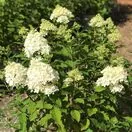
'Limelight' typically grows 2-2.5 metres tall with a similar spread, forming a rounded, well-branched shrub with sturdy, upright stems that support the substantial flower heads without staking. The growth habit is naturally tidy and attractive, requiring little intervention to maintain good form.
The dark green, oval leaves are substantial and provide an excellent backdrop for the flowers throughout summer. They have a slightly textured surface and serrated edges, creating pleasing density and volume. In autumn, the foliage may take on subtle bronze or burgundy tones before dropping, though autumn leaf colour is variable and depends on growing conditions.
The stems are strong and woody, remaining upright even when bearing the weight of large, waterlogged flower heads after rain. This structural strength is one of 'Limelight's' great advantages over other hydrangea varieties that often flop or require support.
The Spectacular Flowers
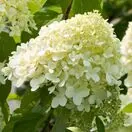
The flowers are undoubtedly 'Limelight's' crowning glory and what makes this variety so beloved. From July onwards, large conical flower heads (panicles) emerge at the tips of every stem. These pyramidal blooms can reach 20-30cm in length and 15-20cm across at the base – truly substantial and impossible to overlook.
The colour progression is captivating:
Midsummer (July-August): Flowers emerge a beautiful fresh lime-green, glowing with an almost luminous quality. This unusual colour is what gives 'Limelight' its name and makes it stand out from other white-flowered hydrangeas. The lime-green shade is particularly striking in evening light and creates wonderful contrasts in the border.
Late summer (August-September): As the flowers mature, they gradually fade to creamy-white or pure white, whilst still retaining hints of green at the base. During this phase, the flowers are at their most substantial and showy.
Autumn (September-October): In autumn, particularly as temperatures cool, the flowers develop beautiful pink or rose-pink tones, often with deeper pink edges. This colour intensifies in cooler weather and full sun, creating a completely different look. The pink tones persist well into autumn, often lasting until the first hard frosts.
Winter interest: Even after frost blackens the flowers, the dried flower heads remain attractive throughout winter, turning russet-brown and creating beautiful skeletal forms, especially when rimmed with frost. Many gardeners leave the dead heads on through winter for structure before pruning in early spring.
Each flower head consists of hundreds of sterile florets (these don't produce nectar but are highly ornamental) packed densely together. The flowers have a papery texture that holds up remarkably well to weather, rarely looking tatty or damaged.
The flowering is incredibly reliable – 'Limelight' blooms on the current season's growth (new wood), so even if stems are damaged by frost or pruned hard in spring, you still get abundant flowers every year. This is a huge advantage over varieties that flower on old wood and can be disappointing after cold winters or incorrect pruning.
Growing Conditions
One of 'Limelight's' greatest assets is its adaptability to various growing conditions, making it far easier than many other hydrangeas.
Soil requirements: 'Limelight' grows well in most reasonably fertile, moisture-retentive soils. It tolerates both acidic and alkaline conditions (unlike mophead hydrangeas where soil pH affects flower colour). Clay, loam, and improved sandy soils all suit it perfectly well. The key requirement is reasonable moisture retention – the large leaves transpire considerable water during summer, so avoid very dry, thin, or extremely free-draining soils unless you're prepared to water regularly.
Good drainage is also important – whilst 'Limelight' appreciates moisture, it doesn't tolerate waterlogging or permanently soggy conditions. In heavy clay, consider improving drainage or planting in slightly raised beds.
Sun and shade: 'Limelight' performs best in full sun to partial shade. In full sun (at least 6 hours daily), you'll get the most abundant flowering, strongest stems, and best pink colouration in autumn. However, it flowers perfectly well in partial shade or dappled sunlight, making it versatile for various garden positions. In very hot, exposed sites, some afternoon shade is beneficial to prevent leaf scorch during heat waves.
Moisture: Consistent moisture during the growing season (April to September) is important for lush growth and maximum flower size. The large leaves can wilt dramatically on hot summer days if the plant is dry, though it usually recovers overnight. Regular watering during dry spells produces the best results.
Hardiness: Fully hardy throughout the British Isles (down to -20°C or lower), 'Limelight' withstands British winters without protection. Young growth can occasionally be caught by late spring frosts, but the plant simply produces new shoots and flowers as normal.
Shelter: Whilst hardy, 'Limelight' appreciates some shelter from the strongest winds, which can damage the large leaves and flower heads. A position with some wind protection (from buildings, fences, or other plants) is ideal.
Planting Your Bare Root
Bare root hydrangeas are supplied during the dormant season from November to March and should be planted as soon as possible after delivery.
Site selection: Choose your planting position carefully, considering the plant's ultimate size (2-2.5m height and spread) and preference for sun to partial shade with reasonable moisture. Avoid very dry spots under trees or in rain shadows, and avoid exposed positions where strong winds dominate.
Soil preparation: Hydrangeas are hungry and thirsty plants that respond well to good soil preparation. Before planting, dig a hole approximately twice the width and depth of the root system. Fork over the base to break up compacted soil and ensure drainage.
Mix the excavated soil with generous quantities of well-rotted organic matter, compost, or manure – ideally 50:50 soil to organic matter. This improves moisture retention, provides nutrients, and creates ideal rooting conditions. On thin or poor soils, be particularly generous with organic matter.
Planting method: Upon arrival, unpack your bare root hydrangea and soak the roots in a bucket of water for several hours (or overnight) to rehydrate them thoroughly after transit.
Dig your prepared hole and create a slight mound of improved soil in the centre. Position the plant so the soil mark on the stem sits level with the surrounding ground surface – planting too deep can cause problems. Spread the roots out naturally over the mound, ensuring they're not cramped, bent, or circling.
Backfill with the improved soil mixture, firming gently with your hands as you go to eliminate air pockets whilst avoiding over-compaction. Build a slight saucer or depression around the plant to hold water. Water thoroughly and generously, allowing it to drain, then water again. This settles soil around the roots and ensures good contact.
Apply a generous 7-10cm mulch of organic matter (compost, well-rotted manure, or bark chips) around the plant, keeping it a few centimetres clear of the stems. This conserves moisture, suppresses weeds, and gradually releases nutrients.
Container planting: 'Limelight' grows well in large containers (minimum 50cm diameter and depth). Use good quality, loam-based compost (such as John Innes No. 3) mixed with extra compost for moisture retention. Ensure containers have drainage holes. Container plants require more frequent watering and feeding than those in the ground.
Initial Pruning
At planting time (late winter/early spring): If planting between November and February, leave the stems unpruned until early spring (March). Then cut all stems back to a pair of healthy buds approximately 30-40cm from the ground. This seems drastic but encourages strong, bushy growth from the base and produces a well-structured plant.
If planting in March, prune at planting time before growth begins.
First growing season: Allow the plant to grow and establish without further pruning. Keep well-watered throughout summer, particularly during dry spells. You should get some flowers in the first summer, though they may be smaller than on mature plants.
Annual Pruning and Maintenance
Pruning 'Limelight': One of the great advantages of paniculata hydrangeas is that pruning is straightforward and flexible. They flower on the current season's growth (new wood), so you can prune as hard as you like in spring without sacrificing flowers.
Annual pruning regime (March): Each year in early to mid-March, just as buds begin to swell but before leaves emerge, prune all stems back quite hard:
-
Cut each stem back to a pair of healthy buds approximately 30-60cm from the ground (or to 2-3 pairs of buds from the base). This hard pruning produces fewer but larger flowers on strong stems.
-
Remove completely any weak, damaged, dead, or crossing stems.
-
For more flowers on a larger plant, prune less severely – cut back to 3-4 pairs of buds (approximately 60-90cm from ground). This produces more numerous but slightly smaller flowers.
-
Shape the plant as you prune to maintain an attractive, balanced form.
Don't be timid – 'Limelight' responds vigorously to hard pruning and produces stronger stems and larger flowers as a result. Unpruned or lightly pruned plants become congested with thin, weak stems and smaller flowers.
Deadheading: Deadheading isn't necessary for repeat flowering (unlike roses), so it's a matter of personal preference. Many gardeners leave the spent flowers on through autumn and winter for their attractive dried appearance and structural interest, only removing them during the March pruning. However, if you prefer a tidier look, remove faded flowers in autumn by cutting back to the first pair of strong buds below the flower head.
Ongoing Care
Watering: Regular watering is crucial, particularly during the first 2-3 years and during dry spells in summer. Hydrangeas have large leaves that transpire significant moisture, and they wilt dramatically when dry. Water deeply and thoroughly rather than little and often – a generous soaking once or twice weekly during dry weather is better than daily dribbles. Mulching helps retain moisture significantly.
Feeding: 'Limelight' is relatively hungry and benefits from feeding. Apply a balanced general-purpose fertiliser (such as Growmore or blood, fish and bone) in early spring as growth begins, following packet instructions. Alternatively, apply a generous mulch (5-7cm) of well-rotted manure or compost in late winter, which feeds gradually whilst improving soil structure.
For container-grown plants, feed fortnightly from April to August with a liquid fertiliser formulated for flowering shrubs (tomato feed works well).
Mulching: Annual mulching is highly beneficial. Apply a 5-7cm layer of organic matter (compost, well-rotted manure, or bark) in late winter or early spring, keeping it clear of stems. This conserves moisture, suppresses weeds, feeds gradually, and improves soil over time.
Winter protection: None needed – 'Limelight' is fully hardy. Some gardeners leave dried flower heads on through winter for interest and to protect developing buds, removing them during spring pruning.
Uses in the Garden
'Limelight' is wonderfully versatile and suits numerous garden situations:
Mixed borders: Plant towards the back or middle of borders where its substantial size and long flowering season create impact. The lime-green flowers in midsummer are unusual and eye-catching, whilst the white and pink phases complement virtually any colour scheme.
Specimen planting: As a standalone feature in lawns or gravel, 'Limelight' creates a stunning focal point, particularly when in full bloom. Its rounded form and all-season interest make it ideal for specimen use.
Informal hedging: Plant 1.5-2 metres apart to create a spectacular deciduous hedge that flowers for months. Not suitable for formal clipped hedging, but perfect for relaxed, cottage-garden boundaries.
Containers: Grows beautifully in large pots or planters on patios and terraces, bringing the spectacular flowers close to seating areas where they can be fully appreciated. Excellent for adding height and structure to container displays.
Cutting garden: The flowers are superb for cutting and make long-lasting arrangements. Cut when freshly opened for fresh arrangements, or allow to mature on the plant and cut for dried displays (they dry beautifully and last for months).
White or green gardens: The lime-green and white phases make 'Limelight' perfect for white garden schemes or green-themed plantings.
Pollinator gardens: Whilst the sterile florets don't provide nectar, the flowers attract various insects and the foliage supports some caterpillar species.
Design Combinations
The colour progression of 'Limelight' creates wonderful planting opportunities:
Midsummer (lime-green phase):
-
Plant with purple or blue flowers for striking contrasts – Salvia nemorosa, catmint, or hardy geraniums
-
Combine with chartreuse foliage like golden elder or variegated grasses
-
Partner with white flowers for fresh, clean schemes
Late summer (white phase):
-
Looks magnificent with hot colours – orange crocosmias, red dahlias, or golden rudbeckias
-
Creates elegant schemes with soft pastels – pink anemones, pale blue agapanthus
-
Combines beautifully with ornamental grasses as they reach their peak
Autumn (pink phase):
-
Harmonises with autumn colours – bronze sedums, pink asters, purple salvias
-
Looks stunning against purple-leaved plants like Cotinus or purple berberis
-
Creates romantic schemes with late roses
Year-round companions:
-
Underplant with spring bulbs for early interest before the hydrangea leafs out
-
Combine with evergreen structure plants like box or yew for year-round form
-
Partner with plants that offer contrasting foliage texture – ferns, hostas, or ornamental grasses
Cut Flowers and Drying
'Limelight' is exceptional for cutting:
Fresh arrangements: Cut stems when flowers are fully open, early in the morning. Strip lower leaves and place immediately in water. They last 10-14 days in the vase. The lime-green phase is particularly striking in arrangements.
Drying methods:
-
Air drying: Cut when flowers have matured to the pink stage (late summer/autumn). Strip leaves and hang upside down in a warm, dry, dark place. They dry beautifully and last indefinitely.
-
Water drying: Cut mature flowers and place in a vase with a small amount of water. As the water evaporates over several weeks, the flowers dry gradually and naturally, retaining excellent colour and form.
-
Glycerine preservation: For flexible dried flowers, place stems in a mixture of 2 parts warm water to 1 part glycerine. The flowers absorb the glycerine over 2-3 weeks, drying whilst remaining supple.
Dried 'Limelight' flowers retain their colour remarkably well and are perfect for winter arrangements, wreaths, or craft projects.
Problem Solving
'Limelight' is generally trouble-free but may occasionally experience:
Wilting on hot days: Normal if soil is dry. Water thoroughly and mulch well. Plants usually recover overnight but persistent wilting indicates inadequate watering.
Leaf scorch (brown edges): Caused by insufficient watering in full sun or very hot conditions. Ensure regular watering during heat waves. Provide afternoon shade in extremely hot, exposed sites.
Few or small flowers: Usually caused by insufficient pruning, inadequate feeding, or too much shade. Prune harder in spring, feed regularly, and ensure at least half a day's sun.
Failure to flower: Extremely rare with 'Limelight'. Check the plant isn't being pruned at the wrong time (never prune after April) and ensure adequate sun and nutrients.
Aphids: Occasionally affect young growth in spring. Usually tolerate – ladybirds and hoverflies control them naturally. If necessary, blast off with water or use organic soap spray.
Powdery mildew: White powdery coating on leaves, usually in dry conditions. Ensure adequate watering and mulching. Rarely serious – generally just cosmetic.
Why 'Limelight' Stands Out
Among the many hydrangea varieties available, 'Limelight' has achieved exceptional popularity for good reasons:
-
Reliable flowering: Blooms on new wood every year without fail
-
Long season: Flowers from July to October (4+ months)
-
Changing colours: Three distinct colour phases provide evolving interest
-
Strong stems: Needs no staking despite huge flower heads
-
Easy pruning: Simple annual haircut in spring – can't go wrong
-
Versatile: Thrives in sun or partial shade, various soil types
-
Hardy: Fully hardy throughout Britain with no protection needed
-
Low maintenance: No complex requirements or fussy care
-
Award-winning: RHS Award of Garden Merit for proven excellence
Why Choose Bare Root?
Bare root hydrangeas offer excellent value compared to container-grown plants, often costing 30-50% less for equivalent-sized plants. They establish quickly and vigorously, often matching or exceeding the performance of pot-grown plants within a season or two.
Bare root plants develop more natural, spreading root systems without the restrictions of pots, creating stronger, more stable plants better adapted to garden conditions. They also suffer less transplant shock when moved during dormancy.
Environmentally, bare root plants eliminate plastic waste and reduce carbon emissions from production and transportation. For eco-conscious gardeners, this is a significant advantage.
The key to success is planting during the dormant season (November to March), providing good initial care, and ensuring adequate watering during the first growing season.
Final Thoughts
Hydrangea paniculata 'Limelight' bare root is an outstanding investment for virtually any garden. This is a plant that delivers consistent, spectacular results year after year with remarkably little effort. The enormous flower heads that progress from lime-green through white to pink create months of stunning display, whilst the easy-care nature and reliable performance make it perfect for beginners and experienced gardeners alike.
Whether you plant a single specimen as a focal point, group several together for maximum impact, create an informal hedge, or grow in containers for the patio, 'Limelight' will reward you with abundant flowers, beautiful colours, and year-round structure. It's one of those rare plants that truly lives up to its reputation – sometimes the most popular choices are popular for very good reasons.
From its fresh lime-green summer emergence through its romantic pink autumn finale and into its attractive dried winter presence, 'Limelight' earns its place in the garden throughout the seasons. This is a shrub you'll treasure for decades, a reliable friend that greets you with spectacular flowers every summer without fail, asking only for an annual prune and occasional watering in return. For sheer flower power, ease of cultivation, and consistent performance, 'Limelight' is very hard to beat.
Bare Root is usually dispatched between early November and late March. Exact dates vary year to year depending on the weather. We cannot guarantee availability for a certain date at the beginning or end of the season.
Important Bare Root Care
As soon as you receive your bare root plants place the items upright in a bucket of clean water immediately leaving them for at least 2 hours. Only take plants out as you need them for planting.
Q: When is bare root season?
A: Our bare root season usually runs from November to March but it can depend on the weather conditions, we'd always recommend buying at the end of autumn rather than waiting for spring.
Q: Does the plant size include the roots?
A: No, all bare root plant sizes quoted exclude the roots.
Q: What size plants will I receive?
A: Stock size varies through the season, our 'Plant Size' are give as a guide and you will receive plants somewhere in that range. We are unable to specify exactly how tall the plants will be within that range.
Q: How old will the plants be?
A: Most of our 'Plant Sizes' include the age of the plant, this is shown as a sum e.g. 1+2 which in this case would indicate that the plants are 3 years old. The first number is how long the plant has spent in the seedbed and the second is the number of year it has spent lined out in the field. Where the sum starts with a 0+ this indicates that the plants were grown from a rooted cutting.
Q: Can I get a discount for bulk purchases?
A: We offer a discount banding on bare root plants making them cheaper the more you buy, see the table on each page for details of the price within each band.
Q: Do I need canes?
A: Bamboo canes are perfect for giving young saplings, hedging plants, climbers and other tall shrubs the support they need when they start to establish. Unless you are planting in a completely sheltered spot with very little chance of wind then we would always recommend using a cane for support.
Q: Do I need rabbit guards?
A: Spiral Rabbit Guards are the most popular, low cost tree protection for young saplings, seedlings, transplants and hedging plants from browsing animals such as voles, mice, rabbits and hares. Spiral Rabbit Guards have the ability to grow and expand with the growing tree, providing a sheltered environment for the tree. It's hard to say for certain if you will require the extra protection a rabbit guard provides, if your are aware of a particular pest problem in your planting location then we would recommend using them. Rabbit Guards are not suitable for 'evergreens' please see 'Shrub Shelters' for a suitable evergreen protection method.
Q: What is a shrub/tree shelter?
A: Shrub/Tree Shelters are similar to rabbit guards but are designed for use on evergreens that would sweat and die in rabbit guards. We supply shrub/tree shelters as a kit which includes the shelter, 1 Stake and 2 cable ties, one kit is required per plant.
Q: Do I need shrub/tree shelters?
A: If you are aware of any specific pest problems in your planting area then we would recommend using a shrub/tree shelter to give your young trees or hedging plants that extra protection.