
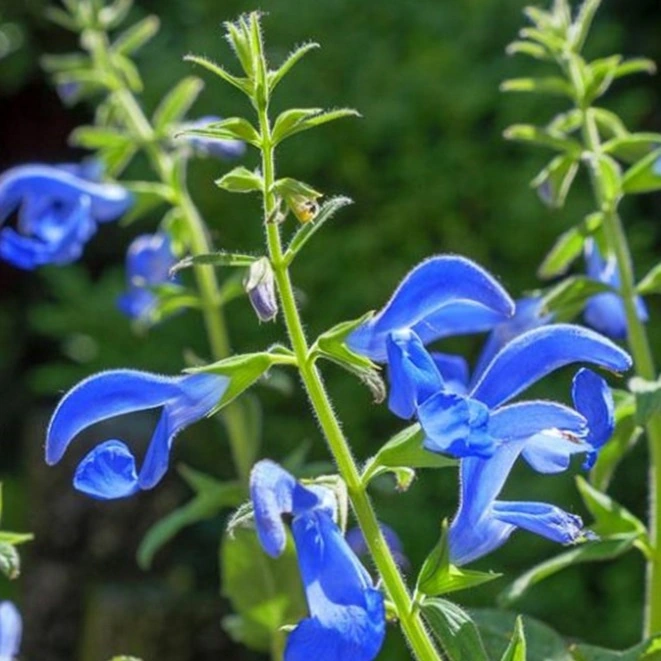
Salvia patens
Salvia patens, commonly known as "Gentian Sage", is one of the most dazzling salvias available, famed for its exceptionally vivid, true blue flowers – a rare and prized colour in the plant world. Native to Mexico, this tender perennial offers tall spires of large, tubular blooms from midsummer to autumn, rising above soft green foliage. Perfect for adding height, drama, and vibrant colour to sunny borders or containers, Salvia patens is also a magnet for pollinators and ideal for those seeking something a little different in their planting scheme.
Key Features
-
Botanical name: Salvia patens
-
Common name: Gentian Sage
-
Plant type: Tender perennial (grown as annual or lifted for winter)
-
Height: 1m (3.2ft)
-
Spread: 40cm (1.3ft)
-
Flowering time: Midsummer to autumn (July to October)
-
Brilliant gentian-blue flowers – large, showy, and intensely coloured
-
Tall, upright growth with softly textured, green foliage
-
Low-maintenance: Deadhead to prolong flowering; lift tubers to overwinter
-
Hardiness: Hardy in the UK down to temperatures of -5 degrees Celcius (RHS hardiness rating H3)
Growth & Habit
Salvia patens grows from small, tuberous roots into a bushy, upright clump with branching stems. The leaves are softly textured and mid-green, forming a lush base from which flower spikes emerge. The flowers themselves are large, trumpet-shaped, and an electrifying shade of blue, making them one of the most distinctive salvias for garden use. It flowers freely over many weeks when deadheaded regularly.
Planting Advice
-
Position: Full sun is essential to bring out the best colour and promote flowering.
-
Potted: Can be planted in the garden after the risk of frost has passed, or grown in containers for added flexibility.
-
Soil: Prefers fertile, well-drained soil. Add grit or compost to improve drainage if needed.
-
Planting Depth: Plant tubers 5cm deep or set transplants at the same depth as in the pot. Water well after planting.
-
Spacing: Space plants 30–45cm apart for a balanced display and good airflow.
A great choice for central positions in sunny borders or grouped in containers for bold summer colour.
Care & Maintenance
Though tender, Salvia patens is easy to care for. Deadhead spent blooms regularly to encourage fresh flowers and maintain a tidy look. As autumn approaches and flowering slows, lift and store tubers in a cool, frost-free place in moist compost or dry sand. Alternatively, overwinter container-grown plants indoors. In early spring, pot up stored tubers or sow seeds indoors to get a head start.
Uses in the Garden
-
Stunning in mixed borders or hot-colour schemes
-
Makes a striking feature in large pots on sunny patios
-
A unique and rare blue flower for plant collectors and designers
-
Excellent in wildlife gardens – attracts bees, butterflies, and other beneficial insects
-
Perfect for cutting gardens and floral arrangements
-
Pairs well with white, silver, and deep purple-flowered plants for contrast
Salvia patens is a spectacular and rewarding plant that brings the rare beauty of vivid blue flowers into your garden. Whether you grow it as a seasonal focal point or lift and protect it each winter, its colour, charm, and pollinator appeal make it a standout choice for sunny spaces. A must-have for gardeners looking to add something truly special to their summer displays.
Buying Perennials from Jacksons Nurseries
At Jacksons Nurseries we lightly trim back our perennials after flowering and trim them back at the end of the season to ensure that the plants remain neat and tidy whilst in the pot. The more tender the plant the less we cut back to help protect exposed stems from winter frost. Depending on the plant variety we will then prune back further in spring once the risk of the more severe frosts is over.
As a result, depending on the time of year you buy perennials, they may not look like images showing their ‘prime time’ in flower and looking at their best.
From late autumn onwards and dependent on variety, there may be very little visible above the soil except for a few cut back dormant leaves or stems. It is perfectly normal for dormant plants to look like this from autumn onwards, they will however burst back into life in spring.
Availability: Stock availability figures are provided as a guide only. There is a delay between orders being placed and the plants being gathered by our pulling team. During this time it may be possible for a member of the public to purchase these plants from our Garden Centre, while this is rare it is a possibility and we will notify you of any problems as soon as possible. This figure may also include plants that have not yet be flagged as unsaleable.
Pre-order: Pre-order times are given as a guide only and may vary dependent on the growing season. Orders containing Pre-ordered products will be shipped as a single order when all items become available. Large orders may be part shipped, please contact us on 01782 502741 or email sales@jacksonsnurseries.co.uk.
Perennials are described and classified differently by different gardeners but all would agree that they are plants that come into flower every year from early spring to late summer, the exact time dependent on variety and most die back to ground level in autumn and winter.
As for all plants, soil preparation is time well spent. Dig over the area to be planted ensuring that the ground is free draining. If not then you may wish to either consider planting in a different spot or raising the level of the planting area by adding additional topsoil, well rotted garden compost and/or well rotted manure. Add ‘Fish, Blood and Bone’ fertiliser or a high potash fertiliser to encourage good root growth and development.
It’s always a good idea to plant a few of the same plant together, we recommend planting in 3’s or 5’s to provide a bold effect but allowing them plenty of room to develop.
Always check eventual plant heights when planning borders to ensure that the taller plants are at the back (or at the centre of an island bed) followed by the medium and then smaller low growing plants.
Remember to deadhead perennials after flowering, trim back lightly in autumn as required to tidy the border and if necessary trim again in spring once the risk of heavy frost has passed.
If perennials get too big, start to flower less and less or if it seems to be dying off from the centre, consider dividing the plant but always check that the particular variety is happy to be divided and that you divide at the right time of year for the plant.
By using this simple guide and a little time, perennials can make an absolutely spectacular difference to your garden.
| Size | Availability | Price | ||
|---|---|---|---|---|

|
In stock
|
£9.99 |