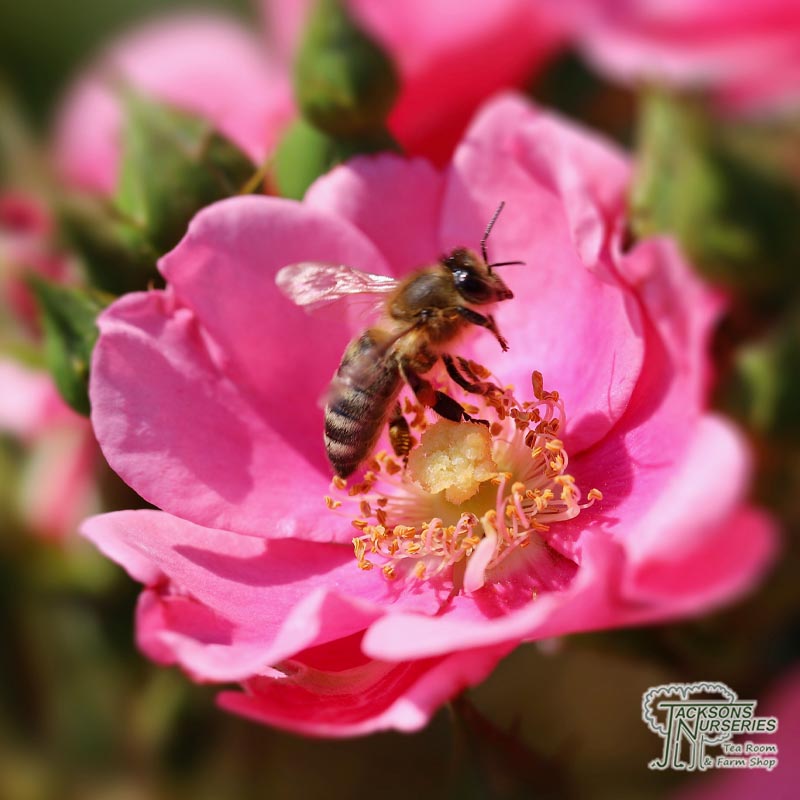
Buy  Rosa 'marguerite hilling' (RU) online from Jacksons Nurseries
Freshly Potted*

Rose 'Marguerite Hilling'

Rugosa Shrub Rose

£13.99
24126
21 item(s)
+
Wishlist

At a Glance

Rose 'Marguerite Hilling' - Shrub Rose

Rose 'Marguerite Hilling' is a spectacular shrub rose introduced in 1959 as a sport (natural mutation) of the equally famous 'Nevada' rose. This magnificent rose produces an abundance of large, single, soft pink blooms that create one of the most breathtaking displays in the rose garden. With its graceful arching habit, exceptional hardiness, and remarkably generous flowering, 'Marguerite Hilling' offers everyday gardeners a rose of outstanding beauty combined with exceptional reliability and minimal maintenance requirements. It's a rose that delivers maximum impact with minimum fuss—perfect for busy gardeners or those new to growing roses who want guaranteed success alongside spectacular results.


Flower Characteristics

The blooms of 'Marguerite Hilling' are utterly charming in their simple elegance. Each flower measures an impressive 10-12 cm across and displays a single to semi-double form with just 5-8 silky petals arranged around a prominent central boss of golden-yellow stamens. The colour is exquisite—soft rose-pink to blush-pink, often with deeper pink tones towards the centre and paler, almost white edges. The colour can vary slightly depending on weather conditions and the age of the flower, creating a beautiful tonal variation across the plant. In hot weather, the blooms fade to the palest blush, whilst cooler conditions intensify the pink tones.

The flowers are produced in spectacular profusion along the entire length of the arching branches, creating a stunning cascade effect when in full bloom. During peak flowering, the plant is absolutely smothered in blooms—it's genuinely one of the most impressive sights in the garden. The fragrance is light to moderate—delicate and sweet, though not as powerful as some old roses. The open, single form makes these blooms particularly attractive to bees, hoverflies, and other pollinators.

Following the main flowering, the rose produces small, round, orange-red hips in autumn, providing a second season of interest and valuable food for birds during winter months.


Flowering Period

'Marguerite Hilling' produces a spectacular main flush of flowers in late spring to early summer (typically late May through June), during which time the plant is absolutely covered in blooms—the display is truly breathtaking and lasts 3-4 weeks. This is followed by intermittent flowering throughout summer, with scattered blooms appearing regularly. Many plants produce a reasonable second flush in autumn, particularly if deadheaded and well fed, though this is typically less prolific than the spring display. Even without continuous heavy flowering, the graceful habit, attractive foliage, and autumn hips ensure the plant remains an asset in the garden throughout the year.


Growth Habit and Size

'Marguerite Hilling' is a large, vigorous shrub with gracefully arching branches that typically reaches 2-2.5 metres in height with an equal or greater spread of 2-2.5 metres. This is a substantial plant that needs space to develop its naturally elegant, fountain-like form. The long, flexible stems arch outwards and downwards, creating a magnificent cascading effect, particularly when laden with flowers. The growth is strong and healthy, establishing quickly and reaching impressive size within a few years.

With light support, 'Marguerite Hilling' can also be trained as a short climber, reaching 3 metres or more on a wall or fence, though most gardeners prefer to allow it to develop as a free-standing specimen where its natural grace can be fully appreciated.

The foliage is attractive and abundant—medium green, semi-glossy leaves that are slightly smaller and more refined than typical rose foliage, creating a light, airy appearance. The leaves provide good coverage and remain healthy throughout the season. The stems have relatively few thorns, making this rose easier to work with than many varieties.


Hardiness and Climate Suitability

'Marguerite Hilling' is exceptionally hardy, tolerating winter temperatures down to -25°C (USDA Zone 4). This outstanding cold tolerance, inherited from its Rosa moyesii ancestry, makes it ideal for cold, exposed gardens in northern regions, Scotland, upland areas, and challenging locations. It shows excellent tolerance of wind, poor weather, and less-than-perfect conditions that would challenge many other roses. This remarkable resilience, combined with outstanding disease resistance, makes it one of the toughest and most reliable roses you can grow—perfect for difficult gardens or demanding climates.


Ideal Growing Conditions

Sunlight: Plant in full sun for the most abundant flowering—at least six hours of direct sunlight daily is ideal. 'Marguerite Hilling' will tolerate partial shade and still produces a reasonable display with 4-5 hours of sun, though flowering will be reduced in shadier positions.

Soil: This adaptable rose grows well in most reasonably fertile, well-drained soils. It's not particularly fussy and will perform in a range of soil types from clay to sandy loam, though it appreciates soil enriched with organic matter at planting. It tolerates a wider pH range than many roses (6.0-7.5) and will even grow in slightly alkaline conditions. Ensure good drainage, as this rose dislikes waterlogged conditions.

Water: Water regularly during establishment, but once established 'Marguerite Hilling' shows good drought tolerance and requires minimal supplementary watering except during prolonged dry spells. This makes it ideal for low-maintenance gardens or areas with water restrictions.

Spacing: This is a large rose that needs generous space. Allow at least 2-2.5 metres between plants or from neighbouring shrubs to accommodate the mature spread and ensure the graceful arching habit can be fully displayed and appreciated.


Planting and Care

Planting: Plant bare-root roses during the dormant season from November to March, or container-grown plants any time if kept well watered during establishment. Dig a hole 50-60 cm wide and deep, and whilst 'Marguerite Hilling' tolerates average soil, incorporating organic matter at planting helps establishment and encourages vigorous growth. Position the graft union just below soil level. If planting against a wall or fence for training as a climber, position the plant 40-45 cm away from the structure to allow air circulation.

Feeding: 'Marguerite Hilling' is not a demanding rose and performs well without heavy feeding. Apply a balanced rose fertiliser or general-purpose fertiliser in early spring as growth begins. A light spring mulch of well-rotted compost or manure is beneficial but not essential. Avoid excessive feeding, which can promote soft growth at the expense of flowers and hardiness.

Pruning: This rose requires minimal pruning—one of its great advantages for busy gardeners. In late winter or early spring (February-March), simply remove any dead, damaged, diseased, or weak growth. Occasionally remove one or two of the oldest stems at ground level to encourage fresh growth from the base and maintain vigour. Avoid heavy pruning, as flowers are produced on growth from previous years—hard pruning reduces flowering. If the plant becomes too large for its space, stems can be shortened by one-third after the main flowering. Light shaping and removal of spent flower clusters helps maintain appearance, though many gardeners leave later flowers to develop into decorative hips.

Mulching: Apply a 5-7 cm layer of organic mulch in spring if desired, though this tough, low-maintenance rose manages well without mulching once established.


Disease Resistance

'Marguerite Hilling' has outstanding disease resistance and is one of the healthiest roses you can grow. It shows exceptional resistance to blackspot, rust, and powdery mildew, typically remaining completely disease-free throughout the season with absolutely no intervention. This exceptional health, combined with minimal pruning and feeding requirements, makes it one of the lowest-maintenance roses available—perfect for organic gardens, naturalistic plantings, wildlife gardens, or gardeners who want beautiful roses without any spraying, special treatments, or constant attention. It simply gets on with growing beautifully year after year.


Garden Uses

This versatile, vigorous rose excels in various garden situations:

  • Specimen planting: Makes a magnificent focal point when given space to display its full cascading habit

  • Large borders: Provides dramatic impact at the back of deep borders or as a centrepiece

  • Informal hedging: Plant 1.8-2 metres apart for a spectacular flowering hedge or screen

  • Wild and naturalistic gardens: The natural, unfussy habit suits informal, wildlife-friendly plantings perfectly

  • Mixed shrub borders: Combines beautifully with other large flowering shrubs

  • Woodland edges: The shade tolerance makes it suitable for woodland margins or dappled shade

  • Low-maintenance areas: Ideal for gardens where minimal intervention is desired

  • Banks and slopes: The arching habit is effective for cascading down slopes

  • Difficult sites: Excellent for exposed, windy, or poor-soil locations where other roses struggle

  • Wildlife gardens: The single flowers attract numerous pollinators and the hips provide winter bird food

  • Cottage gardens: The abundant soft pink blooms suit romantic, informal settings

  • Contemporary gardens: The simple, elegant flowers work well in modern, minimalist designs

Companion Planting

'Marguerite Hilling' pairs beautifully with:

  • Purple and blue flowers such as hardy geraniums, salvias, or catmint (Nepeta) for complementary colour contrast

  • Silver foliage plants like artemisia or santolina to enhance the soft pink tones

  • White flowers such as white Japanese anemones, white roses, or Shasta daisies for elegant harmony

  • Deep purple foliage like Cotinus 'Royal Purple' for dramatic contrast

  • Alliums with spherical purple or white flowers for structural interest

  • Lavender for colour harmony and complementary fragrance

  • Ornamental grasses for textural contrast and movement throughout the season

  • Purple or blue clematis to scramble through the rose after its main flowering

  • White foxgloves (Digitalis) for vertical interest during the rose's flowering period

  • Campanula lactiflora for airy flowers that complement the rose's elegance

  • Penstemon in pink or purple shades for extended colour

  • Spring bulbs such as narcissi or tulips planted beneath for early season interest


Why Choose 'Marguerite Hilling'?

'Marguerite Hilling' offers everyday gardeners one of the most spectacular floral displays in the entire rose world combined with exceptional toughness and virtually zero maintenance. When this rose blooms in late spring, it's genuinely breathtaking—the entire plant becomes smothered in large, soft pink flowers creating a cascade of colour that stops people in their tracks. The display is so abundant and dramatic that many gardeners consider it superior to roses with more modest continuous flowering. For 3-4 weeks each year, this rose is an absolute showstopper.

The soft, romantic pink colour is sophisticated and versatile, working beautifully in virtually any colour scheme. It's gentle enough for pastel gardens, harmonises with cottage garden plantings, yet has sufficient presence for contemporary designs. The simple, single flowers have an elegant simplicity that never looks fussy or overwrought—just pure, natural beauty.

The exceptional hardiness and adaptability make 'Marguerite Hilling' ideal for challenging gardens where other roses fail—exposed hilltops, cold northern regions, windy coastal areas, or gardens with less-than-perfect soil. If you've struggled with roses in difficult conditions, this is the one to try. The outstanding disease resistance means it remains healthy and attractive without any spraying whatsoever—perfect for organic gardeners or anyone who wants roses without chemicals and constant maintenance.

The minimal maintenance requirements are a major advantage for busy gardeners or those new to roses. Once established, 'Marguerite Hilling' essentially looks after itself—no regular feeding necessary, no spraying required, minimal pruning needed, good drought tolerance, and exceptional pest and disease resistance. It's a true plant-it-and-forget-it rose that simply gets on with being beautiful year after year.

The generous size and graceful, arching habit bring structure and presence to the garden throughout the year, not just during flowering. The attractive foliage looks good all summer, and the orange-red hips provide valuable autumn and winter interest whilst feeding birds. The plant earns its place across multiple seasons.

The wildlife value is excellent—the open, single flowers are magnets for bees and other pollinators during their flowering period, whilst the hips provide food for birds during winter. This makes 'Marguerite Hilling' ideal for wildlife-friendly gardens or for gardeners who want to support beneficial insects and birds.

Whether you're seeking a spectacular specimen for a prominent position, need a tough rose for an exposed or challenging garden, want a low-maintenance shrub for a naturalistic planting, require a dramatic hedge or screen, desire a rose for poor or difficult soil, looking for a wildlife-friendly rose that supports pollinators and birds, or simply want to experience one of the most glorious sights in rose gardening—that incredible cascade of soft pink flowers in late spring—'Marguerite Hilling' is an outstanding choice.

This is a rose that delivers on every level—spectacular beauty, exceptional toughness, minimal maintenance, excellent wildlife value, and year-round garden presence. It proves that low-maintenance doesn't mean low-impact. When it blooms, it does so with such extravagant generosity and romantic beauty that you'll eagerly anticipate its return each year. Once established, this magnificent rose will reward you with decades of reliable performance and breathtaking displays, asking virtually nothing in return. It's one of the finest shrub roses you can grow—a true garden classic that fully deserves its enduring popularity.

Reasons to Buy Roses from Jacksons Nurseries

(1) ‘Excellent’ on Trustpilot

Buy with confidence from the only online rose grower rated ‘Excellent’ 4.9* on Trustpilot. We have been a trusted supplier of roses for 3 generations. We take pride in growing our own roses in the field before potting them up, allowing for meticulous quality control to sale.


Trustpilot Excellent


(2) Best Prices Guaranteed – Direct from the Grower

Save £££s by buying direct from a grower you can trust. We’ve already price checked all of our roses against competitors so you don’t have to. We are so confident we offer the best value, if you find a rose of the same type and grade elsewhere, we’ll beat it by 10%.


Price Promise

(3) 12 Month Plants Guarantee

We offer a 12 month guarantee on every plant that you buy from us that we have classified as Fully Hardy. If a plant you've bought from us fails in the first year, we will either replace it or refund you. See our satisfaction guarantee page for more details and conditions.


Roses 12 Months Plants Guarantee

(4) Third generation family-owned nursery specialising in roses

Jackson’s Nurseries is a 3rd generation family owned business which has been growing roses for over 60 years. Roses have always been our specialty, as you can see from the colourful array of blooms in the background to the old family photo below. Today, we offer over 200 different varieties of floribundas, hybrid teas, patio, shrub and David Austin roses. Our roses are initially grown in the field before being potted up for website dispatch.


Third Generation Rose Growing

(5) Grown at altitude to produce strong, healthy plants

Our North Staffordshire nursery is situated at 250 metres above sea level, producing strong, hardy plants that will thrive in your garden. Our nursery sits on clay, so you can be sure our roses can handle heavy soil too.


Grown at Altitude Healthy Plants

(6) Help & Advice and Aftercare

We are help to help you with any help and advice you need in choosing, planting and growing your roses before, during and after your purchase from us. The help and advice section of our website has extensive information, see below some examples of articles you may find useful:


Help and Advice Aftercare

How our roses are supplied through the seasons

All our roses are cultivated in an open field and are carefully dug up when the weather is optimal, typically in October or November. While other nurseries supply roses bare root, once our field-grown roses have been potted up we supply them freshly potted. This better protects the roots and helps keep them moist in transit, ensuring your roses arrive as healthy as when they left our nursery. So don’t be alarmed if the compost comes away from the roots when you remove them from the pot.


Pointing at Graft of Rose after Removing from Pot

The roses can remain in their pots over the winter, as long as they are properly watered and fed, but it's best to plant them out as soon as possible. If you do plant them straight away make sure the planting mix is prepared first, hold the root close to the top of the hole as you tip the pot upside down and try to keep as much compost as possible from falling away. They will already be pruned, so no additional pruning is needed except for trimming any dead tips. Regular pruning can start in late winter, the year after planting.


Tying up a Climbing Rose

Rose Types

Hybrid Tea Roses (HT)

Hybrid Tea roses are probably the most popular group of roses, available in both bush and standard form they have long flower stems and shapely blooms. Blooms are typically medium to large in size, with many petals which form a distinct central cone.

Floribunda Roses (FL)

Floribunda roses bears its flowers in clusters or trusses, with several blooms open at time in each truss. A popular choice the Floribunda rose group is unrivalled for colour, reliability and longevity as a bedding display however the flower form in generally inferior to the Hybrid Tea.

Patio Roses (PATIO)

Patio roses were introduced in the 1980’s and the group now contains several popular varieties. Generally low-growing roses that were once grouped with the Floribuna group but have now been put in their own group of compact versions. Usually growing about 50cm high they make excellent plants for patio containers or at the front of borders.

Climbing Roses (CLM)

Climbing roses as the name suggests are the perfect choice for covering a wall or screen. Often grouped together with Ramblers, Climbers tend to have stiffer stems, larger flowers but smaller trusses than Ramblers.

Rambling Roses (RAM)

Rambling roses are often grouped with Climbing Roses but the ramblers tend to have a more pliable stems that can be used to run along the soil to use as groundcover or can be used to make weeping standards.

Miniature Roses (MINI)

Miniature roses have increased in popularity in recent years due to their versatility, even grown indoors as temporary pot plants that grow to a maximum height of 40cm. An ideal choice for planting in tubs, edging beds and rockeries.

English Roses (ENG)

Often referred to as Austin or David Austin Roses, English roses are hybrids of old English roses and more modern varieties bread by David Austin to provide the best of both, mixing old rose shapes and scents with more modern colour range, compact habits and repeat flowering.

Diagram of different types of roses

Planting Advice

Roses like a generous root space, so dig a deep hole approximately twice as wide as the current root system, preferably adding composted organic matter to the soil. Never plant into frozen soil – in winter, await a frost-free period. Carefully remove the pot and gently tease the roots apart to spread them around the hole. Position the plant so that the ‘bud point’ (the place where the shoots emerge from, where the cultivated rose was grafted onto the rootstock) is at soil level. Replace the soil, firming it down gently, then water copiously. Ideally, a general purpose fertiliser should be applied to the surrounding soil as a top dressing. We also highly recommend the use of Rose Rootgrow, which provides a friendly fungus that prevents ‘rose replant syndrome’.


Digging Ground for Roses


Buying our Roses

Pot Size

Most of our roses are supplied in a 4 litre pot although this may vary slightly depending on rose variety. If the size of pot differes significatly from 4 litres then we will make this clear somewhere on the product page.

Seasonality

Our roses are grown outdoors and as such are subject to seasonal changes. As we sell potted stock throughout the year your rose may not arrive and look like you expect it to. If you are uncertain how your rose will arrive (especially if buying for a gift) then we suggest you contact us prior to making a purchase. 

Freshly Potted

Each year a new batch of roses is potted up ready for the following season. Once potted (usually November/December time) they go on sale as 'Freshly Potted'. If you purchase a freshly potted rose and plant it soon after you will find that when removing the rose from the pot there will be a lot of loose soil as the roots will not have had time to grow and bind the compost.


Rose Raised Ready to be Planted


Pruned/Cut Back

In autumn the majority of our roses have finished flowering and begin to look untidy, at this point we prune them quite hard in preparation for the following season. We continue to sell roses throughout the year, when a rose has been pruned in such a way we will identify it has being so. If you are not sure what to expect then please ask prior to making a purchase. Some garden centres/supermarkets sell stock that has been grown abroad or in poly-tunnels so they look 'picture perfect' out of season, while this is ideal for a gift they are short lived once planted.

Aftercare

Water regularly until established. In spring, apply a specialised rose fertiliser along with manure mulch, taking care to avoid direct contact of the mulch with the stems. In winter remove all branches which are dead, diseased or damaged along with any older stems as necessary to avoid overcrowding at the centre. Cut back new growth by about a quarter and prune side-shoots to within three buds of the main stem to encourage vigour. Prompt removal of ‘dead-heads’ will encourage further flowering.
 
Aftercare
Freshly Potted*
3
£13.99
3-4 Litre pot
Rose 'A Whiter Shade of Pale' - Hybrid Tea Rose (Also known as 'Peafanfare') A stunning award-winning hybrid tea rose that produces exquisitely...
In stock
+
Wishlist
1997
£39.99
3-5 Litre pot
Acer palmatum (Japanese maple) are small, deciduous trees grown for their graceful habit, beautiful coloured foliage that is often deeply dissected the Acer...
In stock
+
Wishlist

1603
£12.99
2 Litre pot
This is a popular deciduous climber grown for the masses of highly scented white flowers that are borne in mid summer and continue right through to early...
In stock
+
Wishlist

2443
£13.99
2-3 Litre pot
This is an outstanding, tough evergreen conifer with a dense, spreading growth habit and arching branches that create a low, fountain-like form. It is...
In stock
+
Wishlist

2210
£11.99
2-3 Litre pot
This is a large, semi-evergreen shrub with crinkled, grey-green leaves and large, vibrant pink blooms. It's an extremely long-flowering variety that's...
In stock
+
Wishlist

1610
£13.99
2 Litre pot
Tubular, bright orangey-yellow flowers are produced in clusters on this unusual, deciduous climber in spring and summer. The leaves are dark green with...
In stock
+
Wishlist

1626
£17.99
2 Litre pot
Developed by crossing Lonicera tragophylla with Lonicera x brownii ‘Dropmore Scarlet’ , ‘Mandarin’ produces clusters of orange-red flowers with golden...
In stock
+
Wishlist

2119
£19.99
2-3 Litre pot
Corylus avellana 'Red Majestic' is the latest contorted hazel which combines the charm of the twisted hazel with the qualities of the foliage of the purple...
In stock
+
Wishlist

1526
£11.99
2-3 Litre pot
An excellent deciduous raspberry with short, slightly thorny canes and large, red fruit that has an excellent flavour in autumn. Its an all-purpose variety...
In stock
+
Wishlist

Freshly Potted*
79
£13.99
3-4 Litre pot
Rose 'Ballerina' - Polyantha Rose A graceful polyantha rose that brings delicate elegance to any garden space with its abundant displays of...
In stock
+
Wishlist

2289
£12.99
2-3 Litre pot
Weigela florida 'Nana Variegata' Compact Deciduous Shrub with Stunning Variegated Foliage   Overview Weigela florida...
In stock
+
Wishlist

11394
£17.99
2-4 Litre pot
Syringa 'Andenken an Ludwig Späth' - Classic Purple Lilac Overview Syringa 'Andenken an Ludwig Späth' (pronounced "AHN-den-ken ahn...
In stock
+
Wishlist

1503
£59.99
10-15 Litre pot (110-130cm stem)
Stunning purple leaves and beautiful double rose pink flowers in spring. These bowl-shaped blooms are borne in groups of 2 to 4 just as the leaves are...
In stock
+
Wishlist

No posts found

Write a Review
  Size Availability Price  
Buy  Rosa 'marguerite hilling' (RU) online from Jacksons Nurseries 3-4 Litre pot
In stock
£13.99

You may also like