
Narcissus Pheasant's Eye Grandiflora
Narcissus poeticus grandiflora
Overview
The Narcissus Pheasant's Eye Grandiflora is a classic spring bulb that brings timeless elegance to any garden. This traditional variety produces stunning white flowers with distinctive orange-red centres, creating a striking display that has charmed gardeners for generations. Known for its reliability and sweet fragrance, this narcissus is perfect for naturalising in grass or adding charm to borders and rockeries.
Key Features
-
Flower colour: Pure white petals with vibrant orange-red centre
-
Bloom time: Late spring (May)
-
Height: 35-40cm (14-16 inches)
-
Spread: 10-15cm (4-6 inches)
-
Fragrance: Delightfully sweet and intense
-
Hardiness: Fully hardy (RHS H7)
Plant Description
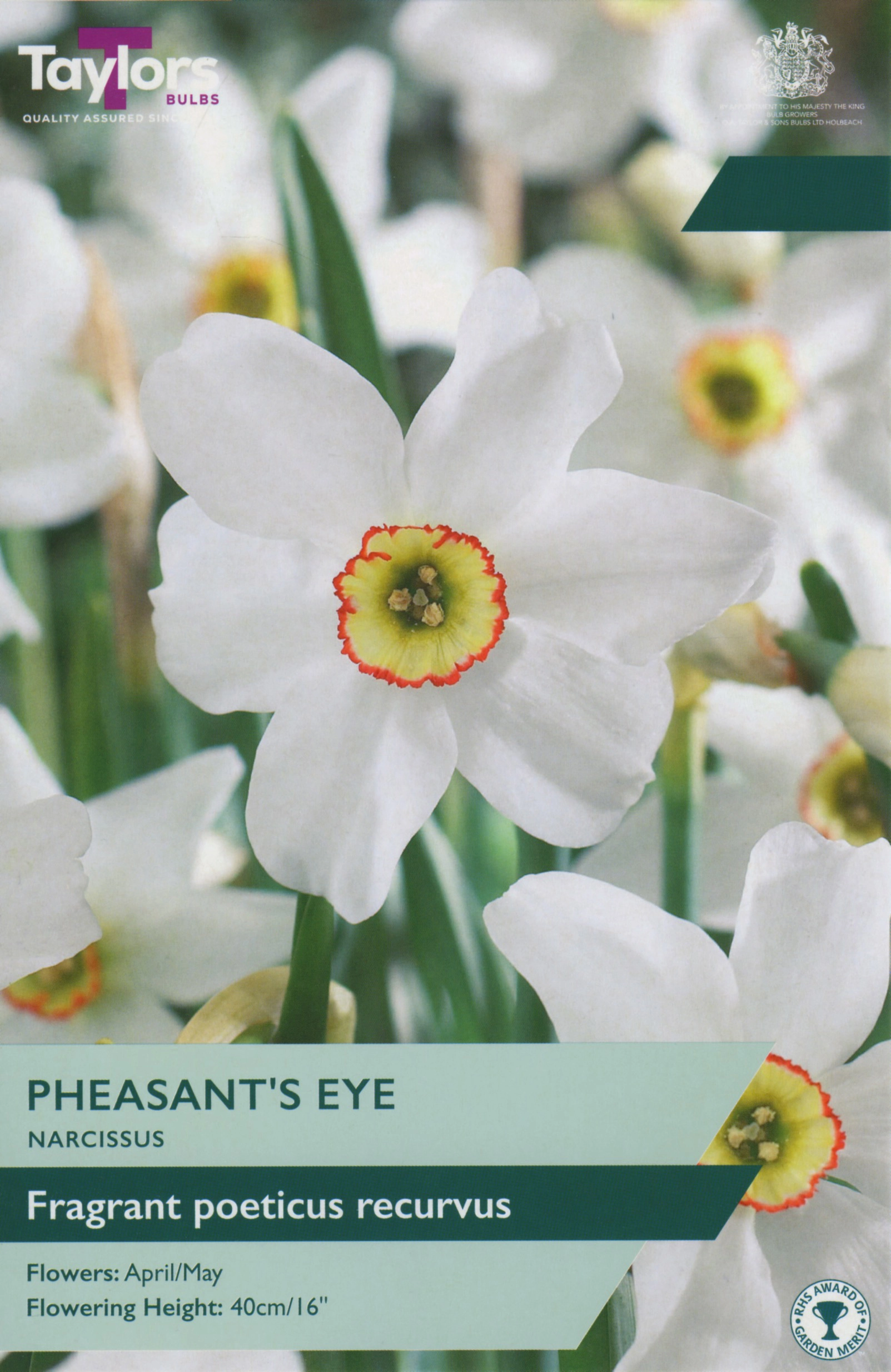
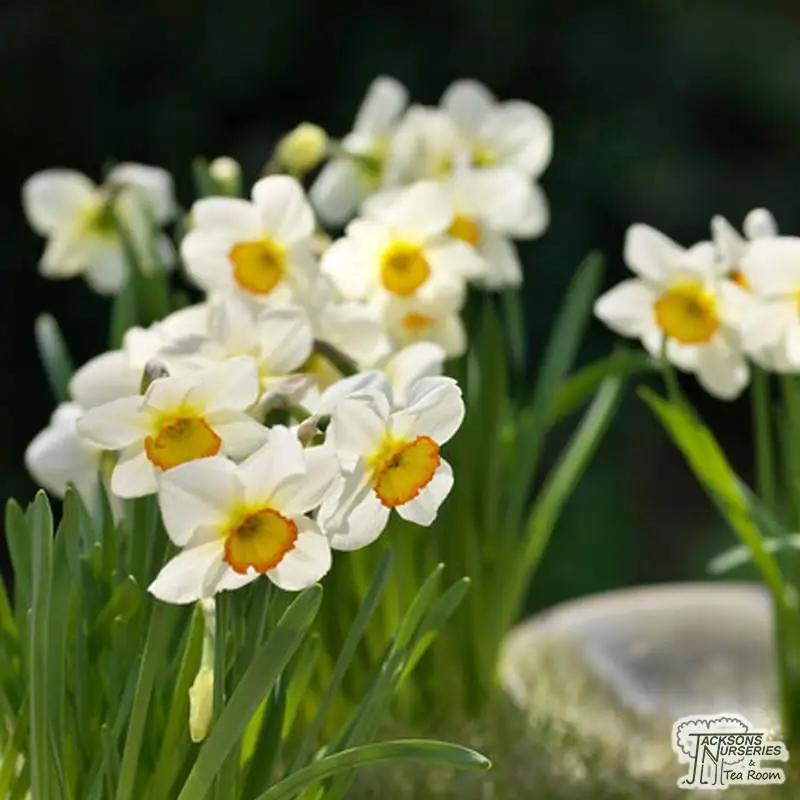
This enchanting daffodil produces single flowers with six pristine white petals surrounding a small, flat yellow cup edged with bright orange-red. The distinctive colouring gives the flower its common name, as the centre resembles a pheasant's eye. Each sturdy stem typically carries one flower, rising above narrow, strap-shaped blue-green foliage. The blooms are larger than the standard Pheasant's Eye variety, making them particularly eye-catching in the garden.
Growing Conditions
Soil: Well-draining soil is essential. Thrives in most soil types including clay, loam, and sandy soils with a pH between 6.0-7.0.
Light: Prefers full sun to partial shade. Morning sun with afternoon shade works well in warmer regions.
Water: Requires moderate moisture during growing season. Allow soil to dry out during summer dormancy.
Climate: Extremely hardy and suitable for most UK climates. Benefits from cold winter temperatures for optimal flowering.
Planting Guide
When to plant: September to November for spring flowering
Planting depth: 15cm (6 inches) deep
Spacing: 10-15cm (4-6 inches) apart
Soil preparation: Add organic matter such as well-rotted compost to heavy soils to improve drainage
Container growing: Suitable for pots using quality multipurpose compost with added grit for drainage
Care Instructions
Watering: Water regularly during active growth in spring. Reduce watering as foliage dies back naturally.
Feeding: Apply balanced fertiliser in early spring as shoots emerge. Bone meal can be applied at planting time.
Deadheading: Remove spent flowers but allow foliage to die back naturally to feed the bulb for next year's display.
Division: Lift and divide clumps every 4-5 years after foliage has died back to prevent overcrowding.
Garden Uses
-
Naturalising: Excellent for planting in grass or woodland areas where it will spread naturally
-
Border planting: Perfect for spring borders and cottage garden schemes
-
Rock gardens: Ideal for alpine and rock garden settings
-
Cut flowers: Makes beautiful, fragrant cut flowers for indoor arrangements
-
Container displays: Suitable for pots and window boxes on patios
Companion Plants
Plant alongside other spring bulbs such as crocuses, grape hyacinths, and tulips for extended colour. Combines beautifully with primroses, violets, and emerging perennials like hostas and astilbe.
Wildlife Benefits
The flowers attract early bees and other pollinators, providing valuable nectar when few other flowers are available. The foliage provides shelter for beneficial insects.
Special Notes
-
All parts of the plant are toxic if ingested
-
Deer and rabbit resistant
-
Excellent for beginners as it's very low maintenance
-
Long-lived perennial that improves with age
-
Cut flowers last 5-7 days in a vase
Expected Results
Once established, expect a reliable annual display that increases in impact each year. Bulbs will multiply naturally, creating impressive drifts over time. With minimal care, these narcissus will provide decades of spring pleasure, making them an excellent investment for any garden.
Buying Bulbs from Jacksons Nurseries
Bulbs are supplied either in pre-packaged retail packs or in some cases they are loosly picked and sent bagged.
No posts found