
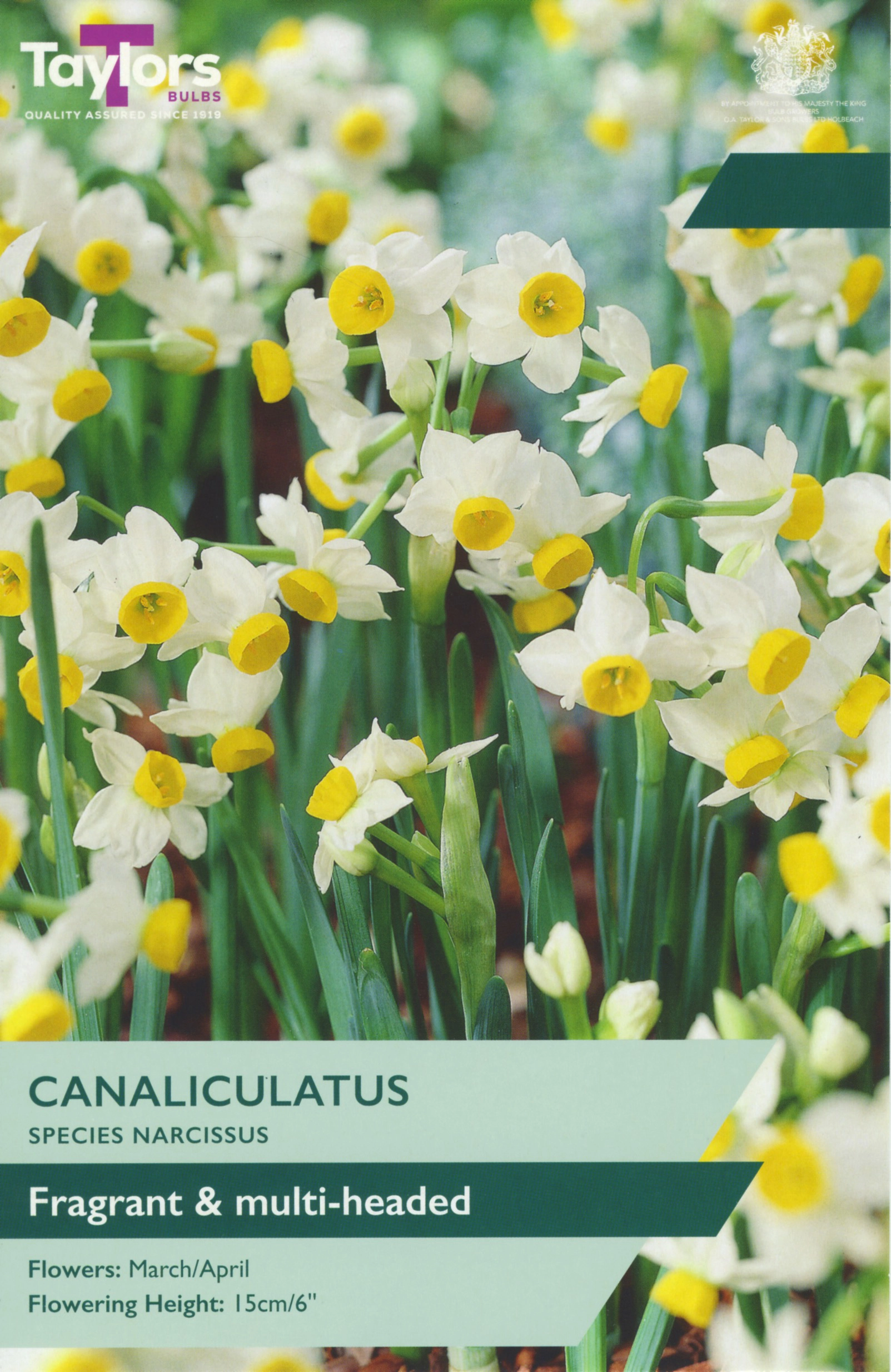
Narcissus canaliculatus (Channelled-leaved Daffodil)
Overview
Narcissus canaliculatus is a charming dwarf daffodil species that brings delicate beauty to winter and early spring gardens. This Mediterranean native produces clusters of small, sweetly fragrant flowers with pristine white petals and bright yellow centres, creating a lovely naturalistic display. Perfect for rock gardens, containers, or naturalising in grass, this hardy bulb offers gardeners an early burst of colour when most other plants are still dormant.
Key Features
Botanical Details
- Species: Narcissus canaliculatus
- Common names: Channelled-leaved Daffodil, White Hoop-petticoat Daffodil
- Family: Amaryllidaceae
- Origin: Western Mediterranean region
Plant Characteristics
- Height: 10-15cm (4-6 inches)
- Spread: 8-10cm (3-4 inches)
- Flower size: 2-3cm across
- Bloom time: December to February (depending on climate)
- Fragrance: Sweet, honey-like scent
Appearance and Growth Habit
The channelled-leaved daffodil produces distinctive narrow, channelled leaves that give the plant its common name. These blue-green leaves emerge alongside the flowers, creating an attractive foliage backdrop. Each bulb typically produces 2-4 flowers per stem, with blooms featuring six reflexed white petals surrounding a prominent yellow cup or corona. The flowers are held on short, sturdy stems just above the foliage.
The plant forms small clumps over time through natural bulb division, creating increasingly impressive displays as it matures. Its compact size makes it ideal for detailed garden areas where its intricate beauty can be appreciated up close.
Growing Conditions
Sunlight Requirements
- Full sun to partial shade
- Minimum 6 hours of direct sunlight during growing season
- Tolerates dappled shade under deciduous trees
Soil Preferences
- Well-draining soil essential
- Tolerates poor, rocky soils
- pH: Neutral to slightly alkaline (6.5-7.5)
- Avoid waterlogged conditions
Climate Tolerance
- Hardy in USDA zones 6-9
- RHS hardiness rating: H4 (hardy through most of UK)
- Requires cool winter period for proper flowering
- Drought tolerant once established
Planting Guide
When to Plant
- September to November for spring flowering
- Plant as soon as bulbs are available for best results
Planting Depth and Spacing
- Plant 5-8cm (2-3 inches) deep
- Space bulbs 5-8cm apart
- In containers, plant slightly shallower (3-5cm deep)
Planting Tips
- Choose a location with excellent drainage
- Add grit or sharp sand to heavy soils
- Plant pointed end upwards
- Water lightly after planting, then sparingly until growth appears
Care and Maintenance
Watering
- Moderate water during growing season (autumn to spring)
- Allow soil to dry out during summer dormancy
- Avoid overwatering, which can cause bulb rot
Fertilising
- Apply balanced bulb fertiliser in early autumn
- Liquid feed monthly during growing season
- Avoid high-nitrogen fertilisers which promote leaf growth over flowers
After Flowering Care
- Allow foliage to die back naturally (6-8 weeks after flowering)
- Do not cut back green leaves as they replenish the bulb
- Remove spent flowers to prevent energy going into seed production
Dividing
- Divide clumps every 3-4 years when dormant (summer)
- Carefully separate bulb clusters
- Replant immediately or store in dry, cool conditions
Garden Uses and Companion Planting
Ideal Locations
- Rock gardens and alpine collections
- Front of borders and woodland edges
- Containers and window boxes
- Naturalising in short grass
- Mediterranean-style gardens
Companion Plants
- Other early bulbs: Crocus, Iris reticulata, Galanthus
- Alpine plants: Aubrieta, Arabis, Alyssum
- Evergreen shrubs: Lavender, Rosemary, Thyme
- Ornamental grasses: Festuca glauca, Carex comans
Potential Challenges
Common Issues
- Bulb rot in waterlogged soils - ensure excellent drainage
- Narcissus fly larvae - inspect bulbs before planting
- Slugs may damage emerging shoots - use organic deterrents
Prevention Tips
- Plant in raised beds or add drainage material
- Inspect bulbs annually and remove any that feel soft
- Maintain good garden hygiene
Seasonal Interest
Winter to Early Spring: Delicate white and yellow flowers provide essential early nectar for bees and other pollinators when few other sources are available.
Late Spring: Attractive blue-green foliage continues to provide structure while other plants are emerging.
Summer: Plant enters dormancy, requiring minimal water and care.
Autumn: New growth begins to emerge, signalling the start of another flowering cycle.
Why Choose Narcissus canaliculatus?
This delightful dwarf daffodil offers several advantages for the home gardener. Its early flowering period extends the garden's season of interest, whilst its compact size makes it suitable for even the smallest spaces. The sweet fragrance and naturalising habit create increasingly spectacular displays year after year, and its low maintenance requirements make it perfect for busy gardeners or those new to bulb cultivation.
With proper planting and minimal care, Narcissus canaliculatus will reward you with years of reliable, cheerful blooms that herald the end of winter and the promise of spring to come.
Buying Bulbs from Jacksons Nurseries
Bulbs are supplied either in pre-packaged retail packs or in some cases they are loosly picked and sent bagged.