
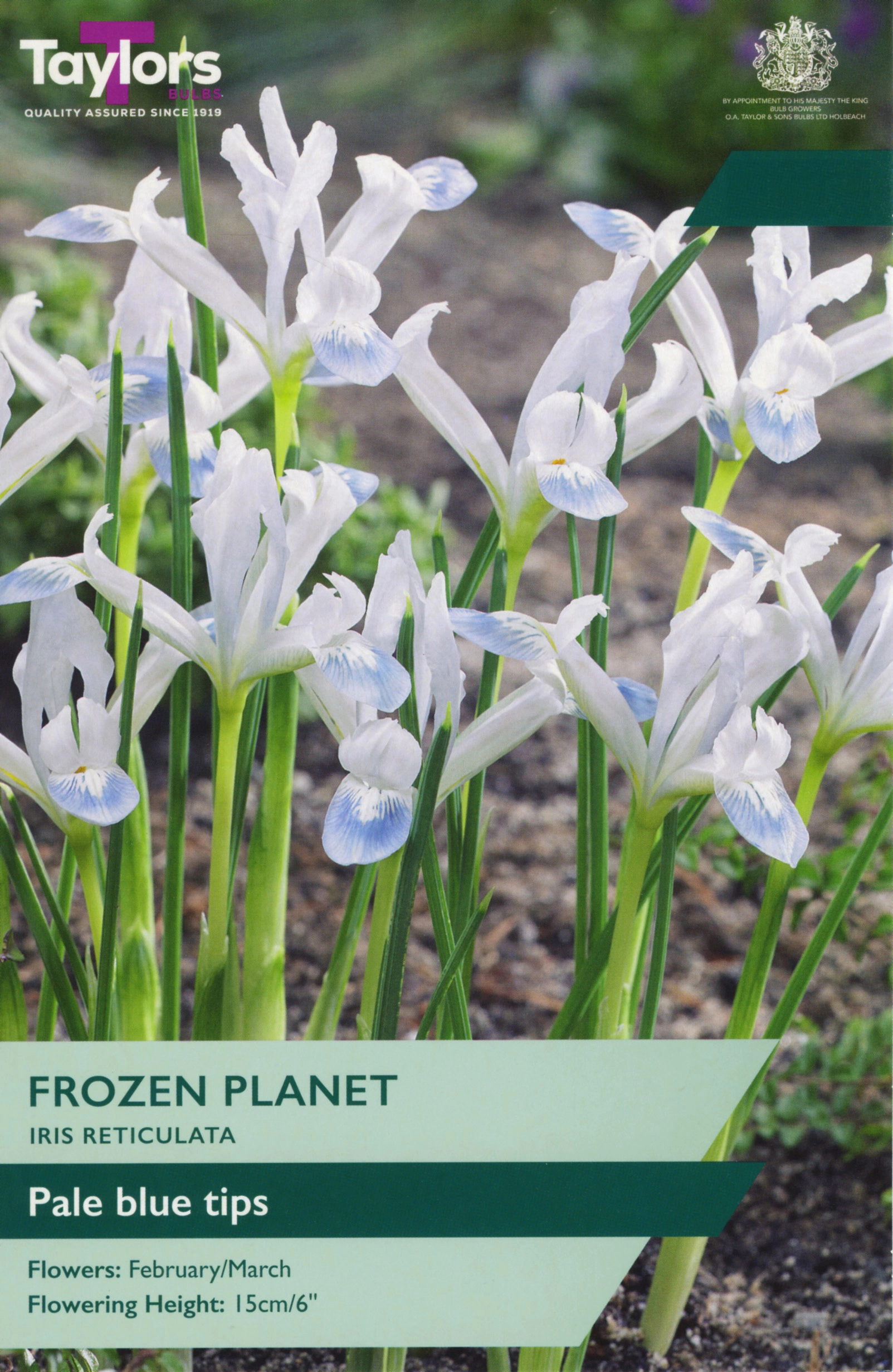
Iris Reticulata 'Frozen Planet'
Overview
Iris Reticulata 'Frozen Planet' is a stunning early spring flowering bulb that brings a touch of celestial beauty to your garden when most other plants are still dormant. This compact iris variety produces exquisite pale blue flowers with intricate white markings that resemble frost patterns, making it a perfect choice for naturalising in rock gardens, borders, or containers.
Key Features
- Early flowering: Blooms from February to March, providing vital early nectar for pollinators
- Compact growth: Reaches just 10-15cm in height, ideal for front borders and small spaces
- Hardy and reliable: Fully hardy in the UK, returning year after year with minimal care
- Naturalising ability: Spreads gradually to form attractive colonies over time
- Fragrant blooms: Delicate honey-like scent attracts beneficial insects
Flower Description
The flowers of 'Frozen Planet' are truly spectacular, featuring pale ice-blue petals adorned with intricate white and darker blue markings. Each bloom measures approximately 6cm across and sits atop sturdy stems above narrow, grass-like foliage. The falls (lower petals) display a distinctive white patch with delicate blue veining, whilst the standards (upright petals) showcase the soft blue colouration that gives this variety its celestial name.
Growing Conditions
Soil Requirements
- Drainage: Essential - requires well-draining soil to prevent bulb rot
- pH: Tolerates most soil types, preferring neutral to slightly alkaline conditions
- Texture: Thrives in sandy or gritty soils; heavy clay should be improved with grit or compost
Position
- Sunlight: Full sun to partial shade
- Exposure: Sheltered from strong winds
- Aspect: South or west-facing positions ideal
Climate Tolerance
- Hardiness: RHS H5 (hardy to -15°C)
- Suitable for: All UK regions
- Drought tolerance: Good once established
Planting Guide
When to Plant
Plant bulbs from September to November for spring flowering. This allows sufficient time for root development before winter dormancy.
Planting Depth and Spacing
- Depth: Plant 8-10cm deep (approximately three times the bulb's height)
- Spacing: 5-8cm apart for natural groupings
- Quantity: Plant in groups of 10-15 bulbs for maximum impact
Step-by-Step Planting
- Choose a well-draining location with good sunlight
- Prepare the soil by adding horticultural grit if drainage is poor
- Dig holes to the correct depth using a bulb planter or trowel
- Place bulbs pointed end upwards
- Backfill with soil and water lightly
- Mark the area to avoid accidental disturbance
Care and Maintenance
Watering
Water moderately during the growing season (autumn to early summer). Reduce watering as foliage dies back and keep dry during summer dormancy.
Feeding
Apply a balanced, low-nitrogen fertiliser in early spring as shoots emerge. Avoid high-nitrogen feeds which encourage leaf growth at the expense of flowers.
After Flowering Care
Allow foliage to die back naturally - this process feeds the bulb for next year's display. Resist the temptation to tidy up until leaves have completely yellowed, typically by late May.
Division
Lift and divide clumps every 4-5 years in summer when dormant if overcrowded. This also provides an opportunity to share bulbs with fellow gardeners.
Design Ideas and Companion Planting
Garden Combinations
- Rock gardens: Perfect amongst alpine plants and between stones
- Woodland edges: Naturalise under deciduous trees for early spring colour
- Containers: Excellent in terracotta pots with good drainage
- Borders: Use as edging or in drifts through perennial plantings
Companion Plants
- Snowdrops (Galanthus): Extend the early spring display
- Crocuses: Plant together for a tapestry of spring colour
- Dwarf daffodils: Provide succession of flowering
- Heathers (Calluna): Evergreen backdrop and complementary colours
- Ornamental grasses: Natural partnership with similar foliage texture
Expected Results
In the first year, expect modest flowering as bulbs establish. From the second year onwards, you'll enjoy increasingly generous displays as the bulbs naturalise and multiply. Well-established clumps can produce dozens of flowers, creating a spectacular carpet of pale blue blooms that signals winter's end.
Troubleshooting Common Issues
Poor Flowering
Usually caused by insufficient sunlight, waterlogged conditions, or premature removal of foliage in previous seasons.
Bulb Rot
Prevented by ensuring excellent drainage and avoiding overwatering, particularly during summer dormancy.
Slugs and Snails
Young shoots may be damaged by molluscs in wet conditions. Use organic slug pellets or copper barriers for protection.
Why Choose 'Frozen Planet'?
This iris variety offers exceptional value for money, providing years of reliable flowering with minimal maintenance. Its early blooming period makes it invaluable for extending the garden's season of interest, whilst its compact size suits modern smaller gardens perfectly. The unique colouration and markings make it a conversation piece that will delight both gardeners and visitors alike.
Perfect for both novice and experienced gardeners, Iris Reticulata 'Frozen Planet' represents everything that's wonderful about bulb gardening - easy establishment, reliable performance, and stunning seasonal impact.
Buying Bulbs from Jacksons Nurseries
Bulbs are supplied either in pre-packaged retail packs or in some cases they are loosly picked and sent bagged.