
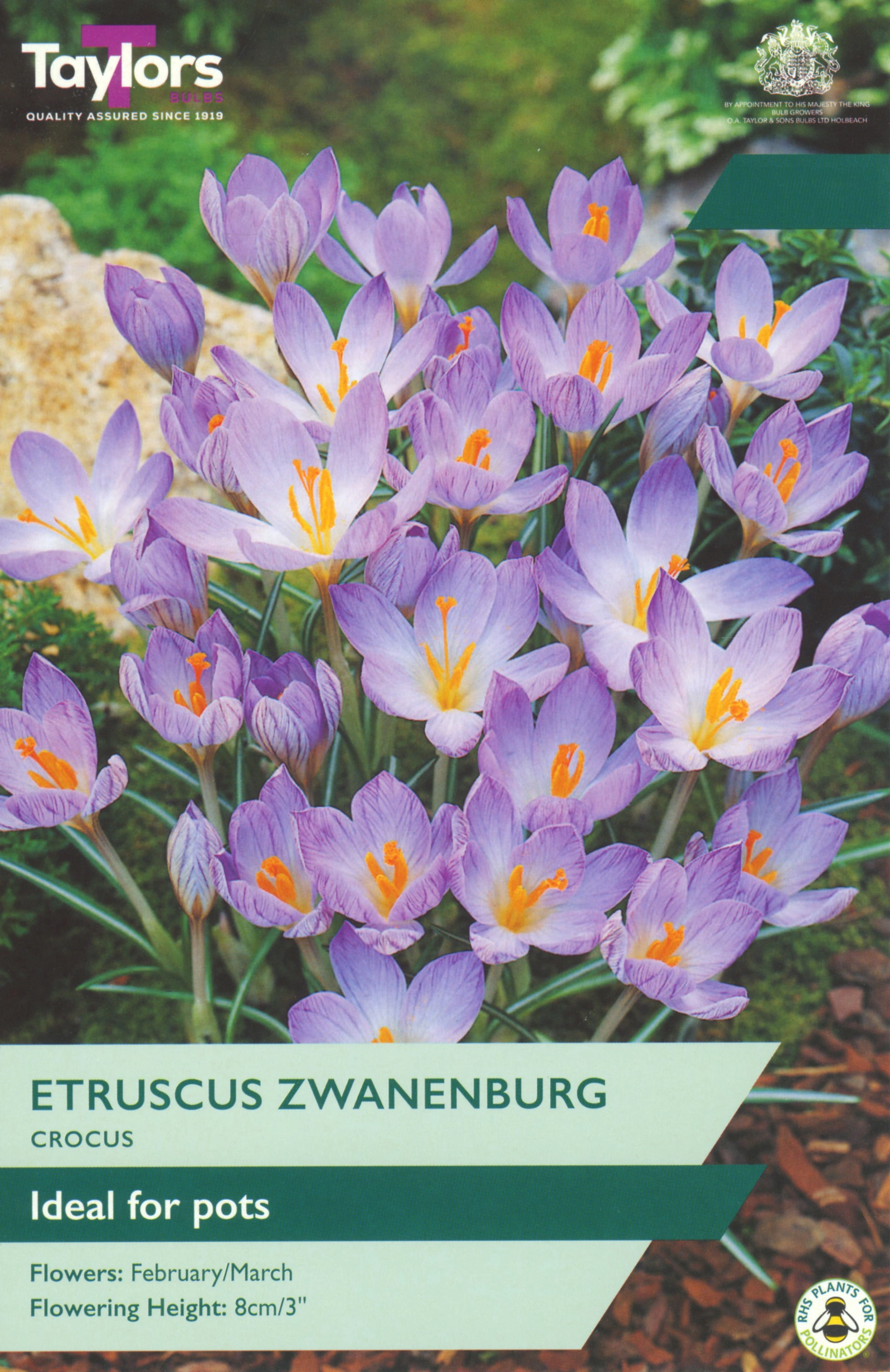
Crocus Etruscus 'Zwanenburg' - Early Spring Delight
Overview
Crocus etruscus 'Zwanenburg' is a charming early-flowering crocus that brings a burst of soft lilac-blue colour to your garden just when you need it most. This hardy bulb is one of the first to bloom in late winter or early spring, often pushing through snow to herald the coming season. With its distinctive feathered petals and compact growth habit, 'Zwanenburg' is perfect for naturalising in grass, brightening rock gardens, or creating drifts of colour in borders.
Key Features
This delightful variety produces goblet-shaped flowers measuring 8-10cm across when fully open. The petals display a beautiful soft lilac-blue colour with distinctive darker purple feathering on the outer petals, creating an almost painted appearance. Each flower emerges from narrow, grass-like foliage with characteristic white central stripes. The compact bulbs typically reach 8-12cm in height when in bloom.
Growing Conditions
Crocus etruscus 'Zwanenburg' thrives in well-drained soil and prefers a sunny to partially shaded position. These bulbs are remarkably hardy and can tolerate temperatures down to -15°C, making them suitable for most UK gardens. They perform best in neutral to slightly alkaline soil but are quite adaptable to different soil types, provided drainage is adequate. Heavy clay soils should be improved with grit or compost to prevent waterlogging.
Planting Guide
Plant bulbs in autumn, typically between September and November, before the first hard frost. Place bulbs 8-10cm deep and 5-8cm apart, with the pointed end facing upwards. For the most natural effect, scatter handfuls of bulbs and plant them where they fall. In grass areas, allow the foliage to die back naturally before mowing - this usually takes 6-8 weeks after flowering and is essential for next year's blooms.
Care and Maintenance
These crocuses are refreshingly low-maintenance once established. Water during dry spells in autumn when the bulbs are developing roots, but avoid overwatering. After flowering, allow the leaves to yellow and die back naturally to feed the bulb for next year's display. Apply a balanced fertiliser in early autumn if desired, though this is rarely necessary in good garden soil. The bulbs will multiply naturally over time, creating larger drifts each year.
Seasonal Interest
Flowering typically occurs from February to March, depending on your location and the winter weather. The blooms open wide on sunny days and close during overcast conditions or at night. Each bulb usually produces 1-3 flowers, and a mature clump can provide weeks of colour. The foliage remains attractive for several weeks after flowering before gradually dying back.
Design Ideas
'Zwanenburg' works beautifully when planted in informal drifts of 25-50 bulbs for maximum impact. They're excellent for naturalising in short grass, creating a carpet effect under deciduous trees, or tucking into rock gardens where their delicate flowers can be appreciated up close. Combine with other early bulbs like snowdrops, winter aconites, and early daffodils for an extended spring display. They also work well in containers for patio colour.
Wildlife Value
These early flowers are valuable for emerging bees and other pollinators when few other food sources are available. The pollen and nectar provide essential early-season sustenance, making them an excellent choice for wildlife-friendly gardens.
Hardiness and Longevity
Fully hardy throughout the UK and much of northern Europe, these bulbs are long-lived perennials that will return year after year with minimal care. They're also excellent for naturalising, gradually spreading to form larger colonies through natural division.
Companion Plants
Pair with other early spring bulbs such as snowdrops (Galanthus), cyclamen coum, iris reticulata, and early narcissus varieties. Later-emerging perennials like hellebores, pulmonaria, and hardy geraniums provide attractive foliage as the crocus leaves fade.
Buying Bulbs from Jacksons Nurseries
Bulbs are supplied either in pre-packaged retail packs or in some cases they are loosly picked and sent bagged.