
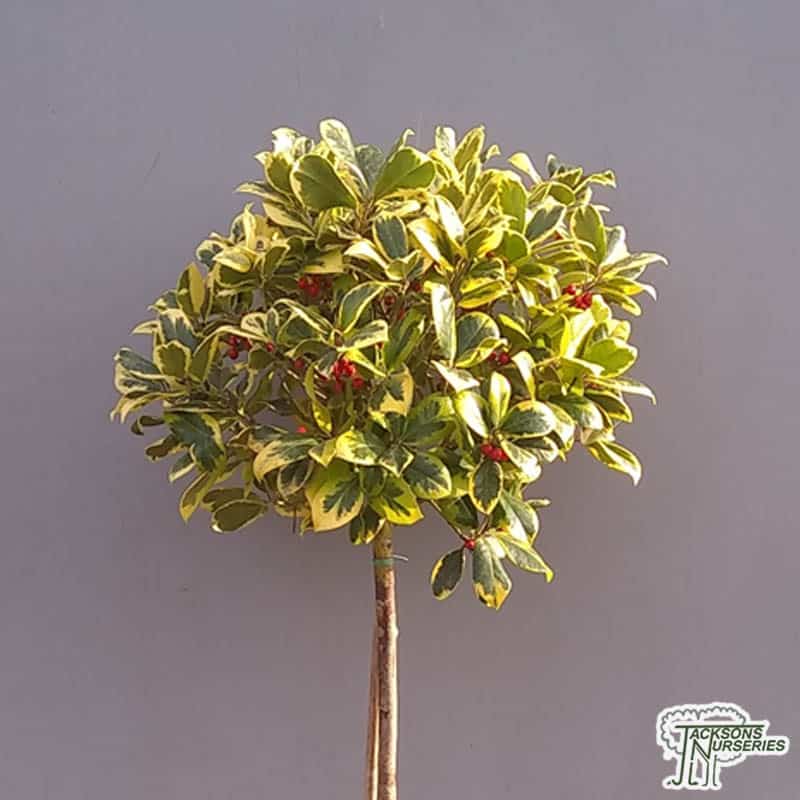
The Ilex Golden King Topiary Lollipop is a truly magnificent evergreen specimen that combines the classic elegance of traditional topiary with the stunning visual appeal of golden variegated foliage. This expertly trained English Holly features a perfectly spherical head atop a clean, straight stem, creating an eye-catching lollipop or standard form. The distinctive gold-edged leaves provide year-round colour and brightness, making this topiary an exceptional choice for adding light and structure to any garden setting.
Scientific Name: Ilex altaclerensis 'Golden King'
Common Names: Golden King Holly, Variegated English Holly
Plant Type: Evergreen shrub/small tree (trained as standard)
Mature Height: The stem will not grow any taller than 90cm; growth of the lollipop head can be controlled as you wish with annual pruning
Growth Rate: Slow to moderate
Hardiness: RHS H6 (hardy to -20°C)
Gender: Female plant (despite the name) - produces berries with male pollinator
Flowering: Small white flowers in late spring
Berries: Bright red berries in autumn/winter (spectacular display)
Spectacular Variegated Foliage
The 'Golden King' variety boasts glossy, dark green leaves with broad, creamy-gold margins that create a luminous effect throughout the year. This variegation provides exceptional brightness in shaded areas and adds warmth to winter gardens.
Perfect Lollipop Form
Each specimen has been meticulously trained over several years to create the classic standard or lollipop shape, featuring a dense, spherical crown balanced on a strong, straight stem.
Seasonal Berry Display
As a female variety, 'Golden King' produces abundant clusters of brilliant red berries from autumn through winter, creating a spectacular display when combined with the golden foliage.
Year-Round Interest
Provides four-season appeal with variegated foliage, spring flowers, and winter berries, ensuring garden interest throughout the entire year.
Architectural Presence
The formal standard shape provides strong architectural structure, perfect for creating focal points and adding height to garden designs.
Soil Requirements
Type: Well-draining, fertile soil preferred
pH: 6.0-7.5 (tolerates slightly acidic to neutral conditions)
Drainage: Essential - avoid waterlogged or constantly wet conditions
Fertility: Benefits from rich, humus-laden soil with good organic content
Mulching: Appreciates organic mulch to retain moisture and suppress weeds
Light Requirements
Optimal: Partial shade to full sun
Variegation: Best colour development in bright light with some protection from scorching afternoon sun
Shade Tolerance: Excellent performance in partial shade
Morning Sun: Particularly benefits from morning sunlight
Climate Tolerance
Hardiness: Extremely hardy, withstanding temperatures to -20°C
Wind: Good wind tolerance, though benefits from shelter when young
Coastal: Excellent tolerance of coastal conditions and salt spray
Urban: Performs well in urban environments with good pollution tolerance
Frost: Young growth may need protection in severe late frosts
When to Plant
Best Time: Can be planted any time of year providing the ground is not frozen or waterlogged and its not excessively windy. Also works really well kept in the pot or planted into a container for either side of an entrance, doorway or path, or on the patio.
Planting Instructions
Select a location with appropriate light levels and good drainage
Dig a planting hole 1.5 times the width of the root ball but no deeper
Ensure the top of the root ball sits level with the surrounding soil surface
Carefully remove from container and gently tease out any circling roots
Backfill with a mixture of native soil and well-rotted compost (3:1 ratio)
Water thoroughly and stake if necessary to support the standard form
Apply 7-10cm of organic mulch, keeping it away from the stem base
Support and Staking
Standard-form topiaries may require staking for the first 1-2 years until the root system becomes fully established and can support the top-heavy structure.
Watering Requirements
Establishment: Regular, deep watering for first 18 months
Mature Plants: Moderate water needs; reasonably drought tolerant once established
Container Specimens: Require consistent moisture monitoring, especially in summer
Winter: Reduce watering frequency but ensure soil doesn't become bone dry
Nutrition and Feeding
Annual Feeding: Apply balanced, slow-release fertiliser in early spring
Container Plants: Monthly liquid feeding during growing season (April-September)
Organic Enhancement: Annual mulch with well-rotted compost or leaf mould
Variegated Plants: Benefit from occasional potash-rich fertiliser to enhance leaf colour
Pruning and Shape Maintenance
Timing: Mid to late summer (July-August) after berry formation
Crown Shaping: Light, regular trimming to maintain spherical head
Stem Maintenance: Remove any shoots growing from the main stem
Tools: Sharp, clean secateurs or topiary shears essential
Frequency: 1-2 times per year for shape maintenance
Winter Care
Berry Display: Avoid heavy pruning in autumn to preserve winter berry display
Container Protection: Move containers to sheltered locations in severe weather
Mulching: Extra mulch around the base provides root protection
Focal Points
Creates stunning focal points in formal gardens, courtyards, and entrance areas where the lollipop form provides dramatic vertical accent.
Container Excellence
Outstanding performance in large containers for patios, terraces, and formal pot displays where mobility and controlled growth are advantages.
Formal Gardens
Perfect for parterre gardens, formal walkways, and symmetrical planting schemes where the standard form provides essential height and structure.
Mixed Borders
Adds evergreen structure and height variation to mixed herbaceous borders whilst providing year-round interest.
Pair Plantings
Magnificent when used in matching pairs to frame doorways, gates, or garden features, creating formal entrance statements.
Winter Gardens
Invaluable in winter garden schemes where the golden foliage and red berries provide essential colour during dormant months.
Spring (March-May)
New golden growth emerges
Small white flowers appear (valuable for pollinators)
Begin regular feeding and watering schedule
Summer (June-August)
Foliage at its most vibrant
Main pruning period
Monitor watering needs, especially containers
Autumn (September-November)
Red berries begin forming and colouring
Spectacular autumn display develops
Reduce watering frequency
Winter (December-February)
Peak berry display period
Golden foliage provides winter brightness
Minimal maintenance required
Pollinator Value
Spring flowers provide nectar for early pollinators including bees and beneficial insects.
Bird Food
Winter berries are valuable food source for thrushes, blackbirds, and other garden birds during harsh weather.
Shelter and Nesting
Dense crown provides excellent nesting sites for small birds and winter shelter.
Year-Round Colour
Unlike plain green alternatives, provides constant colour interest through golden variegation and seasonal berries.
Wildlife Friendly
Offers ecological benefits while maintaining formal appearance, unlike artificial topiary alternatives.
Low Maintenance
Holly's naturally dense growth habit means less frequent trimming required compared to faster-growing alternatives.
Longevity
Extremely long-lived plants that improve with age, representing excellent long-term garden investment.
Slow Establishment
Challenge: Can be slow to establish in first year
Solution: Patient care, consistent watering, and avoiding disturbance
Variegation Reversion
Challenge: Occasional plain green shoots may appear
Solution: Remove any all-green growth immediately to maintain variegation
Berry Mess
Challenge: Fallen berries may create minor tidying requirement
Solution: Regular collection or strategic placement away from paved areas
Spiny Leaves
Challenge: Mature leaves can be quite spiny
Solution: Wear gloves when handling, position away from high-traffic areas
Pot Selection
Choose large containers (minimum 50cm diameter) with excellent drainage holes.
Compost Requirements
Use high-quality, peat-free multipurpose compost mixed with John Innes No.3 for stability.
Watering Containers
Check soil moisture regularly; containers dry out faster than border plantings.
Winter Protection
Move containers to sheltered locations or wrap in fleece during extreme weather.
Property Enhancement
Well-maintained topiary standards significantly increase property value and kerb appeal.
Maturation Benefits
Becomes more impressive with age as the crown develops density and the stem gains character.
Generational Plants
With proper care, can provide decades of garden structure and beauty for future generations.
Underplanting Suggestions
Winter-flowering Cyclamen coum for complementary colour
Variegated Ajuga reptans to echo the golden theme
Spring bulbs: white daffodils, yellow crocuses
Complementary Plants
Other evergreens with contrasting foliage (dark green Yew, blue-grey Juniper)
Winter-flowering shrubs (Mahonia, Viburnum tinus)
Ornamental grasses for textural contrast
Colour Schemes
Gold and burgundy theme with copper-leaved Heuchera
White and gold scheme with white-flowering perennials
Traditional Christmas colours with red-berried shrubs
The Ilex Golden King Topiary Lollipop represents the pinnacle of ornamental gardening, combining formal elegance with natural beauty. The years of expert training required to create the perfect standard form, combined with the exceptional ornamental qualities of the 'Golden King' variety, make this an outstanding investment for discerning gardeners.
This topiary offers unmatched year-round interest, from the luminous golden foliage that brightens even the darkest winter days, through the delicate spring flowers that support early pollinators, to the spectacular winter berry display that provides both visual drama and wildlife value. Whether creating formal garden statements, adding structure to mixed plantings, or providing container excellence for patios and terraces, this magnificent specimen delivers professional results and lasting beauty that will enhance any garden for years to come.
Buying Topiary from Jacksons Nurseries
Unlike many garden centres, supermarkets and some nurseries here at Jacksons Nurseries we sell the majority of our stock all year round. Our stock is for the most part grown outdoors making it far hardier than those grown under glass and/or only sold ‘In Season’.
Here at Jacksons Nurseries we would favour a hardy outdoor grown plant every time. They are far less likely to suffer from the shock of being planted in colder conditions and they will begin to establish more rapidly the following spring. This can mean that they don’t look like a ‘picture perfect’ plant when purchased out of season but with the correct care and a little time you’ll have a wonderful plant to enjoy for many years to come.
Availability: Stock availability figures are provided as a guide only. There is a delay between orders being placed and the plants being gathered by our pulling team. During this time it may be possible for a member of the public to purchase these plants from our Garden Centre, while this is rare it is a possibility and we will notify you of any problems as soon as possible. This figure may also include plants that have not yet be flagged as unsaleable.
Pre-order: Pre-order times are given as a guide only and may vary dependent on the growing season. Orders containing Pre-ordered products will be shipped as a single order when all items become available. Large orders may be part shipped, please contact us on 01782 502741 or email sales@jacksonsnurseries.co.uk.
Please Note: Plants in 20 litre pots and above might require a pallet delivery starting at £79.99 per pallet. Depending on the exact pot size and height it may be possible to get between 5-10 trees or more than 100 of 2-litre plants per pallet at no extra cost. The maximum height we can dispatch on a pallet is 2m, this includes the height of the pallet and pot.
*Freshly potted - Root balled plant is freshly potted into a transportable container ready for shipping.
No posts found