

Cornus sanguinea 'Midwinter Fire'
Overview
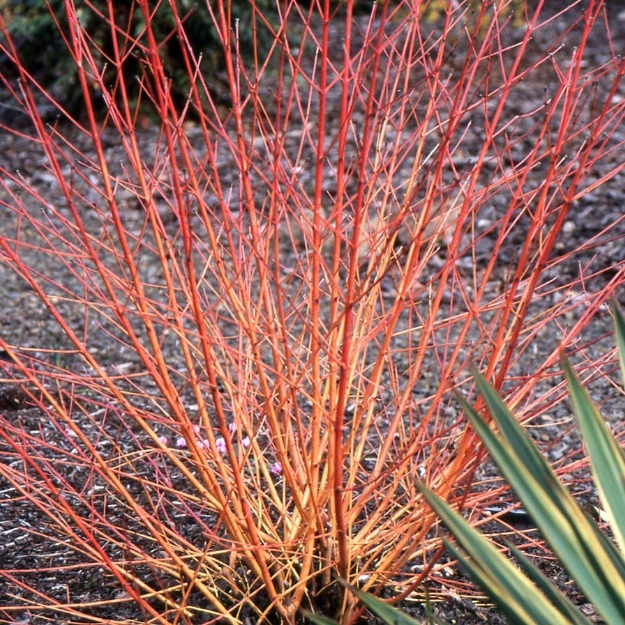
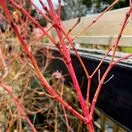
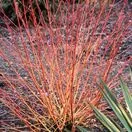
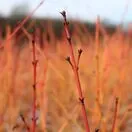
Cornus sanguinea 'Midwinter Fire' is a spectacular deciduous shrub that brings vibrant colour to the winter garden when it's needed most. This British native dogwood cultivar is renowned for its stunning stem displays, which transform from fiery orange-red to golden yellow as winter progresses, creating a glowing beacon of warmth in the coldest months.
Key Features
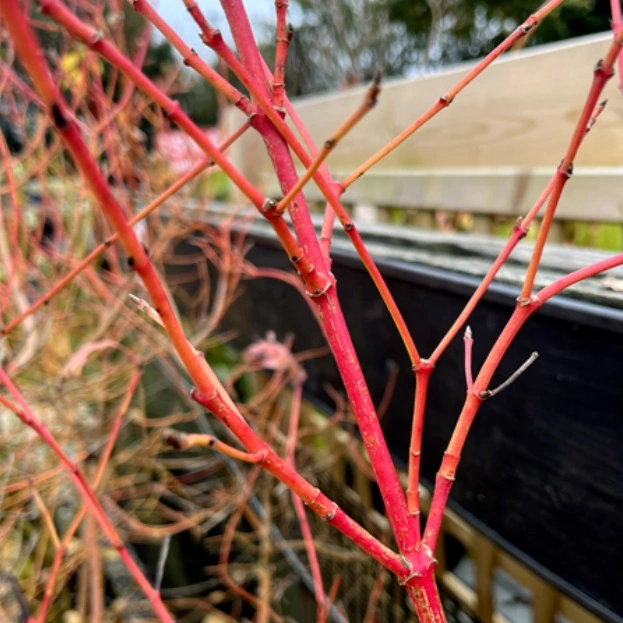
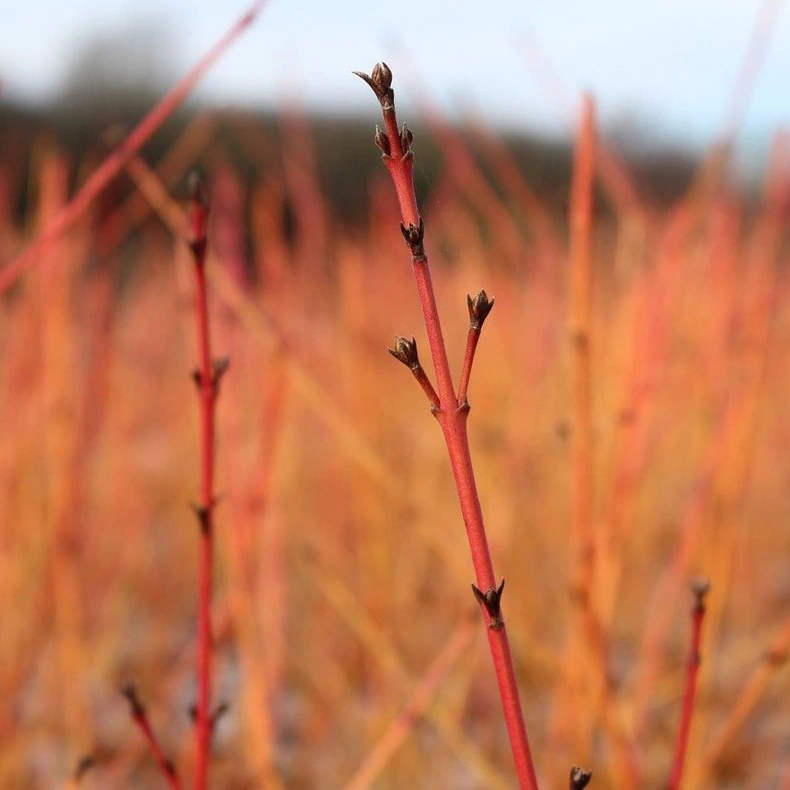
This hardy shrub typically reaches 1.5 to 2 metres in height and spread, making it ideal for medium-sized gardens. The real magic happens after the leaves drop in autumn, revealing stems that intensify in colour throughout winter. The younger stems display the most vivid colouration, ranging from coral-pink through burnt orange to butter yellow, often with multiple hues on a single branch.
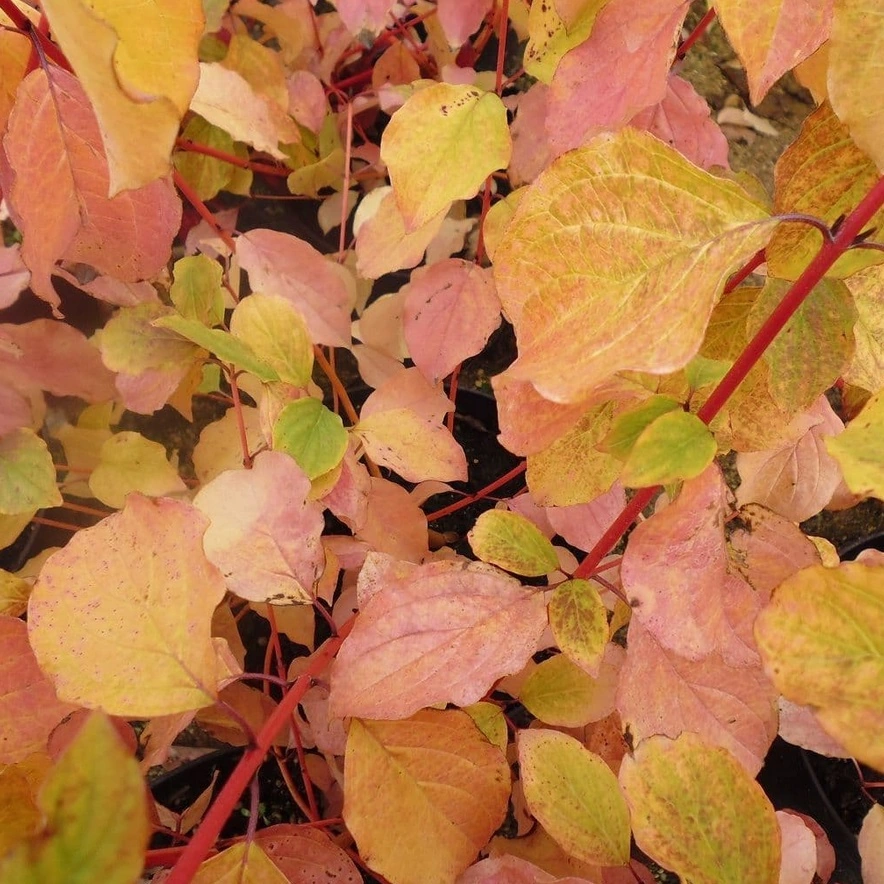
During spring and summer, the shrub produces oval, mid-green leaves and clusters of small, creamy-white flowers in late spring. These are followed by black berries in autumn, which are beloved by wildlife. However, it's the winter stem colour that makes this plant truly exceptional.
Growing Conditions
'Midwinter Fire' is remarkably adaptable and will thrive in most garden situations. It performs best in full sun to partial shade, though the stem colour will be most intense in a sunny position. The shrub tolerates a wide range of soil types, from clay to sand, provided the soil retains some moisture. It's particularly happy in damp or boggy conditions, making it perfect for challenging areas where other shrubs might struggle.
This variety is fully hardy throughout the UK, withstanding temperatures well below freezing without protection. It's also tolerant of exposed sites and coastal conditions.
Planting Your Bare Root
Bare root plants should be planted between November and March, whilst the shrub is dormant. Before planting, soak the roots in a bucket of water for a couple of hours to rehydrate them. Dig a hole roughly twice the width of the root system and deep enough so the soil mark on the stem sits level with your garden soil. Mix some well-rotted compost or manure into the excavated soil, then backfill around the roots, firming gently as you go. Water thoroughly after planting and keep watered during dry spells in the first growing season.
Care and Maintenance
One of the great advantages of 'Midwinter Fire' is its low-maintenance nature. The key to maintaining brilliant winter colour is hard pruning, which encourages fresh young growth. In late March or early April, cut all stems back to within 5-10 centimetres of ground level. This technique, called coppicing or stooling, promotes vigorous new shoots that will display the best colour the following winter.
Feed with a general-purpose fertiliser after pruning to support strong regrowth. Keep the plant well-watered during its first year, and mulch around the base each spring to retain moisture and suppress weeds.
Garden Uses
This versatile shrub works beautifully in mixed borders, where its winter stems provide structure and colour when perennials have died back. It's particularly effective planted en masse for maximum impact, or grouped with other winter-interest plants such as evergreen grasses, hellebores, and snowdrops.
'Midwinter Fire' is also excellent for wildlife gardens, providing nectar for pollinators in spring and berries for birds in autumn. The dense growth offers nesting sites and shelter for garden wildlife year-round.
Consider planting it where low winter sun can backlight the stems, creating a truly spectacular display. Near a window or along a path you use regularly allows you to appreciate the colour throughout the darker months.
What to Expect
Your bare root plant will arrive dormant, consisting of stems and roots with no leaves. Don't be alarmed by this appearance – it's perfectly normal. Once planted, the shrub will establish its root system over winter and burst into leaf in spring. You may see some stem colour in the first winter, but the display will improve significantly in subsequent years as the plant matures and after you begin the annual pruning regime.
With proper care, 'Midwinter Fire' will provide decades of reliable winter colour, becoming more impressive with each passing year.
- For protection from pests consider Shrub Shelters.
- Please see our bare root plant guides for more information. We've put together a collect of help and advice articles covering what bare root plants are, why they are a good choice, which plants are available bare root, when and where to plant.
* Deciduous plants supplied bare root during the dormancy period will not have any leaves at this time; top growth will just be brown and twiggy to start with and will come into leaf in the spring. This is perfectly normal. The plants we supply are healthy will an extensive root system. Please see the final picture for an illustration of how your plants will look when they are delivered.
Bare Root is usually dispatched between early November and late March. Exact dates vary year to year depending on the weather. We cannot guarantee availability for a certain date at the beginning or end of the season.
Important Bare Root Care
As soon as you receive your bare root plants place the items upright in a bucket of clean water immediately leaving them for at least 2 hours. Only take plants out as you need them for planting.
Q: When is bare root season?
A: Our bare root season usually runs from November to March but it can depend on the weather conditions, we'd always recommend buying at the end of autumn rather than waiting for spring.
Q: Does the plant size include the roots?
A: No, all bare root plant sizes quoted exclude the roots.
Q: What size plants will I receive?
A: Stock size varies through the season, our 'Plant Size' are give as a guide and you will receive plants somewhere in that range. We are unable to specify exactly how tall the plants will be within that range.
Q: How old will the plants be?
A: Most of our 'Plant Sizes' include the age of the plant, this is shown as a sum e.g. 1+2 which in this case would indicate that the plants are 3 years old. The first number is how long the plant has spent in the seedbed and the second is the number of year it has spent lined out in the field. Where the sum starts with a 0+ this indicates that the plants were grown from a rooted cutting.
Q: Can I get a discount for bulk purchases?
A: We offer a discount banding on bare root plants making them cheaper the more you buy, see the table on each page for details of the price within each band.
Q: Do I need canes?
A: Bamboo canes are perfect for giving young saplings, hedging plants, climbers and other tall shrubs the support they need when they start to establish. Unless you are planting in a completely sheltered spot with very little chance of wind then we would always recommend using a cane for support.
Q: Do I need rabbit guards?
A: Spiral Rabbit Guards are the most popular, low cost tree protection for young saplings, seedlings, transplants and hedging plants from browsing animals such as voles, mice, rabbits and hares. Spiral Rabbit Guards have the ability to grow and expand with the growing tree, providing a sheltered environment for the tree. It's hard to say for certain if you will require the extra protection a rabbit guard provides, if your are aware of a particular pest problem in your planting location then we would recommend using them. Rabbit Guards are not suitable for 'evergreens' please see 'Shrub Shelters' for a suitable evergreen protection method.
Q: What is a shrub/tree shelter?
A: Shrub/Tree Shelters are similar to rabbit guards but are designed for use on evergreens that would sweat and die in rabbit guards. We supply shrub/tree shelters as a kit which includes the shelter, 1 Stake and 2 cable ties, one kit is required per plant.
Q: Do I need shrub/tree shelters?
A: If you are aware of any specific pest problems in your planting area then we would recommend using a shrub/tree shelter to give your young trees or hedging plants that extra protection.