

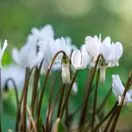
Cyclamen hederifolium White
Hardy autumn-flowering cyclamen (Cyclamen hederifolium f. albiflorum)
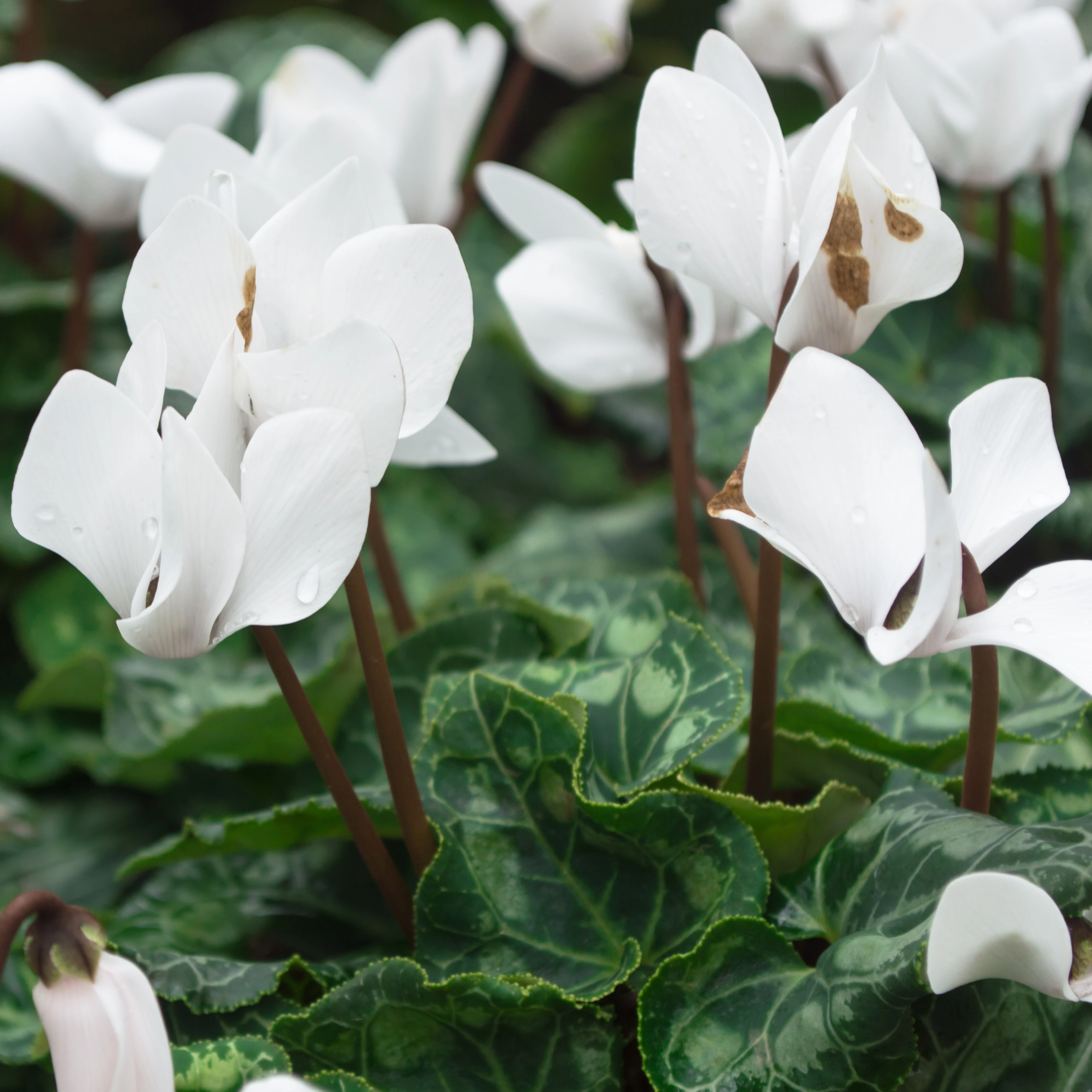
When most of the garden is winding down, this charming little cyclamen is just getting started. From late summer into autumn, dainty pure white flowers rise from bare ground, followed by marbled, ivy-shaped leaves that carpet the soil right through winter. It’s fully hardy, long-lived and very easy to grow. It’s one of the best plants for brightening the dry, shady corners under trees where little else will grow.
At a Glance
-
Flower colour: Pure white
-
Flowering time: August to October, sometimes into November
-
Foliage: Silver and green marbled leaves from autumn to late spring
-
Height: 10–15cm
-
Spread: 15–25cm, increasing over the years
-
Position: Partial or dappled shade
-
Soil: Any well-drained soil, including chalk
-
Hardiness: Fully hardy (RHS H5)
-
Ideal for: Under trees and shrubs, woodland gardens, rockeries, borders and containers
The Flowers
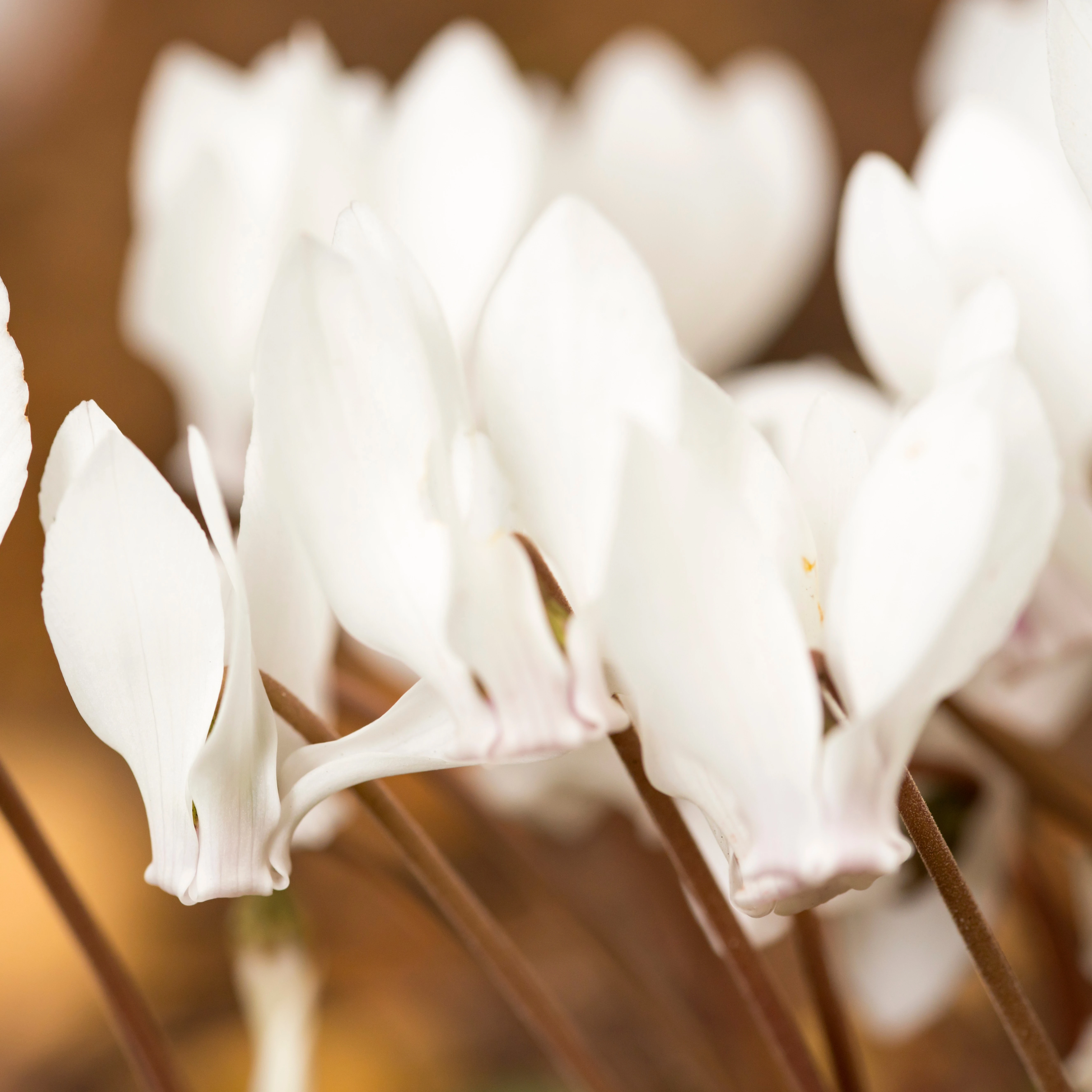
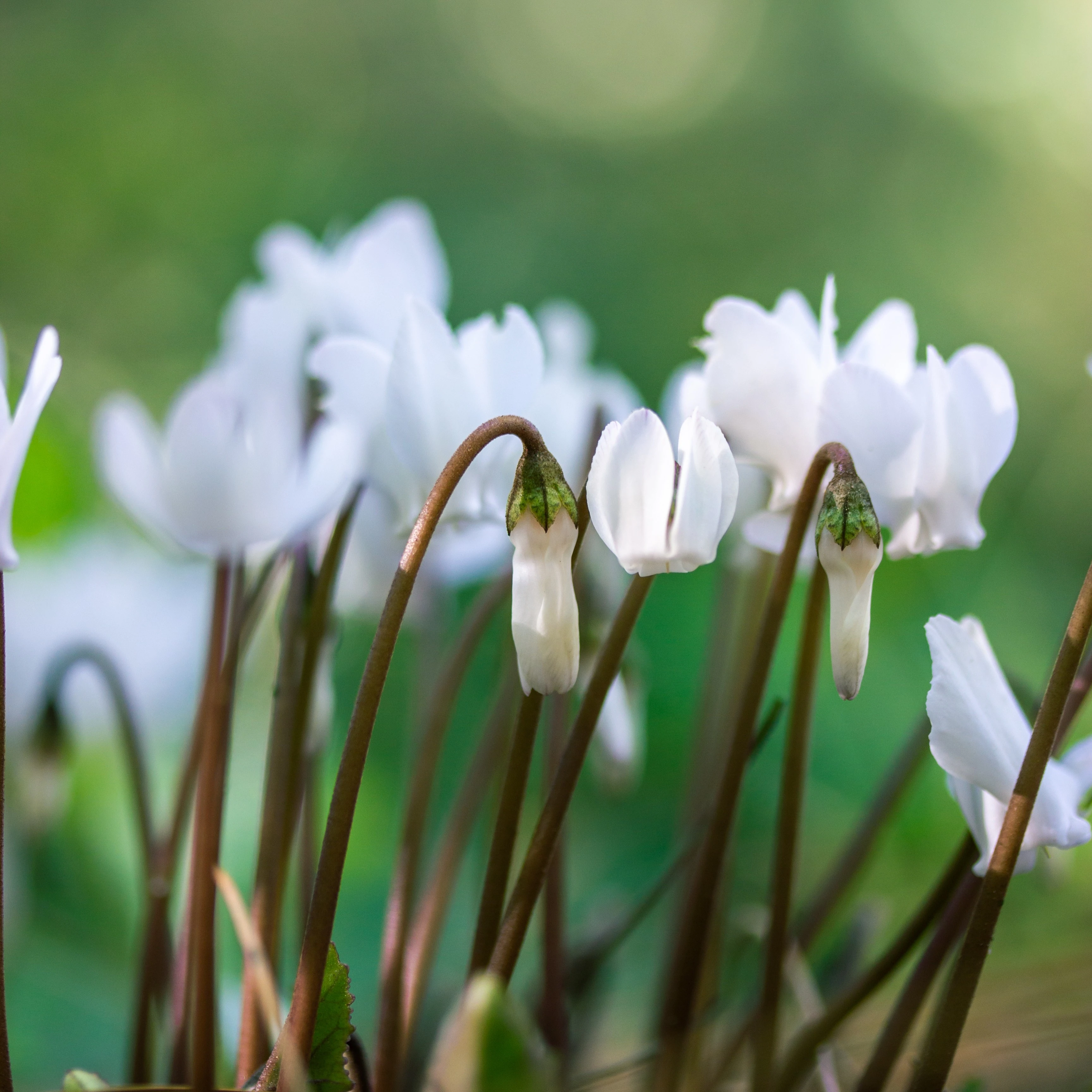
Each flower is around 2cm long, with five slender petals swept elegantly backwards like tiny shuttlecocks. Small “ears” at the base of each petal are a tell-tale feature of this species. The flowers often appear before the leaves, so they seem to spring straight out of the bare earth. Many plants have a light, sweet scent, which you’ll notice most when they’re grown in a drift or in a raised pot.
The Foliage
The leaves are just as much of a feature as the flowers. They’re shaped like ivy leaves, which is where the name hederifolium (“ivy-leaved”) comes from. Each one is patterned in silver, grey and green, and no two plants are quite alike. They form a handsome ground cover all winter, then yellow and die back in late spring or early summer while the plant rests. This is entirely natural, so don’t worry when it happens.
Where to Grow
In the wild, this cyclamen grows in the woodlands and rocky hillsides of southern Europe and Turkey. That makes it perfect for planting beneath deciduous trees and shrubs. It gets plenty of light in autumn and winter after the canopy has dropped its leaves, and it’s happy with the shade and dryness of summer because it’s dormant then. Once established, it copes well with dry shade and competition from tree roots.
It also works well:
-
At the foot of hedges and shrubs
-
In rockeries and raised beds
-
Along the edges of shady borders and paths
-
In pots and shallow containers
Avoid anywhere that stays wet or waterlogged, as the tubers can rot.
Planting
Pot-grown plants can be planted at any time of year when the ground isn’t frozen or waterlogged. Late summer to autumn, when they’re in active growth, is ideal.
-
Prepare the soil. Fork in some leaf mould or well-rotted compost. On heavy clay, add grit to improve drainage.
-
Plant at the right depth. Set pot-grown plants at the same level they were in the pot. If you’re planting tubers, keep them shallow. Unlike most bulbs, this cyclamen roots from the top and sides of the tuber, so cover it with only 2–3cm of soil. Place the rounded side down and the flatter, slightly hollow side facing up.
-
Space them out. Allow 15–20cm between plants. Groups of five or more look especially effective.
-
Water in well, then leave them to settle.
Always buy cyclamen from cultivated stock, never wild-collected tubers.
Growing in Containers
Choose a shallow pot with good drainage holes. Fill it with gritty compost, such as peat-free multipurpose compost mixed with about a third grit. Water regularly while the plant is in leaf, but sparingly over summer: keep the compost barely moist rather than bone dry. Stand pots on feet over winter so excess water can drain away.
Care and Maintenance
-
Watering: Plants in the ground rarely need watering once established. Give them a drink in a prolonged dry spell in early autumn, when they’re flowering and coming into leaf.
-
Mulching: Spread a thin layer of leaf mould each summer while the plants are dormant. It recreates the woodland floor they love.
-
Feeding: Not essential, though a light sprinkle of general fertiliser in autumn will do no harm.
-
Summer rest: Mark where your plants are so you don’t dig into the tubers by accident while they’re out of sight.
Naturalising and Self-Seeding
After flowering, the stems coil down like springs and pull the seed pods to ground level. The seeds ripen the following summer and have a sticky, sugary coating that ants love. The ants carry them around the garden, so new seedlings pop up in unexpected places. Over the years, a few plants can become a beautiful carpet. White forms come largely true from seed, especially if they’re grown away from pink varieties.
The tubers grow larger every year and can live for decades. A mature plant can produce dozens of flowers each autumn.
Pests and Problems
Cyclamen are generally trouble-free. In pots, check for vine weevil grubs in the compost. Squirrels and mice occasionally dig up newly planted tubers, so a piece of wire mesh over the planting area helps until the plants are established.
Planting Partners
-
Cyclamen coum flowers from midwinter to early spring and enjoys the same conditions, giving you cyclamen flowers for much of the year
-
Pink Cyclamen hederifolium makes a lovely mix with the white form
-
Snowdrops for late winter interest
-
Hellebores and ferns for structure in shady spots
-
Black mondo grass (Ophiopogon planiscapus ‘Nigrescens’), against which the white flowers really glow
Good to Know
-
Not a houseplant: This is a completely different plant from the large florist’s cyclamen sold indoors in winter, which are tender.
-
Toxic if eaten: All parts, especially the tubers, are harmful if eaten, so keep away from pets that like to dig.
-
Wildlife: The flowers provide a late source of nectar and pollen for bees on mild autumn days.
Buying Alpines from Jacksons Nurseries
At Jacksons Nurseries we lightly trim back our alpines after flowering to ensure that the plants remain neat and tidy whilst in the pot. The more tender the plant the less we cut back to help protect exposed stems from winter frost. Depending on the plant variety we will then prune back further in spring once the risk of the more severe frosts is over.
As a result, depending on the time of year you buy alpines, they may not look like images showing their ‘prime time’ in flower and looking at their best.
Availability: Stock availability figures are provided as a guide only. There is a delay between orders being placed and the plants being gathered by our pulling team. During this time it may be possible for a member of the public to purchase these plants from our Garden Centre, while this is rare it is a possibility and we will notify you of any problems as soon as possible. This figure may also include plants that have not yet be flagged as unsaleable.
Pre-order: Pre-order times are given as a guide only and may vary dependent on the growing season. Orders containing Pre-ordered products will be shipped as a single order when all items become available. Large orders may be part shipped, please contact us on 01782 502741 or email
orders@jacksonsnurseries.co.uk.
From late autumn onwards and dependant on variety, there may be very little visible above the soil except for a few cut back dormant leaves or stems. It is perfectly normal for dormant plants to look like this from autumn onwards, they will however burst back into life in spring.
Alpines are a group of perennials that generally grow in rocky conditions at high altitudes.
As for all plants, soil preparation is time well spent. Dig over the area to be planted ensuring that the ground is free draining. If not then you may wish to either consider planting in a different spot or raising the level of the planting area by adding additional topsoil, well rotted garden compost and/or well rotted manure. Add ‘Fish, Blood and Bone’ fertiliser or a high potash fertiliser to encourage good root growth and development.
It’s always a good idea to plant a few of the same plant together, we recommend planting in 3’s or 5’s to provide a bold effect but allowing them plenty of room to develop.
By using this simple guide and a little time, alpines can make an absolutely spectacular difference to your garden.
No posts found