
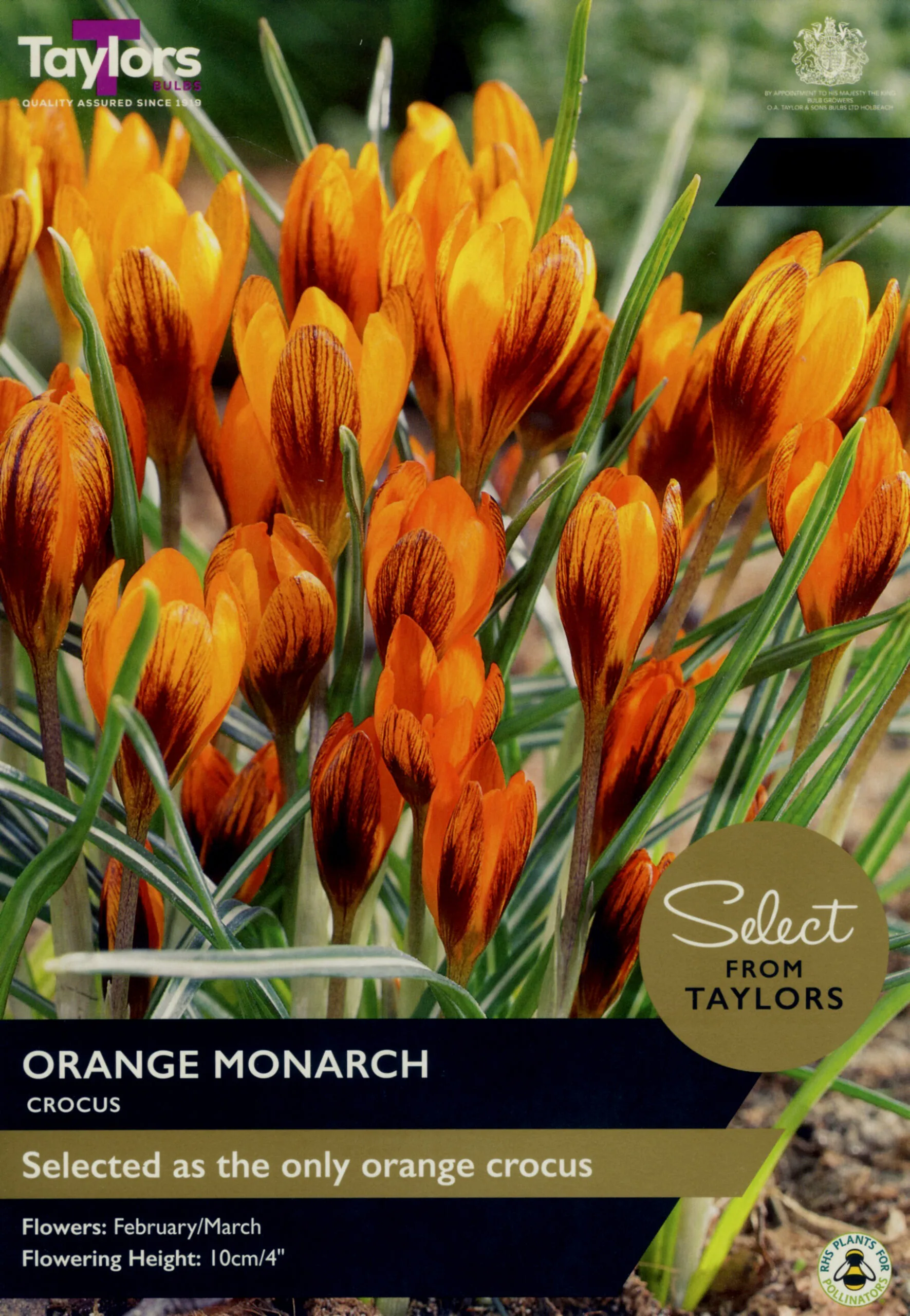
Crocus Orange Monarch
Crocus chrysanthus 'Orange Monarch'
Overview
The Orange Monarch crocus is a spectacular early spring bulb that brings vibrant warmth to your garden when most other plants are still dormant. This hardy perennial produces stunning orange and yellow blooms with distinctive purple markings, creating a delightful contrast against the late winter landscape. Perfect for naturalising in lawns, rock gardens, or container displays, this compact bulb is an essential addition to any British garden.
Key Features
- Flower Colour: Bright orange petals with golden yellow interiors and deep purple feathering on the exterior
- Flowering Period: February to March
- Height: 8-10cm (3-4 inches)
- Spread: 5-8cm (2-3 inches)
- Hardiness: Fully hardy (RHS H7)
- Aspect: Full sun to partial shade
Growing Conditions
Soil Requirements
Orange Monarch crocuses thrive in well-drained soil and are particularly suited to sandy or chalky conditions. They dislike waterlogged soil, which can cause bulb rot. If your garden has heavy clay soil, consider adding grit or sharp sand to improve drainage, or plant in raised beds or containers.
Light Requirements
These crocuses perform best in full sun but will tolerate partial shade. Morning sun is particularly important for encouraging the flowers to open fully. In shadier positions, the blooms may remain more closed.
Climate Tolerance
Exceptionally hardy and well-suited to the British climate, Orange Monarch crocuses require a cold winter period to flower properly. They're ideal for gardens throughout England, Scotland, Wales, and Northern Ireland.
Planting Guide
When to Plant
Plant bulbs between September and November, before the ground becomes frozen. Earlier planting allows better root development.
Planting Depth and Spacing
- Depth: Plant bulbs 8-10cm (3-4 inches) deep
- Spacing: Space bulbs 5-8cm (2-3 inches) apart
- Orientation: Plant with the pointed end facing upwards
Planting Tips
For the most natural effect, scatter bulbs randomly and plant where they fall rather than in rigid rows. When naturalising in grass, plant in drifts of 25-50 bulbs for maximum impact.
Care and Maintenance
Watering
Once established, Orange Monarch crocuses are drought-tolerant and rarely need supplementary watering. Avoid overwatering, particularly during the summer dormancy period.
Feeding
Apply a balanced, low-nitrogen fertiliser in early spring as shoots emerge. Avoid high-nitrogen feeds which encourage leaf growth at the expense of flowers.
After Flowering Care
Allow foliage to die back naturally for at least six weeks after flowering. This process allows the bulb to store energy for next year's display. If naturalised in grass, delay the first mowing until the crocus leaves have yellowed and withered.
Division
Crocuses will gradually multiply to form attractive clumps. Lift and divide overcrowded clumps every 3-4 years in late summer when dormant.
Garden Uses
Naturalising
Excellent for creating natural drifts in grass verges, beneath deciduous trees, or in wildflower meadows. The early flowering period means blooms appear before grass begins active growth.
Rock Gardens
Perfect scale for rock gardens and alpine displays, where the bright colours provide early season interest amongst emerging perennials.
Containers
Ideal for window boxes, pots, and seasonal displays. Plant with other early bulbs like snowdrops and winter aconites for extended colour.
Underplanting
Excellent beneath deciduous shrubs and trees where they'll receive spring sunshine before the canopy leafs out.
Companion Plants
Orange Monarch pairs beautifully with:
- Purple crocuses (Crocus tommasinianus)
- Snowdrops (Galanthus)
- Winter aconites (Eranthis hyemalis)
- Daffodils (Narcissus) for succession of bloom
- Primroses (Primula vulgaris)
- Heathers (Erica carnea)
Wildlife Value
Crocus flowers provide valuable early nectar for bees, particularly honey bees and bumblebees emerging from winter dormancy. The flowers are also visited by beneficial hoverflies and other early pollinators when few other food sources are available.
Common Problems
Bulb Rot
Caused by waterlogged soil. Ensure good drainage and avoid planting in areas where water regularly pools.
Rodent Damage
Mice and voles may eat bulbs. Plant in wire mesh cages if this is a persistent problem in your garden.
Sparse Flowering
Usually indicates bulbs are too crowded or planted in insufficient light. Divide clumps and replant in sunnier positions.
Purchasing and Storage
Purchase bulbs from reputable suppliers and plant as soon as possible after purchase. If storage is necessary, keep bulbs in a cool, dry, well-ventilated place away from direct sunlight. Check regularly and discard any soft or mouldy bulbs to prevent disease spread.
Conclusion
Crocus Orange Monarch is an indispensable early spring bulb that provides reliable colour year after year with minimal maintenance. Its vibrant orange blooms signal the end of winter and herald the start of the gardening season, making it a must-have for any garden seeking early seasonal interest. Whether planted formally in containers or naturalised in grass, this hardy bulb will reward you with years of dependable spring colour.
Buying Bulbs from Jacksons Nurseries
Bulbs are supplied either in pre-packaged retail packs or in some cases they are loosly picked and sent bagged.