
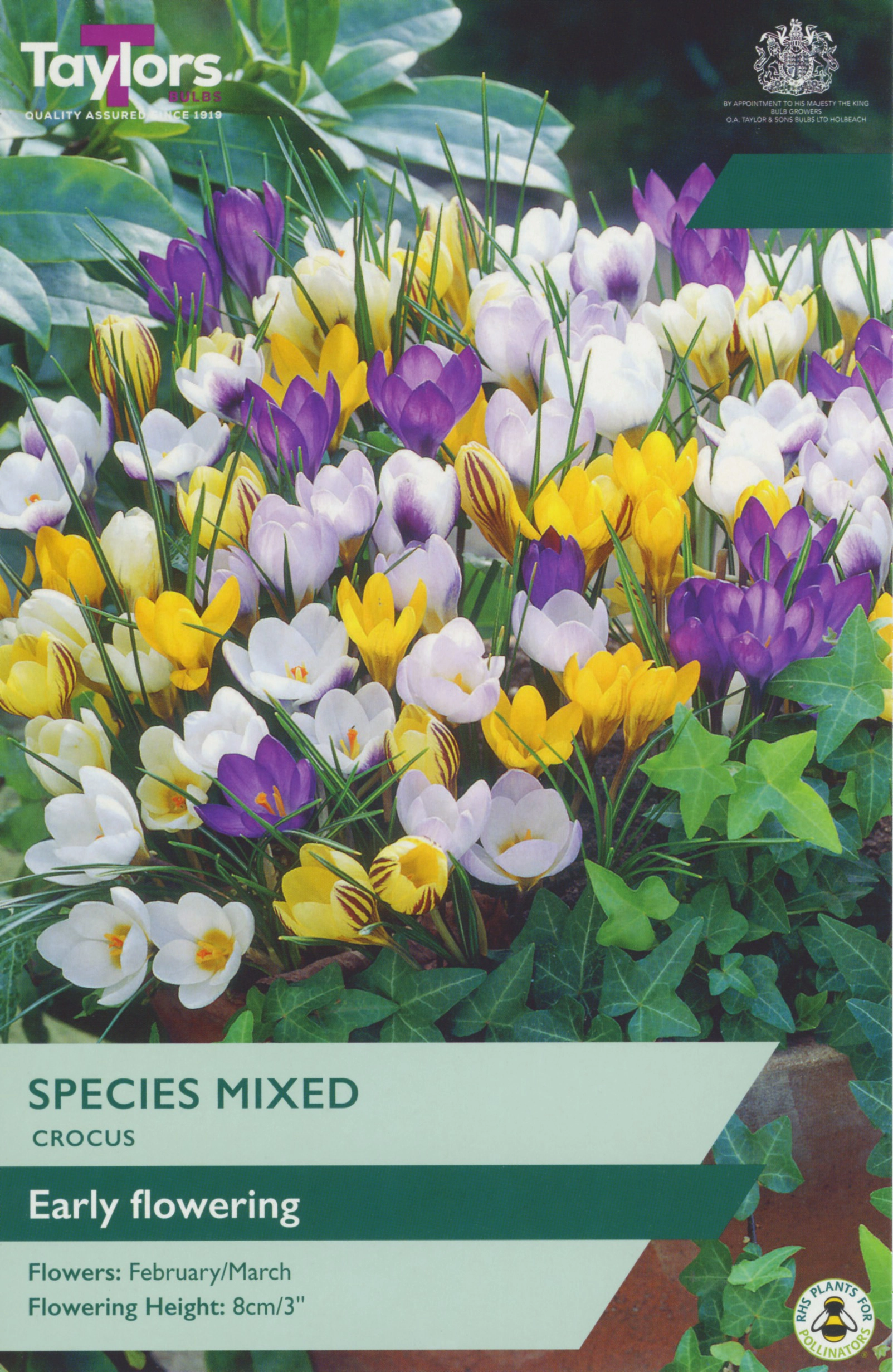
Crocus Mixed Species
Overview
Transform your garden into a vibrant tapestry of early spring colour with our premium Crocus Mixed Species collection. This carefully curated selection combines the finest varieties of these beloved spring bulbs, offering a spectacular display of purple, white, yellow, and striped blooms that herald the end of winter. Perfect for naturalising in lawns, borders, or containers, these hardy perennials will return year after year with increasing abundance.
What's Included
The mixed species collection features a diverse selection of crocus varieties, including:
- Crocus vernus (Dutch Crocus) - Large, showy blooms in vibrant purples and whites
- Crocus chrysanthus (Snow Crocus) - Delicate, early-flowering varieties with intricate markings
- Crocus tommasinianus (Tommies) - Prolific naturalising species in soft lilac and purple tones
- Crocus flavus (Yellow Crocus) - Bright golden-yellow blooms that glow in spring sunshine
Each pack contains premium-quality bulbs, hand-selected for size and vigour to ensure reliable flowering.
Key Features
Early Spring Interest
Crocuses are amongst the first flowers to emerge in late winter and early spring, often pushing through snow to provide much-needed colour when little else is flowering in the garden.
Naturalising Excellence
These hardy bulbs are perfect for naturalising, spreading gradually over time to create drifts of colour in lawns, woodland edges, and informal areas.
Pollinator Friendly
Early-flowering crocuses provide vital nectar and pollen for emerging bees and other pollinators when few other food sources are available.
Low Maintenance
Once established, crocuses require minimal care and will multiply naturally, providing years of reliable spring displays.
Growing Requirements
Soil Conditions
- Soil type: Well-draining soil; avoid waterlogged conditions
- pH preference: Neutral to slightly alkaline (pH 6.0-7.5)
- Drainage: Essential - bulbs may rot in heavy, wet soils
Light Requirements
- Sunlight: Full sun to partial shade
- Positioning: Morning sun is particularly beneficial for flower opening
Climate Suitability
- Hardiness: Fully hardy in the UK
- Chilling requirement: Requires cold winter period for proper flowering
Planting Instructions
When to Plant
Plant bulbs from September to November for best results. Earlier planting allows better root development before winter.
Planting Depth and Spacing
- Depth: Plant bulbs 7-10cm deep (approximately three times their height)
- Spacing: Space bulbs 5-7cm apart for formal displays, or scatter naturally for informal drifts
- Orientation: Plant pointed end upwards
Planting Tips
- Choose a well-draining location to prevent bulb rot
- Add horticultural grit to heavy soils to improve drainage
- For naturalising in grass, use a bulb planter or spade to create individual holes
- Water lightly after planting if soil is very dry
Care and Maintenance
Watering
Minimal watering required once established. Natural rainfall is usually sufficient. Avoid overwatering, particularly during dormant summer period.
Feeding
Apply a balanced, low-nitrogen fertiliser in early spring as shoots emerge. Bone meal can be mixed into planting holes for slow-release nutrition.
After Flowering Care
Allow foliage to die back naturally (typically 6-8 weeks after flowering) to enable bulbs to store energy for next year's display. Avoid mowing grass areas until foliage has yellowed completely.
Division
Clumps can be divided every 3-4 years after foliage dies back to prevent overcrowding and maintain flowering performance.
Design Ideas and Uses
Lawn Naturalising
Create stunning drifts by scattering bulbs randomly across grass areas. The flowers will emerge before grass begins active growth, creating a natural meadow effect.
Border Planting
Plant in drifts at the front of borders for early season interest. Combines beautifully with other spring bulbs like snowdrops and daffodils.
Container Displays
Excellent for autumn-planted containers, providing portable spring colour for patios and balconies.
Rock Gardens
Ideal for rock gardens and alpine collections where their compact size and early flowering is particularly valued.
Expected Performance
Flowering Time
February to April, depending on variety and local conditions. Snow Crocus typically flowers first, followed by Dutch Crocus varieties.
Flower Size
Blooms range from 2-8cm across, depending on species. Expect a wonderful variety of sizes within the mixed collection.
Height
Plants reach 8-15cm in height when in flower, with grass-like foliage extending slightly taller.
Longevity
With proper care, bulbs will persist and multiply for many years, often outliving the gardener who planted them.
Storage and Handling
Store unused bulbs in a cool, dry, well-ventilated location until planting time. Avoid storing in sealed plastic bags which can encourage fungal problems. Plant as soon as possible for best results.
Buying Bulbs from Jacksons Nurseries
Bulbs are supplied either in pre-packaged retail packs or in some cases they are loosly picked and sent bagged.