
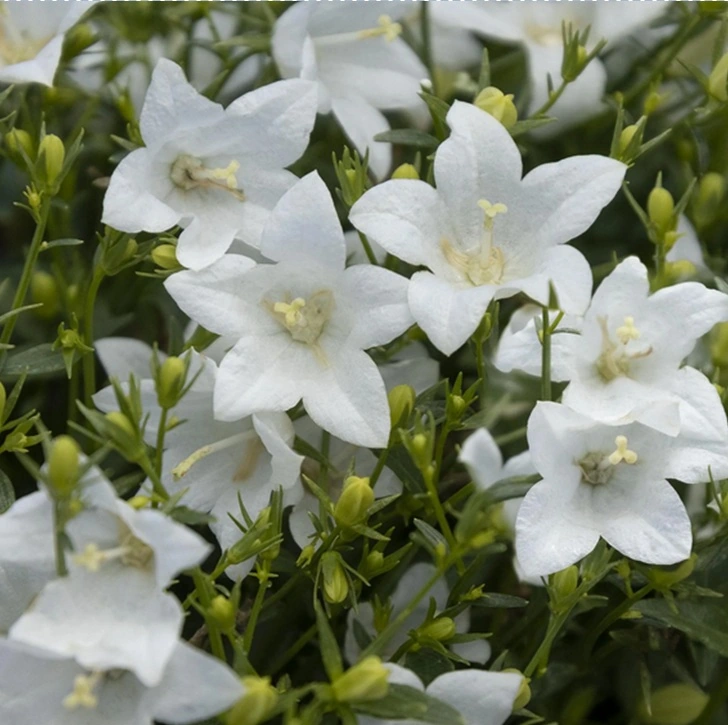
Campanula carpatica 'White Baby' (Dwarf Carpathian Bellflower)
A charming ultra-compact perennial with pristine white bell-shaped flowers for delicate summer colour
Overview
Campanula carpatica 'White Baby' is an enchanting ultra-dwarf perennial that brings miniature cottage garden charm to any landscape. This delightful compact Carpathian Bellflower forms tiny, neat mounds of bright green foliage adorned with masses of pristine white, upturned, bell-shaped flowers throughout the summer months. Its exceptionally compact habit and extended flowering period make it an invaluable addition to small-space gardens, alpine collections, and containers where space is at a premium. The pure white blooms provide elegant contrast whilst creating perfect proportions for miniature garden schemes and detailed plantings.
Key Features
- Flowering Period: July to September (extended summer display)
- Mature Size: 20cm tall (ultra-compact variety)
- Spreading: 60cm wide
- Growth Rate: Moderate-growing, establishing steadily in first season
- Hardiness: Fully hardy (RHS H5, withstands temperatures to -15°C)
- Soil Requirements: Moist but well-draining soil
- Aspect: Full sun to partial shade
Flowers
The delightful feature of 'White Baby' is its profusion of pristine white, upturned, bell-shaped flowers that are borne on very short stalks just above the foliage. Each flower displays the classic campanula bell shape in miniature proportions, creating an enchanting display perfectly scaled to the plant's compact size. The pure white colouration makes this variety particularly valuable for small-scale colour schemes and providing elegant contrast in detailed plantings.
Foliage
The plant forms a tiny, neat mound of small, toothed and rounded bright green leaves that remain attractive throughout the growing season. The foliage stays exceptionally low and dense, creating perfect proportions for the diminutive white flowers. The leaves are heart-shaped but noticeably smaller than standard varieties, creating a delicate, refined appearance ideal for close inspection.
Growth Habit
'White Baby' develops an ultra-compact, tidy mound that maintains perfect proportions without any maintenance. The dwarf habit makes it ideal for detailed plantings where precise scale is important, whilst its controlled growth ensures it never overwhelms neighbouring plants or outgrows its allocated space.
Soil Requirements
Like all Campanulas, 'White Baby' requires moist but well-draining soil and tends to suffer in winter wet conditions. The plant performs best in fertile, neutral to slightly alkaline soil with good organic matter content. Heavy clay soils should be improved with organic matter and grit to ensure adequate drainage, particularly important for this compact variety.
Light Requirements
Plant in a position that receives full sun to partial shade. The compact nature means it benefits from good light to maintain tight, floriferous growth. Whilst it tolerates some shade, the best flowering and most compact habit occur in sunny positions with good air circulation.
Watering Needs
Consistent moisture during the growing season promotes the best flowering performance. The small root system requires careful attention to watering, particularly in containers. Avoid wet winter conditions as these can cause problems for the compact crown.
Planting
Plant from spring through early autumn, with spring planting allowing optimal establishment before winter. Space plants 15-20cm apart for detailed ground cover effect. The ultra-compact size makes it exceptional for container growing in small pots, alpine troughs, and miniature garden schemes.
Maintenance
Deadhead regularly to promote continuous blooms throughout the summer season. This low-maintenance perennial benefits from careful removal of spent flowers to encourage further flowering. The compact nature means deadheading can be done precisely without disturbing the plant's perfect proportions.
Feeding
A light application of balanced fertiliser in spring supports healthy growth and abundant flowering. The compact nature means feeding should be restrained to prevent the plant from losing its dwarf characteristics. Well-rotted compost worked lightly into the soil provides gentle nutrition.
Alpine Gardens
Perfect for alpine and scree gardens where its miniature proportions complement other dwarf plants. The white flowers create excellent contrast against stone whilst maintaining perfect scale with alpine companions.
Detailed Border Edging
The ultra-compact habit makes it ideal for creating precise, detailed edging where exact proportions are essential. Excellent for formal herb garden edging and intricate border designs.
Container Growing
Outstanding for small containers, alpine troughs, and miniature garden displays where its compact size and extended flowering provide reliable colour. Perfect for table-top gardens and detailed container compositions.
Rock Crevices
Ideal for tight spaces in rock gardens and wall crevices where larger varieties would be inappropriate. The compact root system suits restricted growing conditions.
Fairy Gardens
Perfect scale for fairy garden and miniature landscape applications where standard-sized plants would be out of proportion.
Companion Planting
'White Baby' creates charming combinations with other dwarf plants such as miniature hostas, small sedums, and alpine strawberries. Pairs beautifully with silver-leaved miniature plants like dwarf artemisia for elegant small-scale schemes. The white flowers provide perfect contrast to tiny purple violas and miniature lavender for detailed cottage garden effects.
Potential Issues
Generally pest and disease-free with no significant problems. The main concern is avoiding wet winter conditions which can affect the compact crown. Good drainage and air circulation prevent most potential issues. The small size makes it more susceptible to slug damage in damp conditions.
Seasonal Interest
-
Spring: Compact fresh green foliage emerges forming perfect miniature mounds
-
Summer: Extended display of pristine white bell-shaped flowers from late spring through early autumn
-
Autumn: Continued flowering with opportunity for careful deadheading and maintenance
-
Winter: Herbaceous perennial dies back, returning reliably each spring
Hardy Zones and Regional Suitability
-
RHS Hardiness: H5 (Hardy in most places throughout the UK even in severe winters)
-
Temperature Tolerance: Withstands temperatures to -15°C to -10°C
-
Regional Notes: Suitable for all UK regions with proper drainage
-
Award Recognition: Part of improved breeding programmes focusing on compact garden performance
Campanula carpatica 'White Baby' represents exceptional value for gardeners seeking reliable, long-flowering summer colour in an ultra-compact, easy-care package. Its pristine white flowers, perfect miniature proportions, and versatility make it ideal for detailed garden situations from alpine collections to container displays. The plant's hardy nature and extended flowering period ensure excellent performance in small-scale applications year after year, making it a worthy investment for any gardener seeking dependable miniature summer colour with precise proportions.
Buying Alpines from Jacksons Nurseries
At Jacksons Nurseries we lightly trim back our alpines after flowering to ensure that the plants remain neat and tidy whilst in the pot. The more tender the plant the less we cut back to help protect exposed stems from winter frost. Depending on the plant variety we will then prune back further in spring once the risk of the more severe frosts is over.
As a result, depending on the time of year you buy alpines, they may not look like images showing their ‘prime time’ in flower and looking at their best.
Availability: Stock availability figures are provided as a guide only. There is a delay between orders being placed and the plants being gathered by our pulling team. During this time it may be possible for a member of the public to purchase these plants from our Garden Centre, while this is rare it is a possibility and we will notify you of any problems as soon as possible. This figure may also include plants that have not yet be flagged as unsaleable.
Pre-order: Pre-order times are given as a guide only and may vary dependent on the growing season. Orders containing Pre-ordered products will be shipped as a single order when all items become available. Large orders may be part shipped, please contact us on 01782 502741 or email
orders@jacksonsnurseries.co.uk.
From late autumn onwards and dependant on variety, there may be very little visible above the soil except for a few cut back dormant leaves or stems. It is perfectly normal for dormant plants to look like this from autumn onwards, they will however burst back into life in spring.
Alpines are a group of perennials that generally grow in rocky conditions at high altitudes.
As for all plants, soil preparation is time well spent. Dig over the area to be planted ensuring that the ground is free draining. If not then you may wish to either consider planting in a different spot or raising the level of the planting area by adding additional topsoil, well rotted garden compost and/or well rotted manure. Add ‘Fish, Blood and Bone’ fertiliser or a high potash fertiliser to encourage good root growth and development.
It’s always a good idea to plant a few of the same plant together, we recommend planting in 3’s or 5’s to provide a bold effect but allowing them plenty of room to develop.
By using this simple guide and a little time, alpines can make an absolutely spectacular difference to your garden.
No posts found