
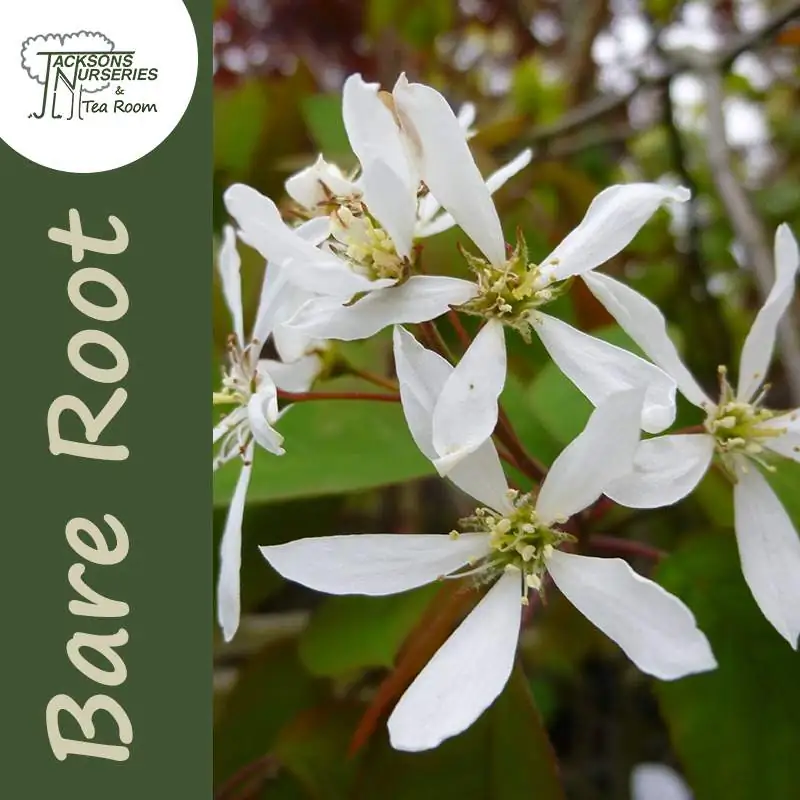
Amelanchier Lamarckii Bare Root - Snowy Mespilus
Amelanchier lamarckii, affectionately known as Snowy Mespilus or Juneberry, is one of the most rewarding small trees you can grow in a British garden. This North American native has been cultivated in Europe for centuries and delivers an exceptional four-season performance that few other trees can match. Supplied as a bare root plant during the dormant season, it offers excellent value and establishes beautifully when planted between November and March.
Why Choose Bare Root?
Purchasing bare root plants is both economical and environmentally friendly. These trees are lifted from the field whilst dormant, with soil removed from their roots for efficient transport. Despite their unassuming appearance on arrival, bare root trees often establish more successfully than pot-grown alternatives, developing stronger root systems and growing more vigorously once settled in their new home.
Plant Characteristics
Amelanchier lamarckii is a multi-stemmed deciduous tree or large shrub that typically reaches 4-8 metres in height with a similar spread, making it perfectly proportioned for today's smaller gardens. Its graceful, upright habit with gently arching branches creates an elegant silhouette throughout the year.
The true magic of this tree lies in its ever-changing seasonal display. In early spring, often before the leaves fully emerge, cascading racemes of delicate white, star-shaped flowers smother the branches in a breathtaking snowy display that inspired its common name. This spring spectacle is made even more striking by the coppery-bronze tint of the emerging foliage.
As spring progresses, the leaves mature to a soft green, providing a lovely backdrop for the developing fruits. By early summer, small purple-black berries ripen - sweet and edible, resembling tiny apples (hence another common name, Serviceberry). These are delicious fresh or in preserves, though you'll need to be quick to harvest them before the birds devour every last one.
Come autumn, Amelanchier truly steals the show with a fiery display of orange, red, and purple foliage that rivals any Japanese maple. Even in winter, the smooth grey bark and elegant branch structure maintain visual interest.
Growing Conditions
Amelanchier lamarckii is wonderfully adaptable and thrives in most British gardens. It performs best in full sun to partial shade - whilst it flowers and fruits most prolifically in good light, it tolerates some shade admirably, making it useful for awkward spots beneath larger trees or in north-facing gardens.
This tree prefers moist, well-drained, slightly acidic soil but is tolerant of neutral conditions and will even grow on slightly alkaline soils, though it may show some leaf yellowing (chlorosis) on very chalky ground. It appreciates soil enriched with organic matter and benefits from consistent moisture, particularly during its first few years.
Fully hardy throughout the UK, Amelanchier withstands cold winters without complaint and is suitable for exposed positions, though flowers last longer when sheltered from harsh winds.
Planting Your Bare Root Tree
Plant your bare root Amelanchier between November and March, choosing a mild day when the soil is workable - neither frozen solid nor waterlogged. Begin by soaking the roots in a bucket of water for at least an hour to rehydrate them thoroughly.
Dig a planting hole approximately twice the width of the root spread and deep enough that the old soil mark on the stem sits level with your garden soil. If your soil is heavy clay or very sandy, work in plenty of well-rotted compost or manure to improve structure and fertility.
Position the tree in the hole, spreading the roots naturally outwards and downwards. Backfill carefully with the improved soil, firming gently with your heel as you go to eliminate air pockets. Water thoroughly after planting - really drench it - and apply a 7-10cm layer of mulch around the base, keeping it a few centimetres clear of the trunk to prevent rot.
Young trees benefit from staking for the first couple of years, particularly in exposed gardens. Use a short stake and flexible tree tie, checking and loosening it regularly as the trunk expands.
Care and Maintenance
Amelanchier is refreshingly low-maintenance once established, but does appreciate some attention during its settling-in period. Water regularly and generously during the first growing season, particularly during dry spells. Even after establishment, this tree performs best with consistent moisture, so continue watering during prolonged summer droughts.
Feed annually in early spring with a general-purpose fertiliser or a generous mulch of well-rotted compost, which also helps retain soil moisture. If grown on alkaline soil and leaves show yellowing between the veins, apply an ericaceous feed or iron supplement in spring.
Pruning is minimal and best done in late winter. Remove any dead, damaged, or crossing branches to maintain a good structure, and thin out congested growth if necessary. Amelanchier flowers on the previous year's wood, so avoid heavy pruning if you want abundant spring blossom. If you wish to keep it as a single-stemmed tree rather than a multi-stemmed shrub, remove any suckers arising from the base.
Garden Uses
Amelanchier's modest size and spectacular display make it incredibly versatile. It's ideal as a specimen tree in a lawn or border, where its year-round beauty can be fully appreciated. The multi-stemmed form works beautifully in mixed shrub borders, providing height and structure without overwhelming neighbouring plants.
Its tolerance of some shade makes it valuable for woodland gardens or as an understorey tree. Plant it near a patio or seating area where you can enjoy the spring blossom close-up, or position it where low sun will backlight the autumn foliage for maximum impact.
Amelanchier also works well in large containers on patios or courtyards, though containerised plants require more consistent watering and feeding. It's an excellent choice for wildlife gardens and cottage garden schemes, and combines beautifully with spring bulbs, which flower simultaneously with its blossom.
Wildlife Value
This tree is a wildlife magnet throughout the seasons. The early spring flowers provide crucial nectar for emerging bees and other pollinators when food sources are scarce. The summer berries are beloved by blackbirds, thrushes, and other garden birds - indeed, you'll be lucky to harvest any for yourself once the birds discover them.
The foliage supports various caterpillars, and the dense branching structure offers excellent nesting sites for small birds. In an increasingly wildlife-conscious age, Amelanchier earns its place as both beautiful and beneficial.
Edible Berries
The sweet, juicy berries that ripen in June and July are genuinely delicious - tasting something like a cross between blueberries and apples with a hint of almond. Rich in vitamin C and antioxidants, they can be eaten fresh, added to summer puddings, made into jams and jellies, or baked in pies and muffins. However, be prepared for competition from the local bird population, who find them equally irresistible.
Companion Planting
Amelanchier combines beautifully with other spring-flowering plants. Underplant with drifts of spring bulbs such as daffodils, bluebells, or white tulips to complement the spring blossom. It looks stunning alongside other acid-loving plants like rhododendrons, azaleas, and camellias, or paired with complementary foliage plants like hostas and ferns that appreciate similar conditions.
Final Thoughts
Amelanchier lamarckii is often described as the perfect small garden tree, and it's easy to see why. With spring blossom, edible summer fruits, spectacular autumn colour, and attractive winter structure, it delivers beauty every single month of the year. Undemanding, hardy, and suitable for both formal and informal gardens, it represents outstanding value as a bare root plant.
Whether you're planting your first tree or seeking something special to complete an established garden, Amelanchier lamarckii offers a combination of elegance, reliability, and multi-season interest that's genuinely hard to beat. This is a tree you'll treasure for decades to come.
Bare Root is usually dispatched between early November and late March. Exact dates vary year to year depending on the weather. We cannot guarantee availability for a certain date at the beginning or end of the season.
Important Bare Root Care
As soon as you receive your bare root plants place the items upright in a bucket of clean water immediately leaving them for at least 2 hours. Only take plants out as you need them for planting.
Q: When is bare root season?
A: Our bare root season usually runs from November to March but it can depend on the weather conditions, we'd always recommend buying at the end of autumn rather than waiting for spring.
Q: Does the plant size include the roots?
A: No, all bare root plant sizes quoted exclude the roots.
Q: What size plants will I receive?
A: Stock size varies through the season, our 'Plant Size' are give as a guide and you will receive plants somewhere in that range. We are unable to specify exactly how tall the plants will be within that range.
Q: How old will the plants be?
A: Most of our 'Plant Sizes' include the age of the plant, this is shown as a sum e.g. 1+2 which in this case would indicate that the plants are 3 years old. The first number is how long the plant has spent in the seedbed and the second is the number of year it has spent lined out in the field. Where the sum starts with a 0+ this indicates that the plants were grown from a rooted cutting.
Q: Can I get a discount for bulk purchases?
A: We offer a discount banding on bare root plants making them cheaper the more you buy, see the table on each page for details of the price within each band.
Q: Do I need canes?
A: Bamboo canes are perfect for giving young saplings, hedging plants, climbers and other tall shrubs the support they need when they start to establish. Unless you are planting in a completely sheltered spot with very little chance of wind then we would always recommend using a cane for support.
Q: Do I need rabbit guards?
A: Spiral Rabbit Guards are the most popular, low cost tree protection for young saplings, seedlings, transplants and hedging plants from browsing animals such as voles, mice, rabbits and hares. Spiral Rabbit Guards have the ability to grow and expand with the growing tree, providing a sheltered environment for the tree. It's hard to say for certain if you will require the extra protection a rabbit guard provides, if your are aware of a particular pest problem in your planting location then we would recommend using them. Rabbit Guards are not suitable for 'evergreens' please see 'Shrub Shelters' for a suitable evergreen protection method.
Q: What is a shrub/tree shelter?
A: Shrub/Tree Shelters are similar to rabbit guards but are designed for use on evergreens that would sweat and die in rabbit guards. We supply shrub/tree shelters as a kit which includes the shelter, 1 Stake and 2 cable ties, one kit is required per plant.
Q: Do I need shrub/tree shelters?
A: If you are aware of any specific pest problems in your planting area then we would recommend using a shrub/tree shelter to give your young trees or hedging plants that extra protection.