
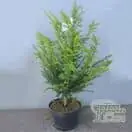
Yew Hedging (Taxus baccata)
The Classic Choice for a Formal Hedge
Yew is the traditional hedge of English country gardens, and for good reason. Its dense, deep green foliage forms a smart, solid screen that looks good in every season. Whether you want a neat boundary, a sheltered backdrop for your borders or a hedge that clips into crisp shapes, yew does the job beautifully and will last for generations.
Why Choose Yew?
-
Evergreen all year round: dark, glossy needles keep your garden private and structured through winter.
-
Remarkably adaptable: happy in full sun or deep shade, and in most soils, including chalk and clay, as long as it isn't waterlogged.
-
Easy to shape: yew responds wonderfully to clipping, making it ideal for formal hedges, topiary and architectural features.
-
Forgiving: unlike most conifers, yew regrows from old wood, so an overgrown or neglected hedge can be cut back hard and restored.
-
Long-lived: a well-planted yew hedge can easily outlive the gardener who planted it.
-
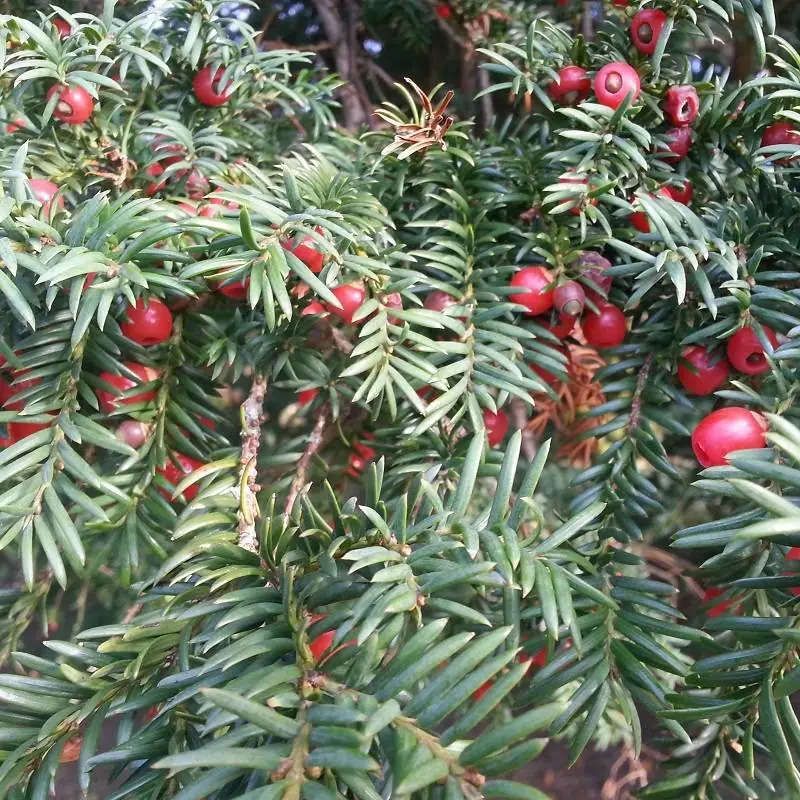
Good for wildlife: its dense growth offers birds shelter and nesting sites, and the red berries on female plants are enjoyed by thrushes and blackbirds.
Appearance
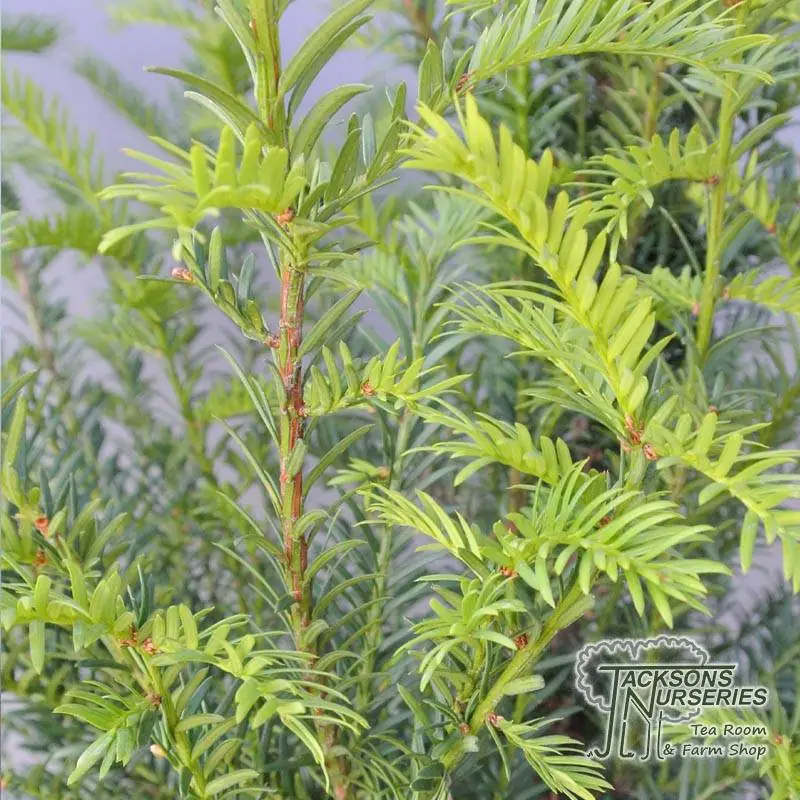
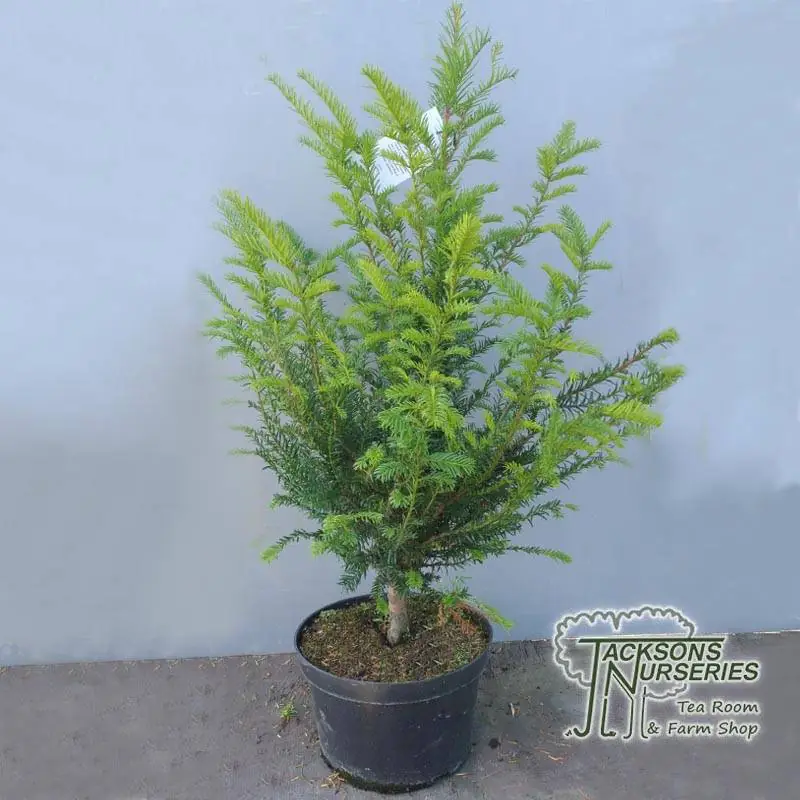
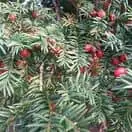
Yew has soft, flat, needle-like leaves of a rich, dark green, which make an excellent contrast to flowering plants and lawns. New growth in spring emerges a fresh, lighter green before darkening. Female plants may carry small, bright red berries in autumn, adding a cheerful splash of colour.
Size and Growth
Yew grows at a steady, manageable pace of roughly 20–30cm a year once established. This is quicker than many people expect, but slow enough that the hedge won't get out of hand. It can be kept anywhere from around 1m to 4m tall, and trimmed to your chosen width.
Where to Plant
Yew thrives in most garden situations:
-
Light: full sun, partial shade or full shade
-
Soil: any fertile, well-drained soil, including chalk, clay and sandy ground
-
Exposure: tolerates wind and cold well, and is fully hardy throughout the UK
The one thing yew dislikes is wet feet. Avoid areas prone to standing water or boggy ground.
Planting Guide
When to plant
-
Pot-grown plants: any time of year, provided the ground isn't frozen or waterlogged
How to plant
-
Clear the planting area of weeds and grass, and dig a trench about 60cm wide.
-
Loosen the soil at the base and mix in some well-rotted organic matter.
-
Space plants about 30–50cm apart, typically 2–3 plants per metre, depending on their size and how quickly you want a dense hedge.
-
Plant at the same depth the plant was growing before, using the soil mark on the stem as a guide.
-
Firm the soil gently around the roots and water thoroughly.
-
Apply a mulch of bark or compost to hold moisture and suppress weeds.
Tip: sprinkling mycorrhizal fungi around the roots at planting helps your yew establish more quickly.
Aftercare
-
Watering: water regularly during dry spells for the first two years, especially in spring and summer. Established hedges rarely need watering.
-
Feeding: give a general-purpose fertiliser each spring to encourage healthy growth.
-
Weeding: keep the base clear of weeds and grass while the hedge establishes.
Pruning
Trim yew once a year in late summer to early autumn (August to September). For young hedges, lightly trim the sides to encourage bushiness, but let the leading shoots grow until the hedge reaches the height you want. Then cut the top level.
For a tidy, formal finish, clip the hedge slightly narrower at the top than at the base. This lets light reach the lower branches and keeps the hedge dense all the way down.
If you've inherited an overgrown yew, it can be cut back hard into old wood in spring. Tackle one side one year and the other side the next to give it time to recover.
Safety Note
All parts of the yew, including the seeds inside the berries, are poisonous if eaten. Take care where young children or pets may nibble plants, and don't plant yew where livestock or horses can reach it. Wear gloves when pruning and wash your hands afterwards.
Yew is an investment that rewards patience: plant it once, give it a little care in its early years, and you'll have a handsome, hard-wearing hedge that gives your garden year-round structure for decades to come.
Buying Conifers from Jacksons Nurseries
Unlike many garden centres, supermarkets and some nurseries here at Jacksons Nurseries we sell the majority of our stock all year round. Our stock is for the most part grown outdoors making it far hardier than those grown under glass and/or only sold ‘In Season’.
Here at Jacksons Nurseries we would favour a hardy outdoor grown plant every time. They are far less likely to suffer from the shock of being planted in colder conditions and they will begin to establish more rapidly the following spring. This can mean that they don’t look like a ‘picture perfect’ plant when purchased out of season but with the correct care and a little time you’ll have a wonderful plant to enjoy for many years to come.
Availability: Stock availability figures are provided as a guide only. There is a delay between orders being placed and the plants being gathered by our pulling team. During this time it may be possible for a member of the public to purchase these plants from our Garden Centre, while this is rare it is a possibility and we will notify you of any problems as soon as possible. This figure may also include plants that have not yet be flagged as unsaleable.
Pre-order: Pre-order times are given as a guide only and may vary dependent on the growing season. Orders containing Pre-ordered products will be shipped as a single order when all items become available. Large orders may be part shipped, please contact us on 01782 502741 or email sales@jacksonsnurseries.co.uk.
* Please Note: 20 litre pots and above will require a pallet delivery starting at £79.99 per pallet. Depending on the exact pot size and height it may be possible to get between 5-10 trees per pallet at no extra cost. The maximum height we can dispatch on a pallet is 2m, this includes the height of the pallet and pot. A pallet charge may be applied depending on the quantity and weight of the plants in your cart.
Where pot sizes are specified in a range (e.g. 30-43 litre pot) we can not supply a specific pot size, you will be supplied with which ever size is available at the time. The tree(s) will be within the specified height range.
*Depending on the time of year we may supply freshly potted rootballed trees, if this is the case these trees can be treated as any potted conifer.
*We will do our utmost to meet the delivery date but it will not be fully guaranteed due to current demand on couriers
Most species of conifer are evergreen, but there are a few deciduous varieties. Some varieties of conifer are good for privacy, as they make excellent hedges. Some are also good for ground cover. They usually have scale-like leaves or needles, and bear iconic cones.
Planting and Conditions
Conifers can be planted throughout the year, but it is best to plant them in the late autumn or winter, as long as the ground is not frozen or waterlogged. Most conifers are frost proof to an extent and hardy, so they will be able to establish well throughout cooler weather.
They should be planted in full sun or partial shade, and are tolerant of most soil types, but will benefit from having compost or manure tilled into the soil prior to planting.
Conifers also need decent draining, so do not plant them in very heavy clay soil or else you will risk drowning the plant.
A hole no less than 1m across and 25cm deep should be dug when planting your conifer. Add organic material such as compost or manure to the hole, and fill it in carefully so that you don’t damage the roots.
Aftercare and Pruning
Unlike other hardwood plants, conifers need very little pruning. However, if green branches appear in trees with coloured or variegated foliage, these should be pruned more often.
Dwarf conifers are not actually dwarf, but are just slower growing. They will eventually become larger and could outgrow their space. This is fairly common with most conifers as they grow, and they can be replaced when it happens. However, their size can be controlled to some extent by pruning and trimming them.
A few conifers such as yew and Thuja, can be pruned hard and will regrow. Most conifers will not regrow from old wood if you prune into it, so take care.
Conifers can be pruned from spring through to late summer.
Newly planted conifers need very careful watering during the initial stages. They are drought proof once established and should not need too much watering, but they are very vulnerable to stress from drought if they are not watered thoroughly.
Removing weeds as soon as they appear is a good way of ensuring that valuable moisture is not lost. Mulching also reduces moisture loss from the top layers of soil.
Potential Issues
Plants can suffer from nutrient deficiencies. Overly acidic or alkaline conditions, dry spells and waterlogging can make it very difficult for plants to extract the right nutrients, and sometimes the soil doesn’t have the right nutrients to start with.
Depending on which nutrient is deficient, mulching, using compost or using a spray enriched with the right nutrients is the remedy to this common ailment.
Brown patches may occur on conifers. There are a number of causes; pests such as the cypress aphid and scale insects can be treated with sprays and foliage removal. Parasitic wasps can also be brought into greenhouses as a biological control for removal of scale insects.
Establishment problems can also occur in young or newly planted conifers. Larger specimens will experience more problems establishing, and will require much greater aftercare than younger specimens. Watering the plant well, but not excessively, and not planting it too deeply should help it to establish better.
Never spray with fertilizer or feed during hot, bright weather or you will risk scorching the leaves. Spray in overcast weather instead.
Root rot can occur when the plant is getting too much water. To remedy this, increase drainage around the plant.
Honey fungus could also occur as a result of waterlogging, or if it is already present on the plant or in the garden. It is the most destructive fungus in Britain, and unfortunately the only treatment is evacuation and burning of affected plant material.
Be sure to extract stumps and roots, as the rhizomorphs that grow during a honey fungus infestation cannot survive in soil when detached from infected material.
No posts found
| Size | Availability | Price | ||
|---|---|---|---|---|

|
In stock
|
£17.99 | ||

|
In stock
|
£4.99 | ||
|
|
In stock
|
£12.99 |