
Potentilla 'Goldfinger' Bare Root
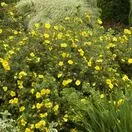
Potentilla fruticosa 'Goldfinger' is an outstanding deciduous shrub that delivers a spectacular display of large, golden-yellow flowers from late spring through to the first frosts of autumn. This vigorous, upright shrub is renowned for producing some of the largest flowers of any potentilla variety, creating a brilliant splash of sunshine-yellow colour that brightens gardens for an impressive 5-6 months. Remarkably undemanding and tolerant of challenging conditions, 'Goldfinger' thrives in almost any garden situation whilst requiring minimal maintenance. These bare root plants establish quickly when planted during the dormant season, offering excellent value for gardeners seeking a reliable, long-flowering shrub that brings cheerful, radiant colour and effortless charm to borders, hedges, and difficult sites.
Key Features
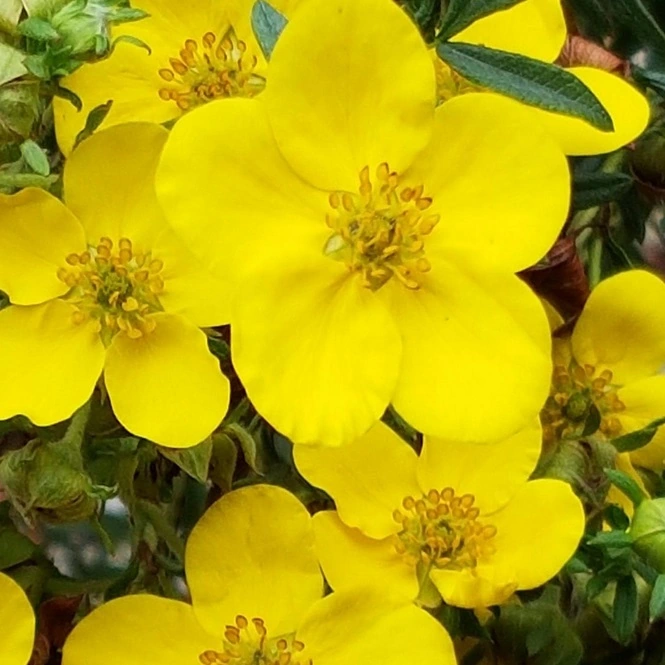
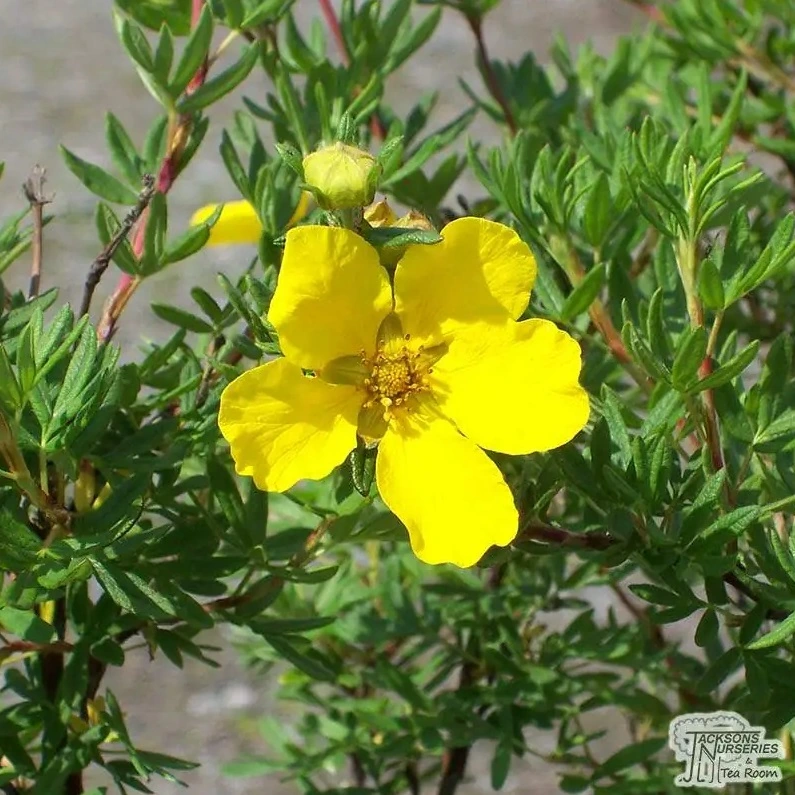
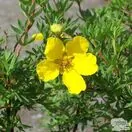
'Goldfinger' is celebrated for its exceptionally large, rich golden-yellow flowers that measure approximately 4-5 cm across – considerably larger than most potentilla varieties. Each flower has five rounded petals with a satiny texture and a prominent central boss of golden stamens, creating a full, generous appearance. The deep, vibrant yellow colour is particularly intense and doesn't fade significantly in strong sunlight, maintaining its brilliant hue throughout the flowering season.
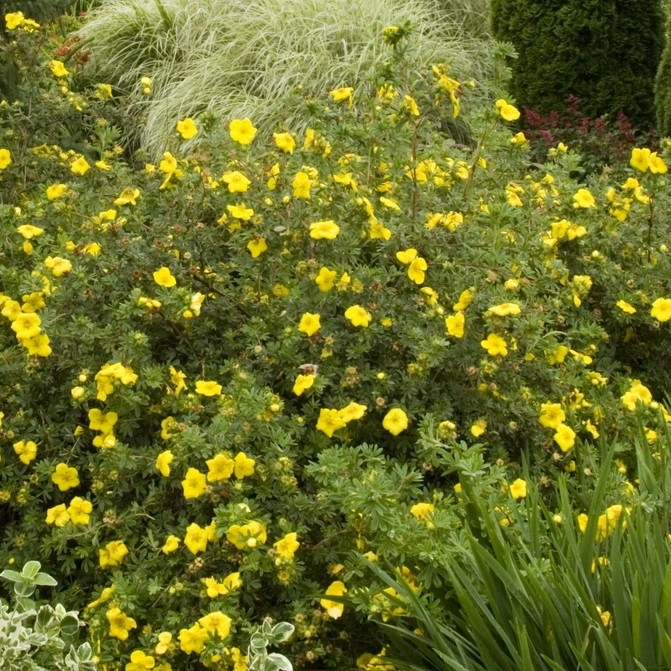
The flowering performance is truly exceptional, beginning in late May or early June and continuing almost without pause until October or even November in mild autumns. This extraordinarily long flowering season of 5-6 months provides outstanding value and ensures the plant remains a focal point in the garden from late spring through autumn. The abundance of blooms is remarkable, with flowers covering the plant so densely that foliage is often barely visible during peak flowering.
The foliage is composed of small, pinnate leaves with narrow leaflets that create a fine, delicate texture. The leaves are bright green to mid-green in colour, providing an attractive fresh backdrop that enhances the golden flowers. Being deciduous, the foliage falls in late autumn, though the shrub often retains some leaves into early winter in sheltered locations.
'Goldfinger' has a naturally upright, bushy habit that's somewhat taller and more vigorous than many potentilla varieties. It typically grows to 100-120 cm in height with a spread of 90-100 cm, creating a substantial, well-proportioned shrub. The growth is moderate and steady, producing a dense, twiggy structure with good natural branching that requires minimal pruning to maintain an attractive shape.
This variety has received the Royal Horticultural Society's Award of Garden Merit, recognizing its exceptional garden performance, reliability, and outstanding ornamental qualities.
Growing Conditions
Potentilla 'Goldfinger' is remarkably adaptable and will thrive in almost any reasonably well-drained soil. It grows successfully in clay, loam, sandy, chalky, and even poor soils, and tolerates both acidic and alkaline conditions (pH 5.0-8.0). The shrub isn't particularly demanding regarding soil fertility and will perform adequately even in quite impoverished ground, though flowering is naturally most prolific in reasonably fertile soil.
Good drainage is beneficial but the plant is quite forgiving – it tolerates brief periods of waterlogging without suffering and also has excellent drought tolerance once established. This adaptability makes it suitable for a wide range of garden situations from slightly heavy clay to free-draining sandy or gravelly soils.
The shrub performs best and flowers most abundantly in full sun, where the golden blooms are most vibrant and prolific. However, it also grows well in partial shade, though the flower display may be somewhat less dense. Unlike some yellow-flowered potentillas which can fade or scorch in strong sun, 'Goldfinger' maintains its rich colour beautifully even in the hottest, sunniest positions.
'Goldfinger' is fully hardy throughout the UK (USDA zones 2-7) and tolerates temperatures well below -30°C without any protection or winter damage. It withstands exposure, strong winds, coastal conditions (including salt spray), atmospheric pollution, and harsh weather admirably. This exceptional toughness makes it suitable for challenging sites including exposed hillsides, seafront gardens, urban environments, and windswept locations where many shrubs would struggle.
The combination of soil tolerance, drought resistance, and ability to withstand difficult conditions makes Potentilla 'Goldfinger' one of the most reliable and forgiving shrubs available – ideal for novice gardeners or those with challenging sites.
Planting Instructions
Bare root Potentilla 'Goldfinger' should be planted between November and March whilst the plants are dormant and the ground is workable – neither frozen solid nor waterlogged. Upon arrival, unwrap the plants and check the roots are moist. If they appear dry, soak them in a bucket of water for 1-2 hours before planting. Plant as soon as possible after receipt for best establishment.
Spacing: For individual specimens in mixed borders, allow 90-100 cm between plants and other shrubs to accommodate the mature spread. For informal low hedging, space plants 50-60 cm apart (approximately two plants per metre). For mass planting to create bold drifts of colour, space at 75-90 cm centres.
Dig a hole approximately twice the width of the root system and deep enough so that the previous soil mark on the stems sits level with the surrounding ground. The hole should be generous enough to accommodate the roots when spread out naturally, without cramping, bending, or circling them.
Loosen the soil at the bottom of the hole with a garden fork to break up any compaction and improve drainage. This is particularly important on heavy clay soils. If your soil is particularly poor, heavy clay, or very free-draining sand, you can incorporate some well-rotted compost or manure into the excavated soil, though this isn't essential – potentillas are remarkably tolerant and undemanding.
Position the plant in the centre of the hole, spreading the roots out evenly in all directions. Ensure the plant sits at the same depth it was growing previously – planting too deep can cause problems with establishment. Backfill with the excavated soil, working it carefully between and around the roots to eliminate air pockets. Firm gently but thoroughly with your heel as you go, adding more soil and firming again until the hole is filled to ground level.
Water thoroughly after planting – provide at least 5-10 litres even if the weather is wet. This is crucial for settling the soil around the roots and ensuring good contact, which aids establishment.
Apply a 5-7 cm layer of organic mulch such as bark chips, well-rotted compost, or leaf mould in a circle approximately 60 cm in diameter around the base of the plant. Keep the mulch 5-10 cm clear of the stems themselves to prevent rot and discourage rodents from gnawing the bark. This mulch helps retain moisture, suppress weeds, and gradually improve the soil as it breaks down.
Care and Maintenance
Watering: Water regularly during the first growing season, particularly during dry spells, to help establish a deep, robust root system. Provide approximately 10-15 litres per week during dry weather. Once established (typically after the first year), Potentilla 'Goldfinger' is remarkably drought-tolerant and requires watering only during prolonged droughts. This excellent drought tolerance makes it ideal for low-maintenance gardens, water-wise landscapes, and areas with hosepipe restrictions.
Feeding: Potentilla isn't a heavy feeder but responds well to an application of general-purpose fertiliser or blood, fish and bone in early spring to encourage vigorous growth and abundant flowering. An annual spring mulch of well-rotted compost or manure provides gentle nutrition whilst suppressing weeds and retaining moisture. However, the plant will perform perfectly adequately without regular feeding – it's genuinely undemanding and thrives even with minimal attention.
Pruning: This is where Potentilla really excels as a low-maintenance shrub. Very little pruning is required, and the plant naturally maintains an attractive, bushy shape without constant intervention.
For routine maintenance, simply trim the plant lightly in early spring (March) before new growth begins. Remove any dead, damaged, frost-affected, or crossing stems, and reduce the previous year's growth by about one-third, cutting back to a healthy outward-facing bud or side shoot. This light annual pruning helps maintain a compact, well-shaped plant and encourages fresh flowering growth, but it's not absolutely essential – the plant will flower prolifically even without annual pruning.
If the shrub becomes overgrown, leggy, bare at the base, or has lost its attractive shape, it responds excellently to hard renovation pruning. In early spring, cut all stems back hard to within 15-20 cm of the ground. The plant will regenerate vigorously with fresh, healthy growth, though you'll sacrifice that season's flowers. This hard pruning can be done every 5-7 years to rejuvenate old specimens and maintain vigour.
Deadheading is not necessary – the flowers fade neatly without creating an untidy appearance, and removing them individually would be impractical given the sheer number of blooms. The plant is self-cleaning and looks attractive even when some flowers have finished.
Mulching: Top up the mulch layer annually in spring to suppress weeds, retain moisture, and gradually improve soil condition. This is beneficial but not essential once the plant is established.
Pest and Disease: Potentilla 'Goldfinger' is remarkably healthy and trouble-free, with excellent natural disease resistance and very few pest problems. It's rarely affected by any serious pests or diseases, making it ideal for organic gardens and for gardeners who prefer not to use chemical treatments. Very occasionally, the foliage may show minor leaf spot in exceptionally wet seasons, but this is cosmetic and doesn't affect the plant's health, vigour, or flowering performance. No treatment is necessary.
Uses in the Garden
Mixed Borders: Outstanding as a mid-height shrub in mixed borders, providing months of brilliant golden-yellow flowers that create a cheerful focal point and combine beautifully with both cool and warm colour schemes. The long flowering season fills the gap between spring bulbs and autumn perennials.
Informal Hedging: Creates attractive low to medium informal hedges at 90-100 cm height, perfect for defining borders, edging pathways, dividing garden areas, or creating internal boundaries. The exceptionally long flowering season provides colour and interest far beyond traditional hedging plants.
Sunny Borders: Ideal for hot, sunny borders where the golden flowers enhance the warm, Mediterranean atmosphere and the plant's drought tolerance means it thrives without constant watering.
Rose Companions: The golden-yellow flowers complement roses beautifully, particularly pink, apricot, white, or red varieties. The continuous bloom extends the season of interest in rose beds and provides colour when roses rest between flushes.
Ground Cover: When planted at 75-90 cm spacing, creates effective weed-suppressing ground cover on banks, slopes, or larger areas, particularly useful in sunny positions where low-maintenance coverage is desired.
Coastal Gardens: Outstanding tolerance of salt spray, maritime exposure, and strong winds makes this ideal for seaside gardens where many shrubs struggle. The bright flowers create cheerful colour even in challenging coastal conditions.
Wildlife Gardens: The flowers attract bees, bumblebees, hoverflies, butterflies, and other beneficial pollinating insects throughout the exceptionally long flowering season, providing valuable nectar from late spring through autumn when many other plants have finished flowering.
Low-Maintenance Gardens: Perfect for gardens where minimal intervention is desired – once established, it largely looks after itself whilst providing months of colour.
Difficult Sites: Ideal for challenging positions such as dry banks, exposed hillsides, poor soils, or pollution-affected urban gardens where reliability and toughness are paramount.
Container Planting: Can be grown in large containers (at least 40 cm diameter) for patios and terraces, where it provides months of colour with minimal care, though it will require more regular watering than in-ground plants.
Yellow/Gold Gardens: Essential for yellow-themed gardens or hot-coloured borders, providing brilliant golden flowers over an exceptionally long period.
Companion Planting
Potentilla 'Goldfinger' works beautifully with a wide range of plants and colour schemes:
Cool colour combinations:
-
Blue and purple flowers such as lavender, catmint (Nepeta), salvia, or perovskia create classic complementary schemes
-
Hardy geraniums in blue or purple shades provide ground-level colour
-
Delphiniums or agapanthus for vertical accents in blue tones
-
Silver-leaved plants like artemisia, stachys, or santolina enhance the golden flowers
Warm colour combinations:
-
Red or orange crocosmia creates vibrant, hot-coloured schemes
-
Achillea in warm tones harmonizes beautifully
-
Rudbeckia or helenium extends the golden theme
-
Ornamental grasses like Stipa or Miscanthus add movement and texture
Rose companions:
-
Pink shrub roses create soft, romantic combinations
-
Apricot or peach roses blend harmoniously
-
White roses provide fresh contrast
-
Red roses create bold, dramatic effects
Other excellent companions:
-
Sedums for late summer and autumn interest
-
Echinacea in purple or pink shades
-
Phlox for mid to late summer colour
-
Alliums for early summer structure and interest
-
Spring bulbs planted around the base for early season colour before the potentilla flowers
The golden-yellow flowers are remarkably versatile, working equally well in cool, complementary schemes with blues and purples or in warm, harmonious combinations with reds, oranges, and other yellows.
Advantages of 'Goldfinger'
Exceptionally large flowers: At 4-5 cm across, 'Goldfinger' produces some of the largest flowers of any potentilla variety, creating impressive impact.
Brilliant colour: Rich, deep golden-yellow that doesn't fade in strong sun, maintaining vibrant colour throughout the season.
Outstanding flowering duration: 5-6 months of continuous bloom from late May/June through to October/November – exceptional value and interest.
Prolific bloomer: Produces masses of flowers that often cover the plant so densely the foliage is barely visible during peak flowering.
Vigorous and upright: Creates a substantial, well-proportioned shrub at 100-120 cm tall – larger than many potentillas, providing more presence.
Low maintenance: Requires minimal care once established – drought-tolerant, disease-free, and needs little pruning.
Exceptionally hardy: Withstands extreme cold, exposure, pollution, poor soil, and difficult conditions admirably.
Versatile: Suitable for borders, hedging, ground cover, containers, and challenging sites.
Wildlife friendly: Attracts pollinators throughout the exceptionally long flowering season.
Award-winning: RHS Award of Garden Merit recognizes exceptional garden performance and reliability.
Reliable: Performs consistently year after year without fuss, problems, or special requirements.
Cost-effective: Long-lived shrub providing excellent value for money with decades of reliable performance.
Potentilla Varieties Comparison
'Goldfinger': Large golden-yellow flowers (4-5 cm), upright vigorous habit (100-120 cm), excellent colour retention, one of the tallest varieties.
'Abbotswood': Pure white flowers, compact rounded habit (75-100 cm), ideal for white gardens, slightly smaller overall.
'Primrose Beauty': Pale primrose-yellow flowers with deeper centres, slightly larger (90-120 cm), attractive silver-grey foliage, softer colour.
'Red Ace': Bright red flowers (can fade to orange in strong sun), compact (60-75 cm), benefits from some afternoon shade to maintain colour.
'Princess' ('Pink Beauty'): Pink flowers, compact (60-75 cm), delicate appearance, less vigorous than 'Goldfinger'.
'Tangerine': Orange-yellow flowers, compact (60-75 cm), colour best in partial shade, less sun-tolerant.
'Elizabeth': Canary-yellow flowers, dome-shaped habit (90 cm), large flowers but slightly paler than 'Goldfinger'.
Choose 'Goldfinger' if you want the largest flowers, most vigorous growth, deepest yellow colour, and a taller shrub with maximum impact and presence.
Seasonal Interest
Spring: Fresh, bright green foliage emerges in April, quickly clothing the framework of stems. The upright, bushy form becomes apparent as leaves expand rapidly.
Late Spring/Early Summer: First flowers appear in late May or early June, quickly increasing in number. By mid-June, the plant is typically covered in golden blooms creating a spectacular display.
Summer: Peak flowering season, with the plant absolutely smothered in large, brilliant golden-yellow flowers that create a stunning focal point. The abundance of blooms is truly remarkable, continuing unabated through July, August, and September.
Autumn: Flowering continues strongly well into autumn, often until late October or November in mild years, providing cheerful colour when many shrubs have finished. The foliage may develop soft yellow tones before falling.
Winter: The plant becomes dormant after leaf fall, revealing the neat, twiggy framework. The dense branching structure provides some winter interest and structure, though this is the shrub's quietest season.
Special Considerations
Vigorous growth: 'Goldfinger' is one of the more vigorous potentilla varieties, growing taller and faster than compact forms like 'Abbotswood'. Ensure you allow adequate space for the mature size of 100-120 cm height and 90-100 cm spread.
Upright habit: The naturally upright growth habit means this variety works well at the back or middle of borders rather than as front-of-border edging, where more compact varieties might be more appropriate.
Full sun for best colour: While the plant tolerates partial shade, the richest golden colour and most prolific flowering occur in full sun. Choose the sunniest position available for maximum impact.
Winter appearance: As a deciduous shrub, Potentilla loses all its leaves in late autumn and provides limited interest during winter. Consider planting with evergreens or winter-interest plants if year-round structure is important.
No significant scent: The flowers have little or no fragrance, unlike some shrubs such as roses or lavender. If scent is important, combine with fragrant companions.
Longevity: With minimal care, Potentilla 'Goldfinger' can live for 20-30 years or more, providing decades of reliable performance and excellent value.
Top Tips for Success
-
Plant in full sun for the deepest golden colour and most abundant flowering
-
Excellent for hot, sunny, dry positions where other shrubs struggle
-
Requires minimal maintenance once established – ideal for busy or novice gardeners
-
Space at 50-60 cm apart for low to medium hedging
-
Light annual pruning in spring maintains shape but isn't essential for flowering
-
Completely trouble-free – no serious pests or diseases to worry about
-
Combines beautifully with blue and purple flowers for classic complementary schemes
-
Perfect for yellow-themed gardens or hot-coloured borders
-
Outstanding for coastal gardens due to exceptional salt and wind tolerance
-
Attracts bees and butterflies throughout the exceptionally long flowering season
-
One of the most vigorous and floriferous potentilla varieties available
-
Be patient – plants take 2-3 years to reach full size and flowering potential
-
Drought-tolerant once established, making it ideal for water-wise gardens
Create months of brilliant golden sunshine with Potentilla 'Goldfinger' bare root – an exceptionally floriferous, vigorous shrub that produces some of the largest flowers of any potentilla variety from late spring through to autumn whilst thriving in almost any conditions with minimal care. Perfect for gardeners throughout Britain seeking reliable, long-lasting, brilliant yellow colour that performs year after year with effortless charm and outstanding impact.
Bare Root is usually dispatched between early November and late March. Exact dates vary year to year depending on the weather. We cannot guarantee availability for a certain date at the beginning or end of the season.
Important Bare Root Care
As soon as you receive your bare root plants place the items upright in a bucket of clean water immediately leaving them for at least 2 hours. Only take plants out as you need them for planting.
Q: When is bare root season?
A: Our bare root season usually runs from November to March but it can depend on the weather conditions, we'd always recommend buying at the end of autumn rather than waiting for spring.
Q: Does the plant size include the roots?
A: No, all bare root plant sizes quoted exclude the roots.
Q: What size plants will I receive?
A: Stock size varies through the season, our 'Plant Size' are give as a guide and you will receive plants somewhere in that range. We are unable to specify exactly how tall the plants will be within that range.
Q: How old will the plants be?
A: Most of our 'Plant Sizes' include the age of the plant, this is shown as a sum e.g. 1+2 which in this case would indicate that the plants are 3 years old. The first number is how long the plant has spent in the seedbed and the second is the number of year it has spent lined out in the field. Where the sum starts with a 0+ this indicates that the plants were grown from a rooted cutting.
Q: Can I get a discount for bulk purchases?
A: We offer a discount banding on bare root plants making them cheaper the more you buy, see the table on each page for details of the price within each band.
Q: Do I need canes?
A: Bamboo canes are perfect for giving young saplings, hedging plants, climbers and other tall shrubs the support they need when they start to establish. Unless you are planting in a completely sheltered spot with very little chance of wind then we would always recommend using a cane for support.
Q: Do I need rabbit guards?
A: Spiral Rabbit Guards are the most popular, low cost tree protection for young saplings, seedlings, transplants and hedging plants from browsing animals such as voles, mice, rabbits and hares. Spiral Rabbit Guards have the ability to grow and expand with the growing tree, providing a sheltered environment for the tree. It's hard to say for certain if you will require the extra protection a rabbit guard provides, if your are aware of a particular pest problem in your planting location then we would recommend using them. Rabbit Guards are not suitable for 'evergreens' please see 'Shrub Shelters' for a suitable evergreen protection method.
Q: What is a shrub/tree shelter?
A: Shrub/Tree Shelters are similar to rabbit guards but are designed for use on evergreens that would sweat and die in rabbit guards. We supply shrub/tree shelters as a kit which includes the shelter, 1 Stake and 2 cable ties, one kit is required per plant.
Q: Do I need shrub/tree shelters?
A: If you are aware of any specific pest problems in your planting area then we would recommend using a shrub/tree shelter to give your young trees or hedging plants that extra protection.
Shrubs are deciduous or evergreen woody plants, and often provide fragrant flowers, berries and foliage. They are good for structural framework, and they can provide a wonderful shelter and food source for wildlife.
Planting and Conditions
Container grown shrubs can be grown at any time of year. It is a little known fact that shrubs planted in the autumn and winter will be easier to look after than those planted in the spring and summer, because they will have time to establish and become hardy in the cooler months.
Plant the shrub at the same depth as it was in its original pot. Planting too deeply can result in root and stem rot.
One of the biggest causes of death in new shrubs is drought stress, so keep it well watered until it’s established.
Make sure you loosen the soil prior to planting. Most shrubs are tolerant of most soil types as long as it is fairly well draining.
Most shrubs will grow happily in containers, but they will be much more demanding on feeding and watering than shrubs in the ground would be. They will also need potting on every couple of years so that they don’t suffocate or become stunted in their pot.
Aftercare and Pruning
Once established, shrubs generally do not require much water. However, at first they need careful, frequent watering and should not be left to dry out.
Shrubs in the ground are generally not demanding and in most cases, annual feeding with general purpose fertilizer will suffice. Shrubs in containers may need more feeding; usually from early spring until late summer.
Shrubs also benefit from mulching in order to supress weeds, conserve moisture and provide vital nutrients. Mulch also greatly improves soil conditions. Shrubs can be mulched in late winter, after fertiliser has been applied, but it can be mulched through autumn to late spring as long as the ground is damp.
All shrubs benefit from dead-heading once spent flowers become apparent. Rhododendrons and Lilac especially benefit from the removal of dead flowers.
Some shrubs may show signs of reverted growth or ‘sporting’. This is where random shoots of different leaves associated with the plant’s parentage begin to appear. Most commonly this is where plants with variegated leaves sprout pure green growths instead of variegated ones.
To control reversion, remove reverted shoots promptly to discourage them. Reverted shoots are usually much more vigorous than the variegated ones, and thus should be completely pruned out and cut back into wood containing variegated foliage.
Potential Issues
Although shrubs are usually very robust garden plants, they can sometimes start to decline with no apparent or obvious reason.
This will start with browning leaves, which could indicate plant stress due to lack of water or waterlogging, an establishment failure or, in the worst case scenario, honey fungus. Another cause of leaf browning is a high salt content in the soil. This could be a natural occurrence, especially if you live near the ocean, or it could be from over fertilisation.
To remedy a high salt content, cut back on fertiliser and step up your watering regime for the next few weeks. If you live by the ocean, this will be harder to remedy—but stepping up your watering will help to wash some of the salt away all the same.
No posts found