
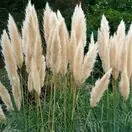

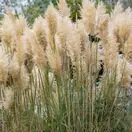
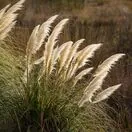
Cortaderia 'White Feather' (White Pampas Grass)
A Classic Grass with Bright White Plumes
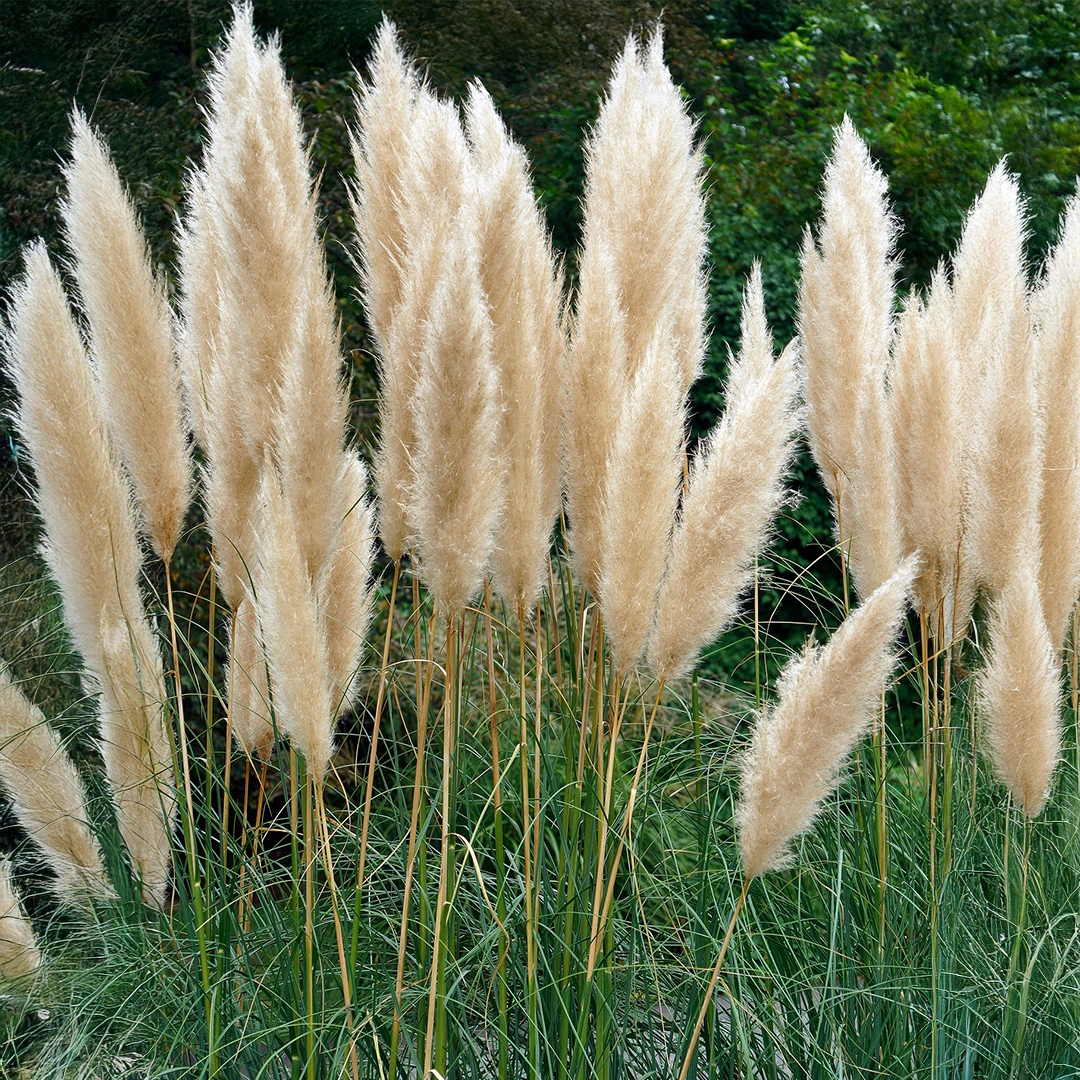
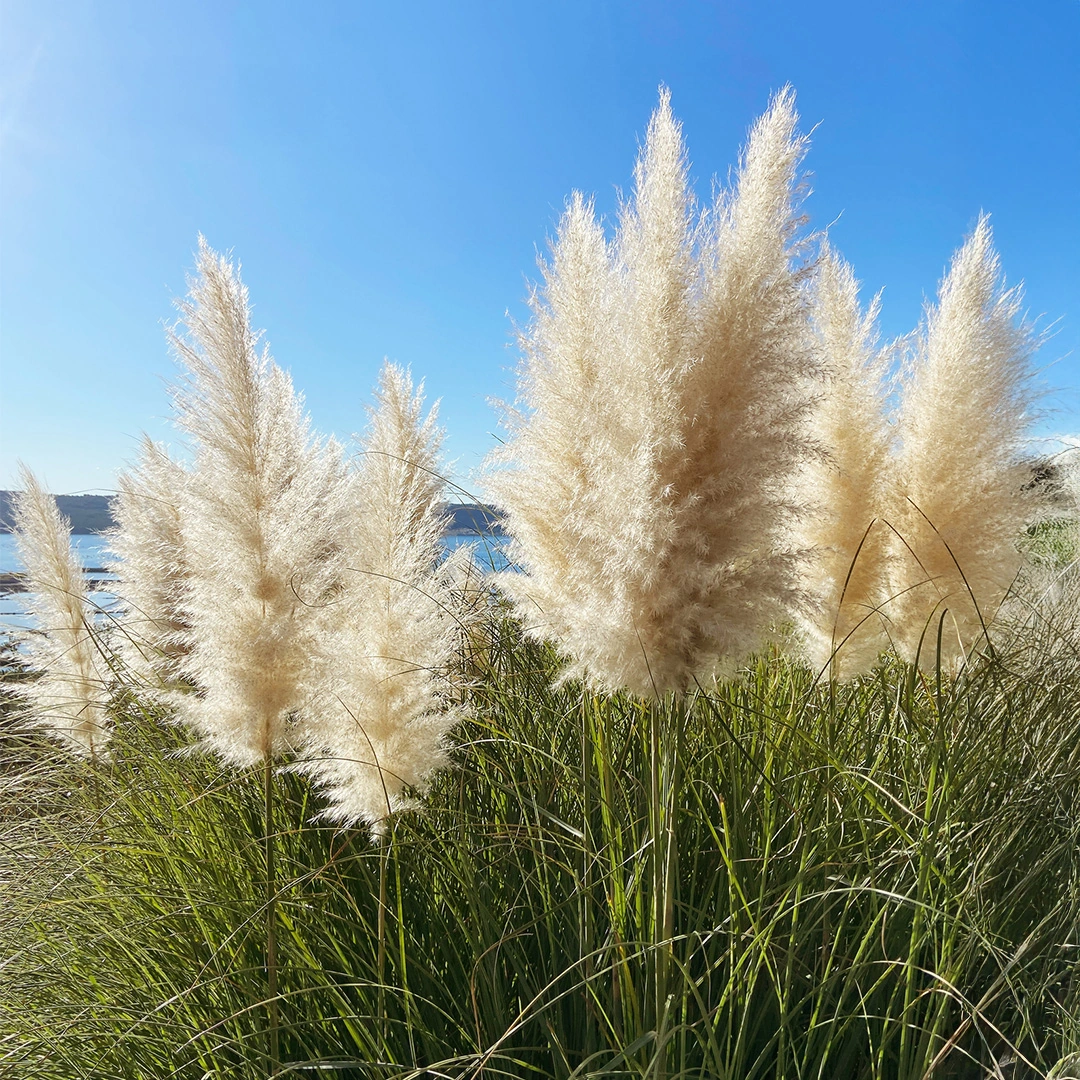
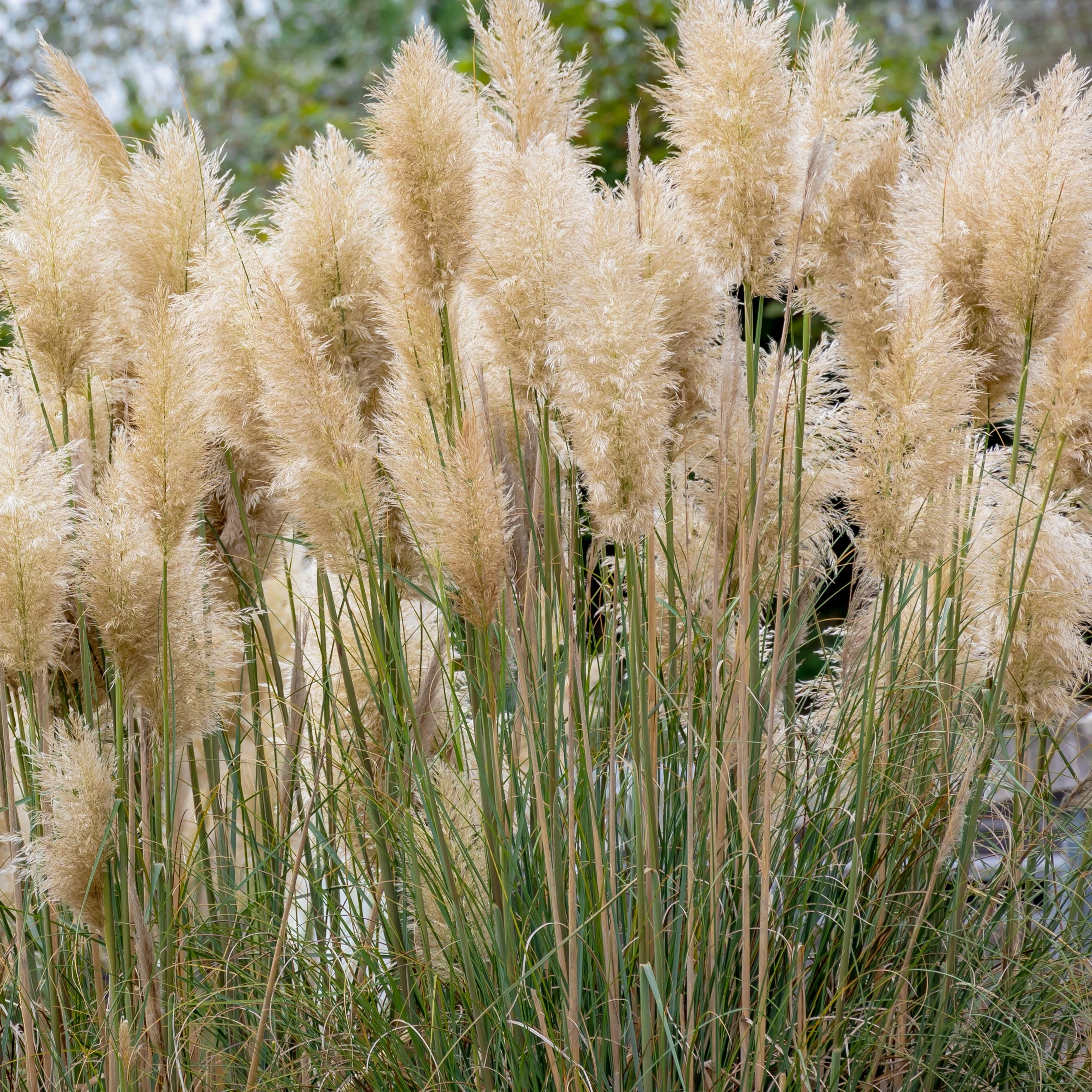
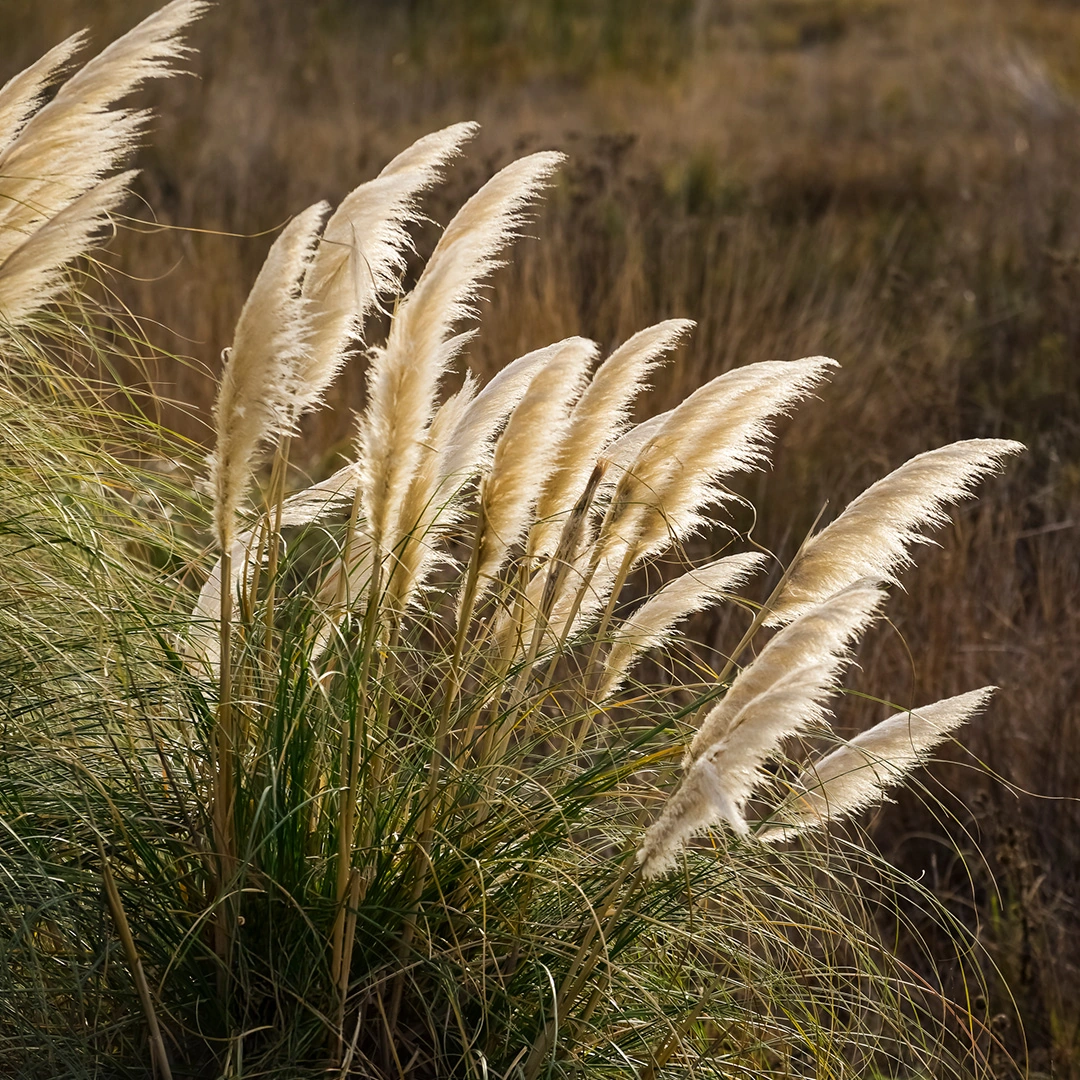
Cortaderia 'White Feather' is a pampas grass that brings real presence to the garden. It forms a large, fountain-like clump of arching evergreen leaves. From late summer, tall, sturdy stems rise well above the foliage, each topped with a big, fluffy plume in creamy to silvery white. These bright plumes stand out against the sky and glow in low autumn sunshine. They often last well into winter, giving you a long season of interest from a single plant.
White pampas is a timeless look, and it has become fashionable again for good reason. Its clean, bright plumes suit modern, minimalist gardens just as well as relaxed, naturalistic planting. It combines easily with almost any colour scheme.
Key Features
-
Large, creamy-white feathery plumes from late summer through autumn, often lasting into winter
-
Evergreen, arching foliage that provides structure all year round
-
Tall, eye-catching stems, perfect as a focal point or living screen
-
Fully hardy in most UK gardens once established
-
Easy to care for, needing little more than a yearly tidy
-
Drought tolerant once settled, and a good choice for coastal gardens
-
Superb for cutting and drying, making elegant indoor displays
Size and Growth
'White Feather' is a big plant, so plan for plenty of space. When mature, the flower stems typically reach around 2 to 2.5 metres (roughly 7 to 8 feet), with a spread of about 1.5 metres. The mound of foliage usually sits at around 1 to 1.5 metres high. It grows steadily and will usually reach its full size within a few years.
Where to Plant
This is a sun-loving grass that performs best in an open position. For the best results:
-
Position: Full sun is ideal. It will put up with a little light shade, but you'll get the most plumes in sun.
-
Soil: Most well-drained soils suit it, including sandy and chalky ground. Avoid soil that stays wet and soggy through winter.
-
Exposure: It handles wind and salty air well, making it a dependable choice for seaside gardens.
The leaves have sharp edges, and the plant grows large. Give it a spot away from paths, seating areas and places where children play.
Garden Uses
'White Feather' is adaptable and can play several roles in the garden:
-
As a standalone specimen in a lawn, gravel bed or large island border
-
At the back of a border, giving height and structure behind lower plants
-
In naturalistic and prairie-style schemes, mixed with other ornamental grasses and late perennials such as echinaceas, verbena bonariensis and asters
-
In coastal and gravel gardens, where its resilience comes into its own
-
As an informal screen or windbreak, softening fences and boundaries
-
Against dark backgrounds, such as evergreen hedges or dark fencing, where the white plumes really stand out
-
In large containers, provided it's watered regularly and given a generous pot
Planting Guide
Spring is the ideal time to plant, as it gives the roots a full season to establish before winter. Container-grown plants can be planted at most times of year, as long as the ground isn't frozen or waterlogged.
-
Dig a hole roughly twice as wide as the pot and just as deep.
-
Loosen the soil at the base and sides of the hole. On heavy clay, work in some horticultural grit to help drainage.
-
Set the plant in the hole so it sits at the same depth as it was growing in its pot.
-
Backfill with soil, firm gently around the roots and water thoroughly.
-
Keep it well watered during dry spells for its first growing season.
Care and Maintenance
Once it has settled in, 'White Feather' is a very undemanding plant.
Watering
Water regularly during its first year, particularly in warm, dry weather. After that, it copes well with drought and usually needs no extra watering. The exceptions are long dry spells and plants grown in pots.
Feeding
Pampas grass doesn't need much feeding. A light application of general-purpose fertiliser in spring is enough, and on decent soil it may not need any at all.
Pruning and Tidying
The one essential job is an annual tidy-up in late winter or early spring, before fresh growth starts:
-
Cut the old flower stems down to the base.
-
Clear out dead, brown leaves. Wearing thick gloves and long sleeves, you can comb through the clump with a gloved hand or a rake to pull out the old growth.
-
Every few years, you can cut the whole clump back hard to around 30 to 60 centimetres to rejuvenate it. Take care not to damage any new shoots coming through.
Don't be tempted by the old method of burning the clump. It can seriously damage or kill the plant, and it's a real fire risk in the garden.
Using the Plumes Indoors
The white plumes are ideal for drying and are very popular in home décor. Cut them when they've just opened and are at their fluffiest, then hang them upside down somewhere dry and airy for two or three weeks. A light mist of unscented hairspray helps to reduce shedding. Dried white pampas keeps its good looks for months. It's lovely in tall vases, wedding and event arrangements, wreaths and seasonal displays.
Why Choose Cortaderia 'White Feather'?
'White Feather' is a brilliant choice if you want a plant with real wow factor that doesn't ask much of you. It gives year-round structure and a long, bright season of plumes, and its elegance fits almost any garden style. It's hardy, reliable and low maintenance, and with a simple tidy each year it will be a standout feature in your garden for many years to come.
Buying Bamboo & Grasses from Jacksons Nurseries
At Jacksons Nurseries we sell the majority of our stock all year round. Our stock is for the most part grown outdoors making it far hardier than those grown under glass and/or only sold ‘In Season’. With Bamboo and Grasses the leaves can differ in quality dependent on the time of the year and whether they are in their growth phase. We protect less hardy species during the winter but other plants grown out doors may have some wind damage. This is in no way detrimental to the plant and will grow out naturally in spring.
Availability: Stock availability figures are provided as a guide only. There is a delay between orders being placed and the plants being gathered by our pulling team. During this time it may be possible for a member of the public to purchase these plants from our Garden Centre, while this is rare it is a possibility and we will notify you of any problems as soon as possible. This figure may also include plants that have not yet be flagged as unsaleable.
Pre-order: Pre-order times are given as a guide only and may vary dependent on the growing season. Orders containing Pre-ordered products will be shipped as a single order when all items become available. Large orders may be part shipped, please contact us on 01782 502741 or email sales@jacksonsnurseries.co.uk.
Ornamental grasses can provide calming, delicate accompaniments to colourful flowering plants, or they can be the focus of design instead. There are types available for every garden setup, soil type and position, and will provide colour, coverage, contrast and structure wherever they are planted.
Planting and Conditions
Grasses from colder climates such as Deschampsia, Festuca, Helctotrichon and Stipa grow in late winter and flower before mid-summer. To get the best establishment, they should be planted in the autumn.
Grasses from warmer climates such as Miscanthus, Panicum, Pennisetum and Spartina grow in late spring, flower after mid-summer and are best cut back in late winter. Plan them in late spring, and they will be best established.
Grasses also make good container specimens, and will prosper in loamy soil.
Ideally, the planting areas for grasses should be prepared in the autumn months. Till the soil deeply, and work in ample organic matter. Ornamental grasses do not require large amounts of fertiliser.
Aftercare and Pruning
The foliage on deciduous grasses can be left until February. They turn brown rather than lose their leaves, and so should be pruned to ground level later in the season. The severity of pruning required can vary from variety to variety, so care should be taken so that you don’t harm the plant.
Evergreen grasses can be trimmed in autumn / spring. Remove brown tips and cut back dead leaves that usually collect around the base of the plant.
Care for your grasses by using mulch and watering them regularly. Otherwise, they are a fairy low maintenance addition to the garden.
Potential Issues
Nothing really bothers most ornamental grasses. Rabbits and voles may occasionally be an issue, but they can easily be controlled using fencing and, if needs must, animal repellents.
No posts found
| Size | Availability | Price | ||
|---|---|---|---|---|

|
In stock
|
£11.99 |