


Fagus sylvatica Atropurpurea (Copper Beech aka Purple Beech)
Overview
The Copper Beech is one of Britain's most magnificent native trees, renowned for its stunning deep purple-bronze foliage that creates a dramatic focal point in any landscape. This majestic deciduous tree combines the classic elegance of the common beech with the added spectacle of rich, dark foliage that shifts through beautiful colour transitions throughout the seasons. Perfect for larger gardens, parkland settings, or as a statement tree, the Copper Beech offers decades of reliable beauty and seasonal interest.
Key Features
Foliage: The tree's crowning glory is its distinctive deep purple-bronze leaves that emerge in spring with a bright coppery sheen. The large, oval leaves maintain their rich dark colouration throughout summer before transforming to brilliant copper and bronze tones in autumn. Even in winter, the tree retains much of its brown foliage, providing structure and interest.
Growth Habit: Develops into a large, stately tree reaching 20-25 metres in height with a similar spread at maturity. Young trees have a more upright, pyramidal shape that gradually broadens into the classic rounded crown with age. The smooth, silver-grey bark becomes increasingly attractive as the tree matures.
Longevity: A truly long-term garden investment, Copper Beeches can live for several centuries, becoming increasingly magnificent with age and serving as living heritage for future generations.
Growing Conditions
Sunlight: Thrives in full sun to partial shade. The intensity and richness of the purple foliage is best developed in good light conditions, though the tree will tolerate some shade.
Soil: Prefers well-draining, fertile soils but shows remarkable adaptability to various soil types including clay, loam, and chalk. Performs best in neutral to slightly alkaline conditions but tolerates mildly acidic soils.
Hardiness: Completely hardy throughout the UK (RHS Hardiness Rating H7), naturally adapted to British climate conditions and capable of withstanding the harshest weather.
Water Requirements: Once established, demonstrates excellent drought tolerance. Young trees benefit from regular watering during dry spells for the first few years until the deep root system develops.
Garden Uses
Specimen Tree: Unrivalled as a statement tree for large lawns, where its magnificent size and colour can be fully appreciated without overwhelming nearby plantings.
Avenue Planting: Creates spectacular tree-lined drives or pathways, particularly effective when planted in rows to form dramatic purple tunnels.
Woodland Gardens: Excellent for naturalised woodland settings, providing canopy structure and seasonal colour while supporting native wildlife.
Large Boundary Screening: When space allows, makes an impressive living screen that provides privacy whilst creating a stunning backdrop.
Memorial Trees: Often chosen for commemorative planting due to its longevity and increasing majesty with age.
Parkland Settings: Ideal for larger rural gardens, estates, and parkland where it has room to develop its full magnificent potential.
Care and Maintenance
Pruning: Requires minimal pruning once established. Any necessary shaping should be done during dormancy in late autumn or winter. Young trees may benefit from formative pruning to develop good structure.
Feeding: Generally unnecessary once established, though young trees may benefit from an annual application of balanced fertiliser to encourage strong early growth.
Pest and Disease: Generally healthy and long-lived. Occasionally susceptible to beech scale or aphids, but these rarely cause serious problems. Good air circulation and avoiding soil compaction around the root zone help maintain tree health.
Mulching: Benefits from organic mulch around the base, particularly when young, to conserve moisture and suppress competition from grass and weeds.
Seasonal Interest
Spring: New leaves emerge with a brilliant coppery-red sheen, creating one of the most spectacular spring displays of any tree. The contrast between the bright new foliage and darker mature leaves is particularly striking.
Summer: Maintains deep purple-bronze foliage that provides dramatic contrast to green-leaved plants and creates cooling shade beneath its broad canopy.
Autumn: Leaves transform to brilliant copper, bronze, and golden-brown tones before falling, creating a spectacular autumn display that rivals any exotic tree.
Winter: Retains much of its brown foliage throughout winter (particularly when young), providing structure and rustling sounds that add atmosphere to the winter garden.
Planting Tips
Plant from containers or as bare-root specimens during the dormant season (November to March). Choose the planting position carefully, considering the tree's ultimate size and ensuring adequate space for development. Dig a planting hole twice the width of the root ball but no deeper. Water thoroughly after planting and maintain regular watering for the first two growing seasons. Consider the tree's mature size when positioning near buildings or boundaries.
Wildlife Value
Provides excellent habitat for native wildlife. The dense canopy offers nesting sites for birds, whilst the nuts (beech mast) provide food for squirrels, birds, and other woodland creatures. The tree supports numerous insect species, making it valuable for biodiversity.
Companion Plants
Works beautifully with plants that complement its dark foliage. Silver-leaved plants like artemisia or elaeagnus create stunning contrasts, while golden-leaved plants such as golden privet or yellow-flowered shrubs provide vibrant colour combinations. Spring bulbs planted beneath create lovely early season interest before the canopy fully develops.
Important Considerations
Space Requirements: This is a large tree that requires considerable space to develop properly. Ensure adequate distance from buildings, boundaries, and utility lines.
Long-term Commitment: As a long-lived tree, consider its position carefully as it will be a permanent feature for generations.
Soil Compaction: Avoid heavy foot traffic or vehicle access around the root zone, as beeches are sensitive to soil compaction.
Why Choose Copper Beech?
The Copper Beech represents the perfect combination of native reliability and exotic beauty. Its stunning purple foliage creates drama and elegance that few other trees can match, whilst its British heritage ensures complete climate adaptation and wildlife value. This is a tree for gardeners who think in decades rather than seasons - a living sculpture that becomes more magnificent with every passing year.
Perfect for those fortunate enough to have the space, the Copper Beech offers the ultimate in garden grandeur, creating a legacy that will be appreciated for generations to come.
Buying Trees from Jacksons Nurseries
Unlike many garden centres, supermarkets and some nurseries here at Jacksons Nurseries we sell the majority of our stock all year round. Our stock is for the most part grown outdoors making it far harder than those grown under glass and/or only sold ‘In Season’.
Here at Jacksons Nurseries, we would favour a hardy outdoor grown plant every time. They are far less likely to suffer from the shock of being planted in colder conditions and they will begin to establish more rapidly the following spring. This can mean that they don’t look like a ‘picture perfect’ plant when purchased out of season but with the correct care and a little time you’ll have a wonderful plant to enjoy for many years to come. Please note that the size and shape of the tree may vary depending on the time of the year and growing season.
Our trees might be Freshly Potted and the root system may not be fully established, and loose soil may occur when unpacking.
Availability: Stock availability figures are provided as a guide only. There is a delay between orders being placed and the plants being gathered by our pulling team. During this time it may be possible for a member of the public to purchase these plants from our Garden Centre, while this is rare it is a possibility and we will notify you of any problems as soon as possible. This figure may also include plants that have not yet been flagged as unsaleable.
Pre-order: Pre-order times are given as a guide only and may vary depending on the growing season. Orders containing Pre-ordered products will be shipped as a single order when all items become available. Large orders may be part shipped, please contact us on 01782 502741 or email sales@jacksonsnurseries.co.uk.
* Please Note: Trees in 20 litre pots and above, and those with awkward shapes might require a pallet delivery starting at £79.99 per pallet. Depending on the exact pot size and height it may be possible to get between 5-10 trees per pallet at no extra cost. The maximum height we can dispatch on a pallet is 2m, this includes the height of the pallet and pot.
Please note that in process of packing trees needs to be trimmed down on some occasions to fit into the packaging
Add a Planting Kit to give your tree the extra support it needs.
Trees can bring a lot to a garden—shade, fruit, colour, fragrance, height and flowers—as well as attracting wildlife and offering wonderful environmental benefits. There are also a lot of things to consider when selecting a tree, and there is a very wide range of beautiful specimens to choose from.
Tree Size
 |
1. Shrub The main stem is only usually 10cm (4”) at most and will not grow further in height but the girth will grow. The head of the plant will continue to fill out with the overall size of the head varying dependent of plant type. |
 |
2. Quarter-standard (QS) A tree with a single stem with clear trunk that is aproximatly 80-100cm is referred to as a quarter-standard. |
 |
3. Half-standard (HS) A tree with a single stem with clear trunk approximatly 100-120cm is referred to as a half-standard. |
 |
4. Standard (Std) A tree with a single stem with clear trunk at least 1.8m is referred to as a Standard. Some standard trees may have 4m+ trunks such as those that line roadsides, depending on the type of tree these may have been pruned or may naturally drop their lower branches as they grow. |
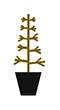 |
5. Feathered (Fth) A tree with single stem that has branches breaking from just above the bottom of the main trunk is referred to as feathered. |
Planting and Conditions
The planting of trees is best done between October and April. Specimens that are grown in containers can be planted at any time of the year, but are much easier to care for in the long run if they are planted in the autumn or winter months.
Most trees will not grow in places where there is not enough air in the soil, or there are insufficient nutrients available. If the soil is too moist or too dry, trees will not flourish and may have establishment problems.
If your soil is waterlogged, especially over winter, consider installing drainage—or plant on a slight mound. Excess moisture can easily kill fine roots, so good drainage is paramount.
Improve the fertility of the soil by incorporating fertiliser and organic matter into the soil prior to planting.
To plant trees, remove the plant from its container or fabric wrapping (unless the guarantee states that this should be left on!) and tease the roots out, spreading them gently. This is to help you get an idea of their spread. The hole that you use to plant your tree should be no deeper than the roots are, but it needs to be around three times the diameter of the root system.
Top heavy or larger specimen trees should be staked. Refill the planting hole carefully, and place soil around all the roots to eliminate air pockets. Don’t fill the hole with fertiliser or organic matter, as this can decompose and cause your tree to sink.
Avoid firming the soil too heavy-handedly so that it doesn’t compact into a solid mass.
You must practice caution when planting trees near buildings, as over a long period of time they can cause subsidence, drain damage or even pose a physical threat from falling branches.
If you are planting a larger specimen tree, it should be soaked prior to planting. If the roots look moist, soak for around half an hour. If the roots look dry, soak for up to two hours.
Aftercare and Pruning
Correct aftercare is of higher importance for specimen trees as the establishment phase can be much longer than that of smaller trees. This involves properly watering the specimen, and mulching the area around the tree properly.
There is no need to apply fertiliser to a tree during the first growing season. Lack of feeding encourages the roots to grow to the surrounding soil in search of moisture and nutrients, and this helps them to establish a healthy root system.
If the soil is infertile, feeding the year after planting may be beneficial. A balanced, general purpose feed spread over the whole root area will work best when applied in the spring time.
Newly planted trees require thorough watering to give them the best start. The amount of watering required will depend on your soil type. If you are planting in heavy clay soil or soil with poor drainage, then watering should not be undertaken too frequently.
Grasses and weeds can compete with younger trees for nutrients light and moisture. Some climbing plants can also compete for these valuable resources, so should not be planted near trees when they are young. Some gardeners wish to have a climber growing on their tree, and this can look very beautiful—but should only be attempted when the tree is fully established.
All trees, but especially young and newly planted ones, benefit from mulching. This helps to suppress weeds, conserve vital moisture and provide the nutrients that the tree desperately needs.
Some trees may show signs of reverted growth or ‘sporting’. This is where random shoots of different leaves associated with the plant’s parentage begin to appear. Most commonly this is where plants with variegated leaves sprout pure green growths instead of variegated ones.
To control reversion, remove reverted shoots promptly to discourage them. Reverted shoots are usually much more vigorous than the variegated ones, and thus should be completely pruned out and cut back into wood containing variegated foliage.
Suckers should also be promptly removed. Do this by tearing the shoot away from the root, removing most of the dormant basal buds and thus reducing the possibility of regrowth. Keep an eye out for returning suckers.
Most trees will benefit from occasional pruning. Pruning can make trees slightly smaller than they would be without it, but it rarely keeps a tree that is supposed to be big, small.
Deciduous trees should be pruned in autumn and winter, but some trees such as magnolia and walnut trees should be pruned in late summer, as this allows for faster healing.
Trees that are prone to silver leaf disease should be pruned from April to July when there are no disease spores on the wind, and the sap of the tree is rising (pushing out) rather than falling (pulling in). This will aid in pushing infection, if any, out of the tree. Some trees can bleed sap if pruned at the wrong time. This can weaken the tree, so try to prune at a time of year that is best for the tree.
Evergreen trees rarely need pruning, but dead or diseased branches should be removed in late summer.
Potential Issues
Trees are large and slow growing, and are thus difficult to replace in gardens should you need to. Most trees have evolved over time and can withstand disease, but ill health in a tree is still a worry. Brown or yellow leaves can indicate drought stress, a soil problem or a nutrient deficiency.
Trees can also suffer from the fatal honey fungus, silver leaf, bacterial canker, root rot and verticillium wilt. Many of these can be treated or reduced with proper pruning or chemical sprays, but some are fatal. Once honey fungus takes hold, the only proper solution is extraction and burning of the infected material.
Severe sap bleeding can also be enough to kill a tree. Do not prune during the wrong season, and do not bind or wrap wounds from incorrect pruning. Instead, use a protective wound paint to seal the wound. Some gardeners claim that protective seals can increase the chances of infection because they can trap excess water. Always use your better judgement.
Pruning during summer months, as long as suitable for the specific plant, tends to reduce the chances of infection from sap bleeding.
| Size | Availability | Price | ||
|---|---|---|---|---|

|
In stock
|
£8.99 |