

Japanese Maple 'Viridis'
Acer palmatum var. dissectum 'Viridis'
A Fresh, Green Waterfall of Foliage
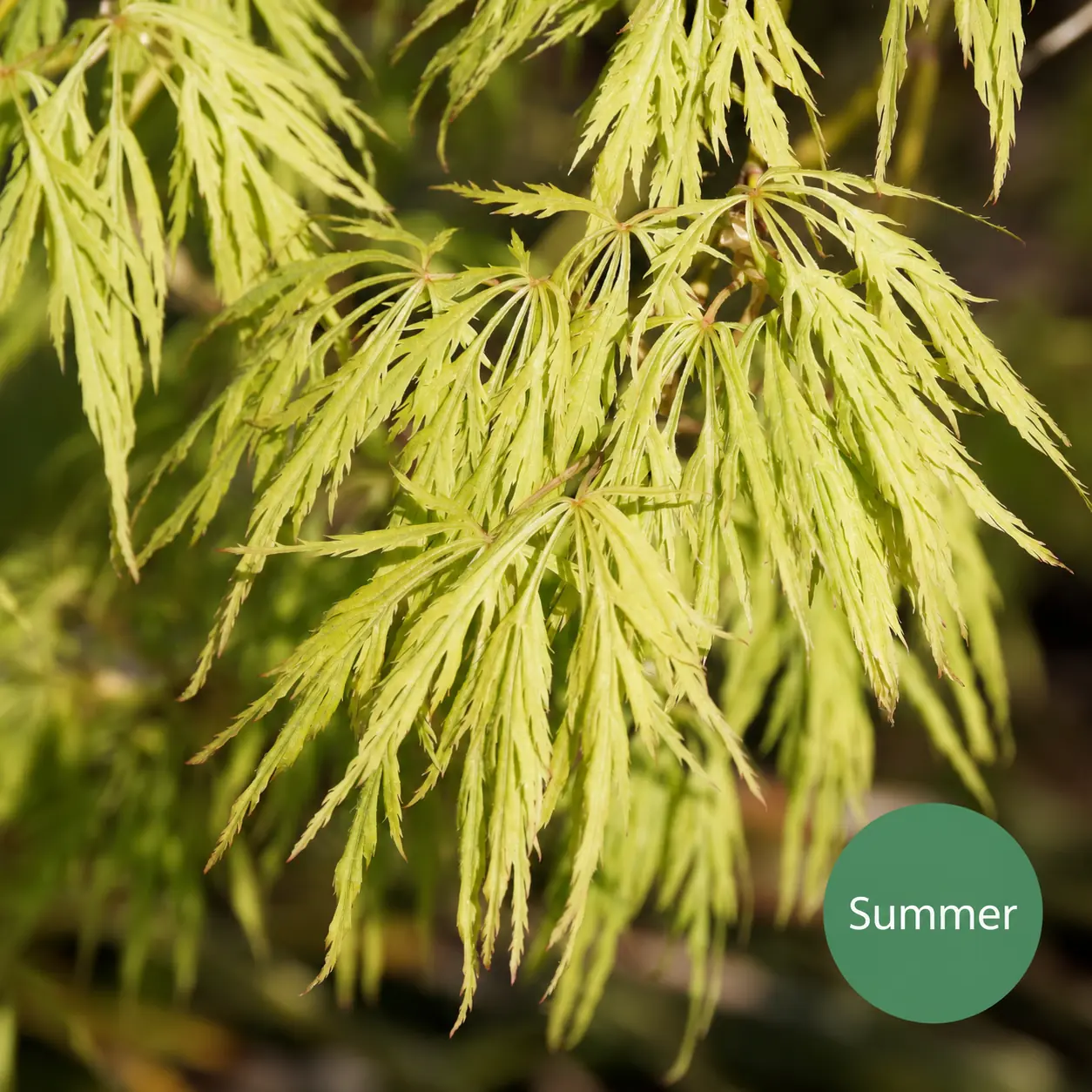
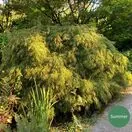
'Viridis' is a classic green-leaved weeping Japanese maple, loved for its soft, lacy foliage and graceful cascading habit. Its bright, fresh green leaves bring a cool, calming feel to the garden through spring and summer, before turning to glowing shades of gold, orange and red in autumn. It makes a beautiful focal point in borders, Japanese-style gardens, beside water or in a patio pot.
Why Choose 'Viridis'?
- Fresh green colour: its bright green leaves make a lovely contrast to darker foliage and red-leaved maples.
- Graceful form: the arching, weeping branches create a soft, flowing shape that looks elegant all year round.
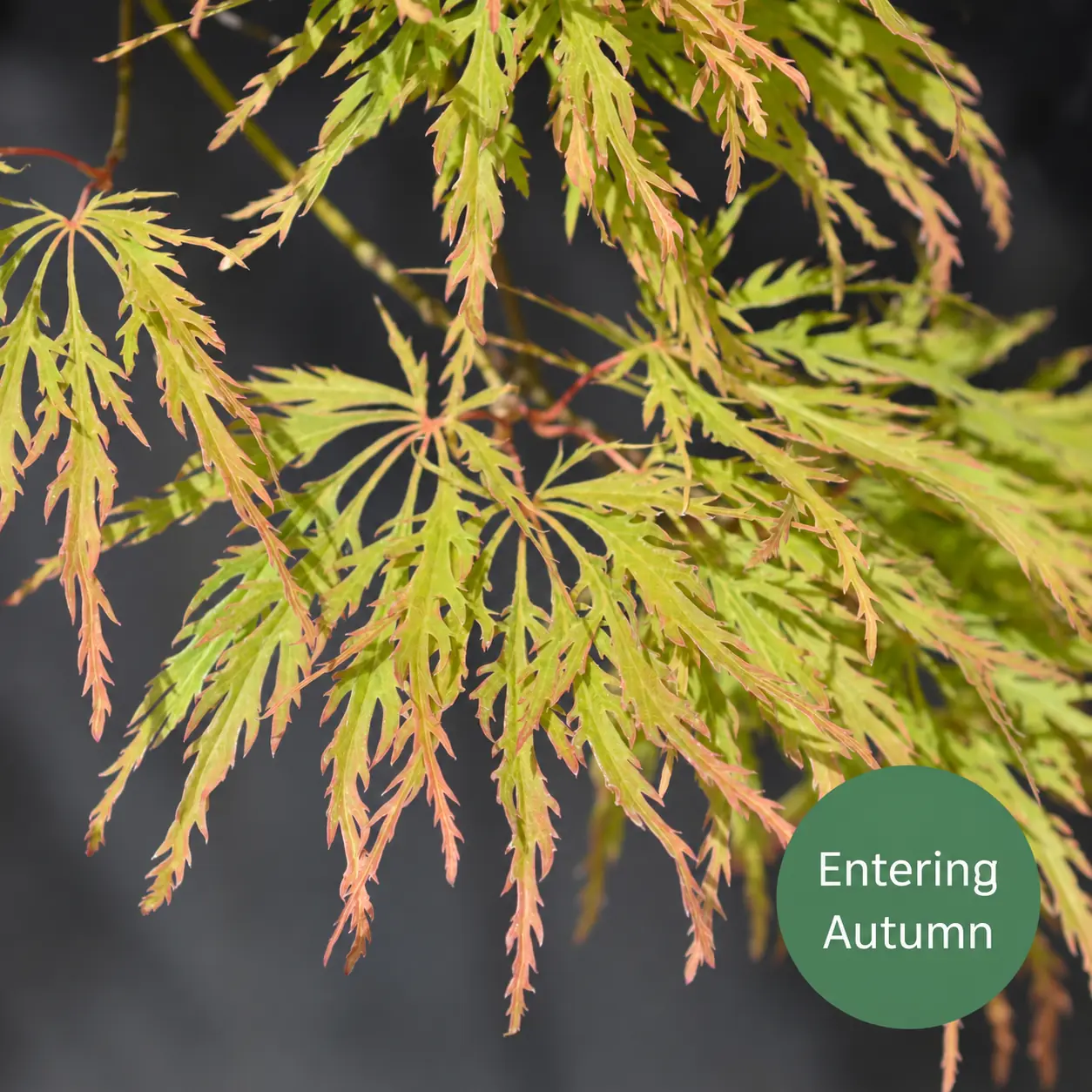
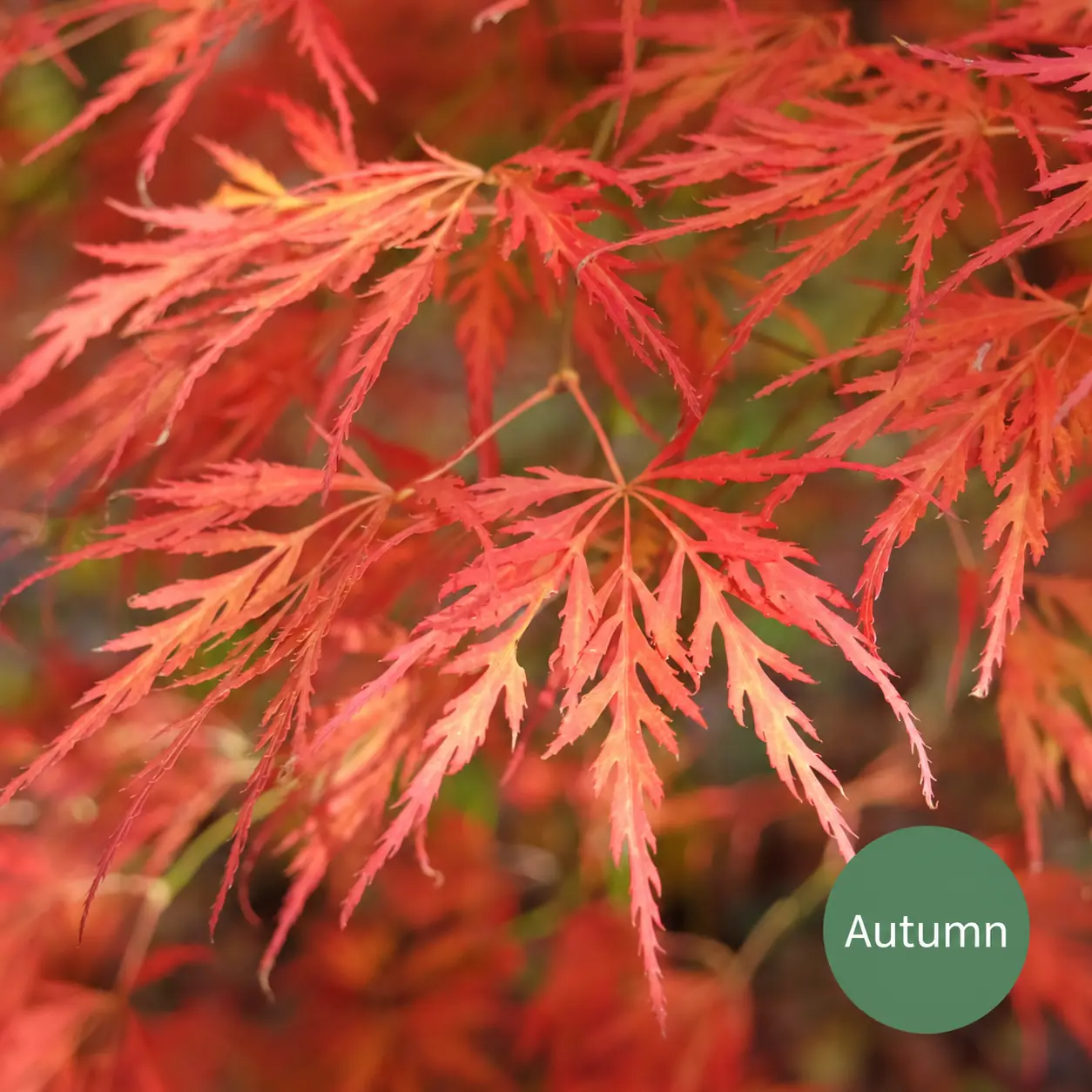
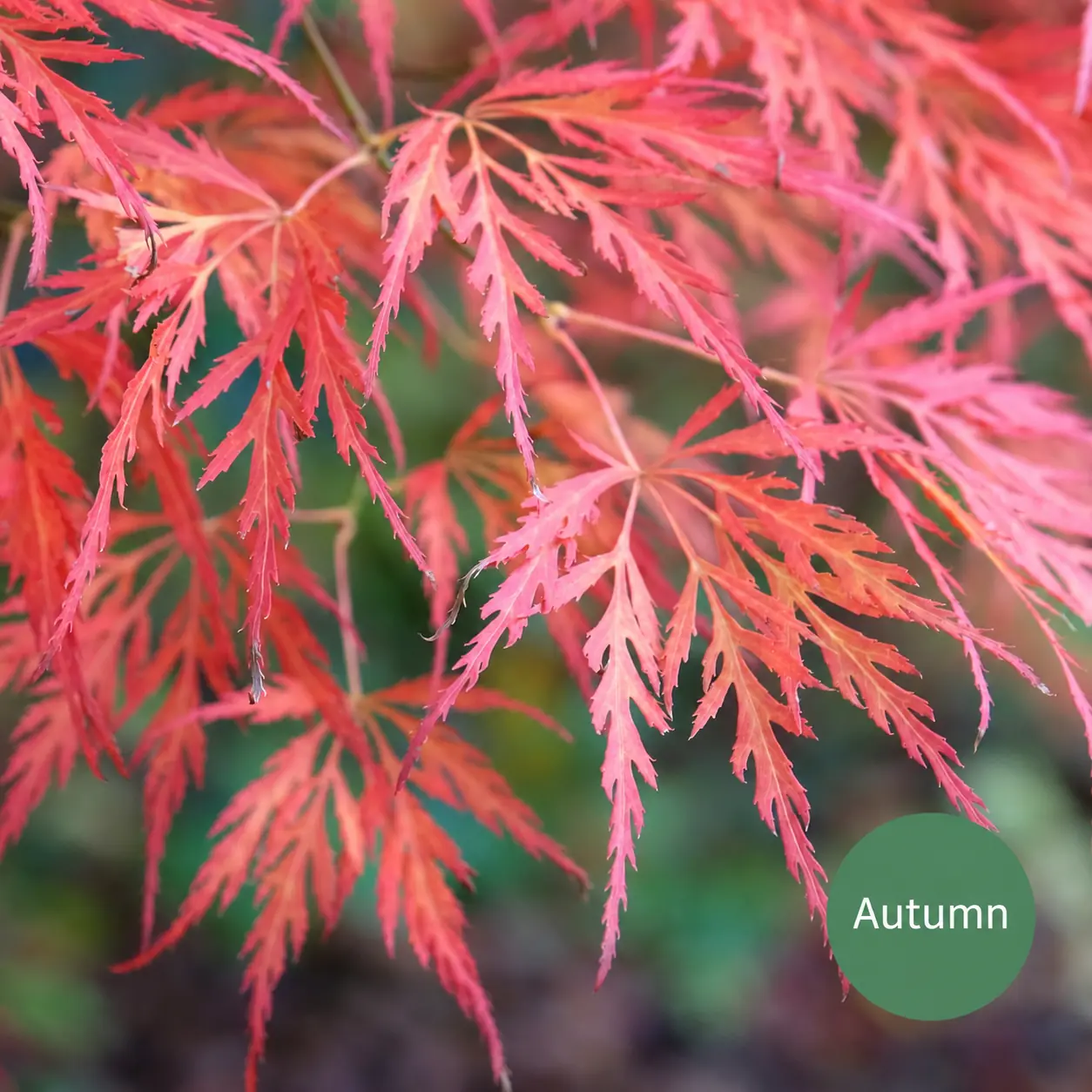
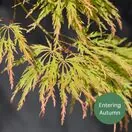
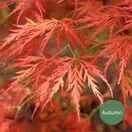
- Brilliant autumn colour: the foliage turns warm shades of yellow, gold and orange, often tinged with red.
- Compact and slow-growing: it suits small gardens, courtyards and containers.
- Versatile: it works equally well in a border, a rockery, a Japanese-style planting or a pot on the patio.
Appearance
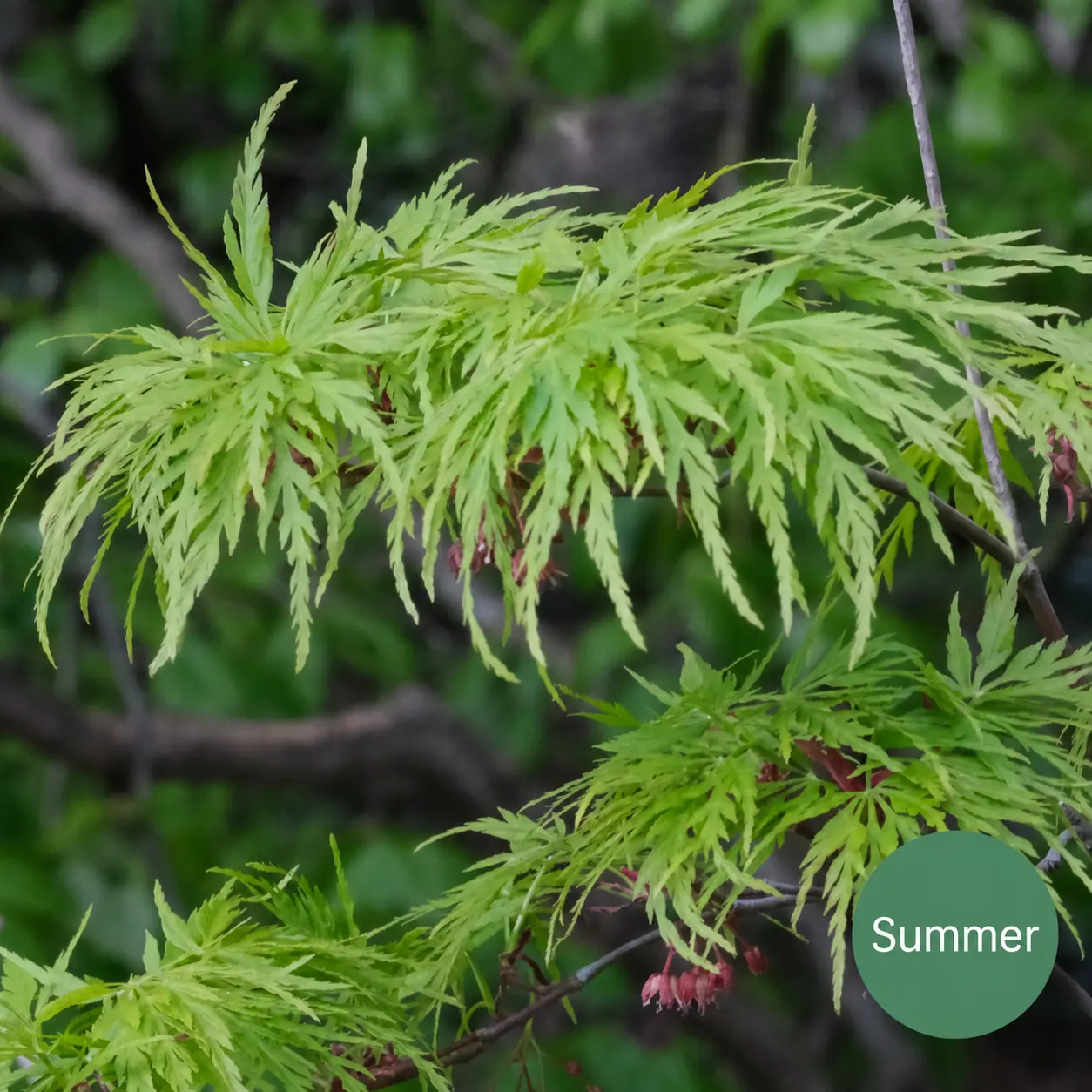
'Viridis' has finely dissected leaves, each divided into narrow, feathery lobes that give the plant a delicate, fern-like texture. The leaves open a vivid lime-green in spring and mature to a soft, fresh green in summer. In autumn they put on a warm display of yellow, gold and orange, sometimes flushed with red.
Its slender, arching branches weep gracefully downwards, so even in winter, when the leaves have fallen, the plant has an attractive sculptural outline. Small reddish flowers appear in spring, followed by winged seeds, though the foliage is very much the main attraction.
Shrub and Standard Forms
'Viridis' is grown in two main ways, each with its own charm:
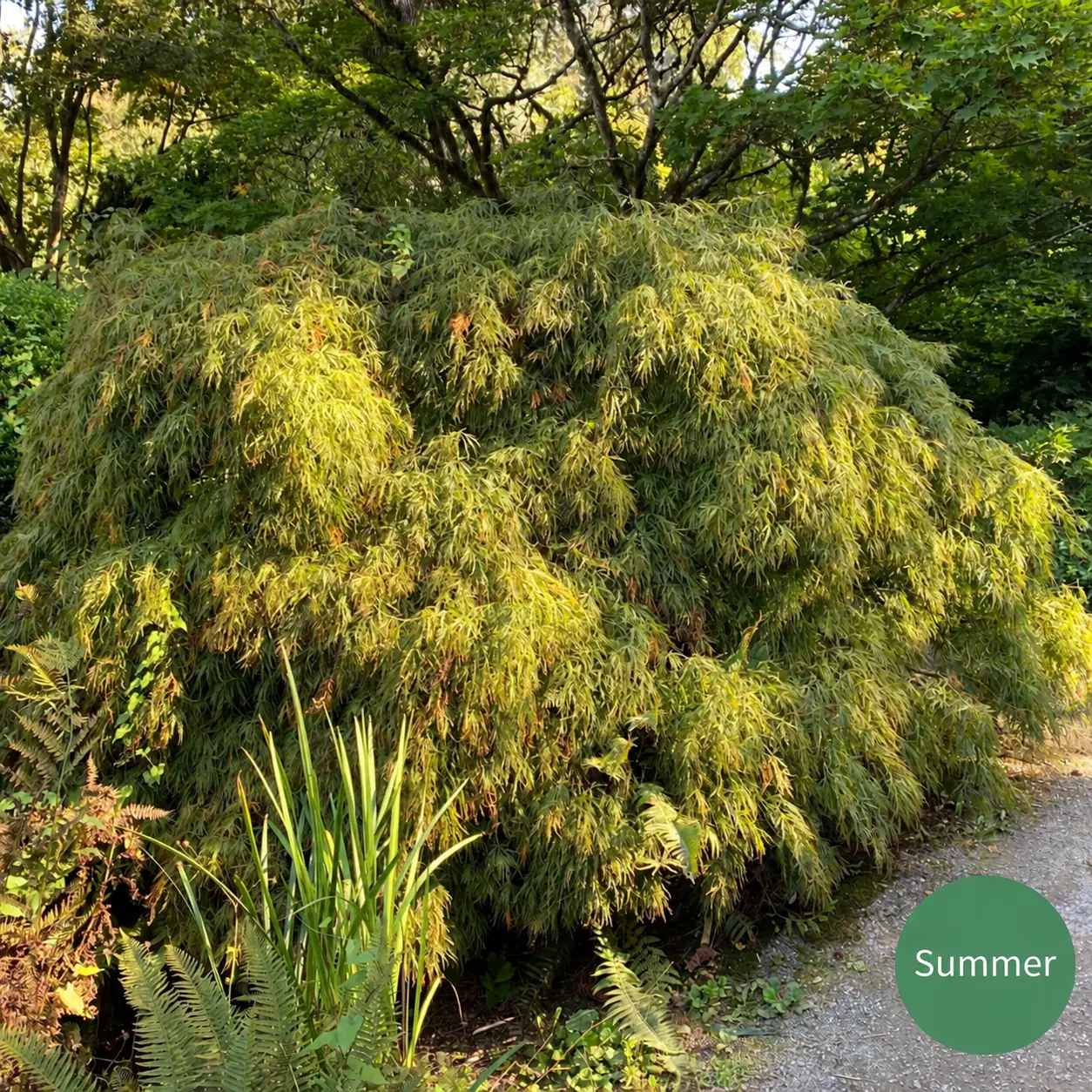
- Shrub form: grows as a low, spreading mound, with branches cascading close to the ground. This is ideal for borders, rockeries and the front of planting schemes.
- Standard (grafted on a stem): the weeping foliage is grafted onto the top of a clear, upright stem, so the branches tumble down from a raised head like a fountain. This gives extra height and makes a striking feature in pots, formal settings or small gardens where you want to lift the eye.
Size and Growth
'Viridis' is a slow-growing, deciduous plant. In shrub form, it typically reaches around 1–2m tall and 2–3m wide over 10–20 years, forming a broad dome that is wider than it is tall.
On a stem, its height is largely set by the height of the stem it is grafted onto. The weeping head will gradually widen over the years and its branches will cascade further towards the ground, but it won't grow much taller than its stem. This makes standards easy to plan around in a small space.
Where to Plant
Like all Japanese maples, 'Viridis' does best in the right spot:
- Light: dappled or partial shade is ideal. Green-leaved maples are more prone to leaf scorch than red forms, so protect from strong midday and afternoon sun.
- Shelter: choose a position protected from cold, drying winds and late spring frosts, which can damage the tender young leaves.
- Soil: moist but well-drained, humus-rich soil that is neutral to slightly acidic. Avoid heavy, waterlogged ground and very dry, sandy soil.
Planting Guide
When to plant
Autumn is the ideal time, while the soil is still warm. Pot-grown plants can be planted at any time of year, provided the ground isn't frozen or waterlogged. Water extra well if planting in summer.
How to plant
- Dig a hole about twice the width of the pot and the same depth.
- Mix plenty of well-rotted organic matter, such as leaf mould or garden compost, into the soil you've removed.
- Gently tease out any circling roots and place the plant in the hole at the same depth it was growing in its pot. Keep the graft union (the slight bulge where the plant has been joined) above soil level.
- For stem-grown plants, drive a short stake into the hole before planting and tie the stem to it with a soft tree tie to keep it steady while the roots establish.
- Backfill, firm the soil gently and water thoroughly.
- Mulch around the base with bark or leaf mould, keeping it clear of the stem, to hold in moisture and keep the roots cool.
Tip: sprinkling mycorrhizal fungi around the roots at planting helps your maple establish more quickly.
Growing in Containers
'Viridis' makes an excellent container plant in any form. Shrubs spill softly over the rim of a pot, while stem-grown plants make an elegant raised feature on a patio or either side of a doorway. Choose a sturdy container at least 45cm wide with good drainage holes, and a heavier pot for standards so they don't blow over in the wind.
Use a loam-based compost, such as John Innes No. 3, mixed with some ericaceous compost, and raise the pot on feet so excess water can drain away. Container plants dry out more quickly, so water regularly, especially in summer. Repot or top-dress with fresh compost every couple of years in spring. During very cold spells, move the pot to a sheltered spot or wrap it in hessian or bubble wrap to protect the roots.
Aftercare
- Watering: keep the soil moist, particularly in the first couple of years and during dry spells. Rainwater is best if you have hard tap water.
- Feeding: give a light feed in spring with a slow-release or ericaceous fertiliser. Avoid overfeeding, which can encourage soft growth that is prone to scorching.
- Mulching: top up the mulch each spring to keep the roots cool and moist.
- Staking: for stem-grown plants, check ties regularly and loosen them as the stem thickens so they don't cut into the bark.
Pruning
'Viridis' needs very little pruning, as its natural weeping shape is part of its beauty. If needed, prune in late autumn to midwinter (November to January) when the plant is fully dormant, as cutting at other times can cause the stems to bleed sap.
Remove any dead, damaged or crossing branches, and lightly thin congested growth from the centre to show off the attractive branch structure. You can also trim the tips of any branches trailing on the ground. Avoid cutting back hard.
On grafted plants, rub or cut off any shoots that appear on the stem below the graft or from the base. These come from the rootstock and, if left, can take energy away from the weeping head.
Plant 'Viridis' in a sheltered, lightly shaded spot, give it a little care while it settles in, and it will reward you with a cool cascade of green and a glowing autumn display for many years to come.
Buying Japanese Acers from Jacksons Nurseries
Unlike many garden centres, supermarkets and some nurseries here at Jacksons Nurseries we sell the majority of our stock all year round. Our stock is for the most part grown outdoors making it far hardier than those grown under glass and/or only sold ‘In Season’.
Here at Jacksons Nurseries we would favour a hardy outdoor grown plant every time. They are far less likely to suffer from the shock of being planted in colder conditions and they will begin to establish more rapidly the following spring. This can mean that they don’t look like a ‘picture perfect’ plant when purchased out of season but with the correct care and a little time you’ll have a wonderful plant to enjoy for many years to come.
Availability: Stock availability figures are provided as a guide only. There is a delay between orders being placed and the plants being gathered by our pulling team. During this time it may be possible for a member of the public to purchase these plants from our Garden Centre, while this is rare it is a possibility and we will notify you of any problems as soon as possible. This figure may also include plants that have not yet be flagged as unsaleable.
Pre-order: Pre-order times are given as a guide only and may vary dependent on the growing season. Orders containing Pre-ordered products will be shipped as a single order when all items become available. Large orders may be part shipped, please contact us on 01782 502741 or email sales@jacksonsnurseries.co.uk.
Grafting & Leaf Reversion
The main purpose of grafting ornamental plants and trees is to combine features of one variety with the more vigorous or resilient root stock of another. Grafting of Japanese Acers also has the added benefit of controlling the height of the tree depending on where the graft has been made.
When a Japanese Acer has been grafted some leaf reversion may take place or incorrect growth from the grafted base. If this occurs, pinch or prune out the incorrect stems once the leaves have fully unfurled.
Cultivation & Pruning
The perfect conditions for growing Japanese Acer would be well drained loam, slightly acidic and sandy with a good amount of organic matter but they will grow in most soil types. Avoid overly wet, dry or alkaline conditions.
Positioning your Japanese Acer will depend on the variety but most will grow best in a sheltered position. Green-leaved trees will tolerate full sun but some shade in the brightest of conditions will help prevent scorch. Red/Purple leaved trees will need some sun to help their develop their rich colours while variegated leaved trees are more suited to partial shade as they are more susceptible to scorch from the afternoon sun.
Mulch your Japanese Acer every other year with well-rotted garden compost or manure. During early establishment ensure that mulch does not come into contact with the collar.
Japanese Acer have shallow fibrous roots and are ideal plants for growing in containers. Ensure good drainage and do not over water. Feed in spring and early summer with a slow release fertiliser or a liquid feed. Try to avoid potting your Acers in overly large pots, start out with a pot approximately 5-8cm/2-3in larger than the pot it was in when purchased and re-pot by the same increase every couple of years, ideally in April or September.
Pot grown Acers are particularly vulnerable to winter frosts. Wrap your containers with fleece or bubble wrap.
Japanese Acers require very little pruning, allowing your tree to grow naturally will be the best way to produce a graceful shaped specimen. You may however wish to prune badly positioned or crossing shoots to encourage a better form, in this case pruning is best done when the tree is fully dormant usually from November to February, pruning outside of this window may result in a weakened tree.
Potential Problems
Japanese Acer are very prone to leaf scorch in both windy or excessively sunny positions. Red/Purple leaved varieties with green leaves or poor autumn colour may indicate insufficient light levels.
Horse chestnut scale and other scale insect damage can be a problem as can verticillium wilt. Pot grown trees can also be a target for vine weevils.
No posts found
| Size | Availability | Price | ||
|---|---|---|---|---|

|
In stock
|
£62.99 | ||

|
In stock
|
£29.99 | ||

|
In stock
|
£49.99 |