Check Here Before Buying – Pot Size Matters...Not all websites offer the same. Plants in a 2-litre pot have twice the root system of a P9 or 1 litre pot.

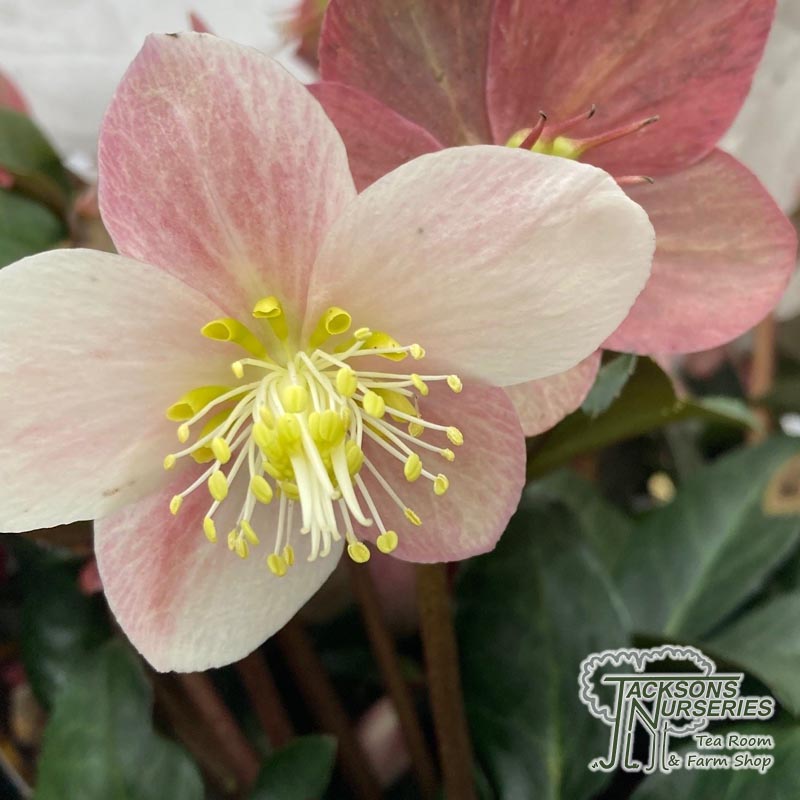
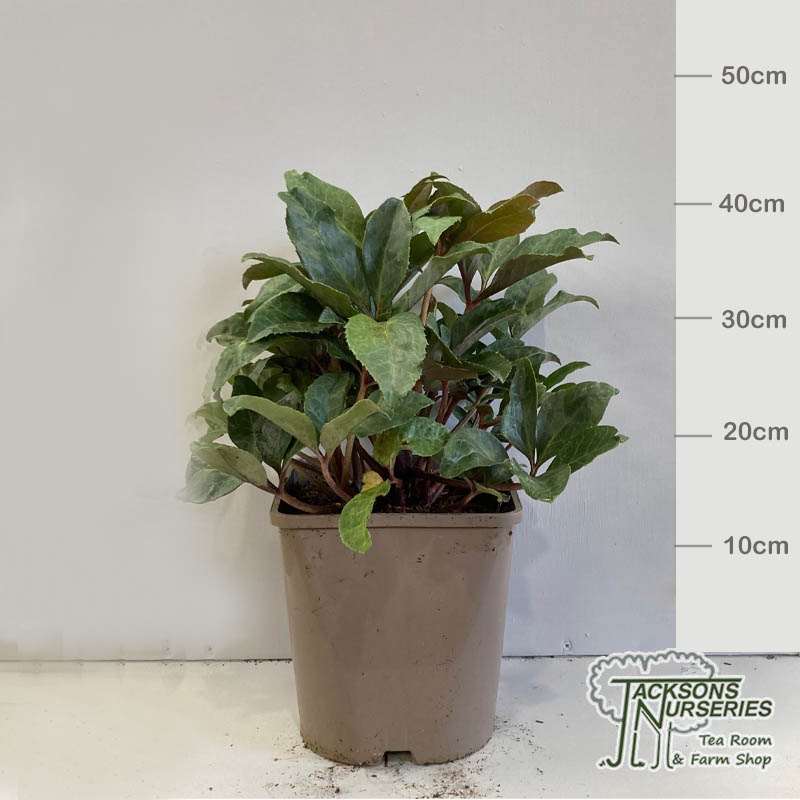
Helleborus are becoming a very popular species and Helleborus Maestro is a hybrid variety that can be grown in Partial Shade. A semi-evergreen, clump-forming perennial with divided, leathery, dark green foliage and branched stems rising above with dusky rose buds opening to dangling, cup-shaped, creamy white single flowers turning reddish pink as they mature in late winter and early spring.
Helleborus Maestro is an easy-to-care-for choice. Plant in well-draining soil and add well-rotted organic matter to the hole when planting. Ideally suited to woodland areas but are very versatile, ensure the soil is moist when planting in sunnier areas.
All parts of the plant are toxic, can be harmful if eaten and may irritate the skin. Wear gloves and other protective equipment when handling
Buying Perennials from Jacksons Nurseries
At Jacksons Nurseries we lightly trim back our perennials after flowering and trim them back at the end of the season to ensure that the plants remain neat and tidy whilst in the pot. The more tender the plant the less we cut back to help protect exposed stems from winter frost. Depending on the plant variety we will then prune back further in spring once the risk of the more severe frosts is over.
As a result, depending on the time of year you buy perennials, they may not look like images showing their ‘prime time’ in flower and looking at their best.
From late autumn onwards and dependent on variety, there may be very little visible above the soil except for a few cut back dormant leaves or stems. It is perfectly normal for dormant plants to look like this from autumn onwards, they will however burst back into life in spring.
Availability: Stock availability figures are provided as a guide only. There is a delay between orders being placed and the plants being gathered by our pulling team. During this time it may be possible for a member of the public to purchase these plants from our Garden Centre, while this is rare it is a possibility and we will notify you of any problems as soon as possible. This figure may also include plants that have not yet be flagged as unsaleable.
Pre-order: Pre-order times are given as a guide only and may vary dependent on the growing season. Orders containing Pre-ordered products will be shipped as a single order when all items become available. Large orders may be part shipped, please contact us on 01782 502741 or email sales@jacksonsnurseries.co.uk.
Perennials are described and classified differently by different gardeners but all would agree that they are plants that come into flower every year from early spring to late summer, the exact time dependent on variety and most die back to ground level in autumn and winter.
As for all plants, soil preparation is time well spent. Dig over the area to be planted ensuring that the ground is free draining. If not then you may wish to either consider planting in a different spot or raising the level of the planting area by adding additional topsoil, well rotted garden compost and/or well rotted manure. Add ‘Fish, Blood and Bone’ fertiliser or a high potash fertiliser to encourage good root growth and development.
It’s always a good idea to plant a few of the same plant together, we recommend planting in 3’s or 5’s to provide a bold effect but allowing them plenty of room to develop.
Always check eventual plant heights when planning borders to ensure that the taller plants are at the back (or at the centre of an island bed) followed by the medium and then smaller low growing plants.
Remember to deadhead perennials after flowering, trim back lightly in autumn as required to tidy the border and if necessary trim again in spring once the risk of heavy frost has passed.
If perennials get too big, start to flower less and less or if it seems to be dying off from the centre, consider dividing the plant but always check that the particular variety is happy to be divided and that you divide at the right time of year for the plant.
By using this simple guide and a little time, perennials can make an absolutely spectacular difference to your garden.
No posts found
| Size | Availability | Price | ||
|---|---|---|---|---|

|
In stock
|
£19.99 |