
When to Buy a Real Christmas Tree
There’s a careful balancing act to be struck: buying your Christmas tree sufficiently early to make sure the best trees are still available, whilst also ensuring your tree doesn’t spend so long indoors that it starts to deteriorate. One option that gives you the best of both worlds is ordering online or by phone well in advance and having our garden centre staff reserve a tree that fits your requirements. All our trees are freshly cut to order within a few days of when they are shipped, so you can be sure your tree will arrive in pristine condition. It’s easy to order online for delivery on a date of your choice, or for collection from our Staffordshire garden centre at your convenience.
Real Fresh Cut Christmas Trees
Potted Christmas Trees
When to Install your Christmas Tree in the Home
Christmas trees are similar to cut flowers. The lifespan of a Christmas tree depends on which variety you choose and how well you care for it once indoors. Cut Nordman Fir and Fraser Fir Christmas trees have the best needle retention and will stay looking good indoors for around 5 weeks with the right care. In, fact we rate Nordman Fir and Fraser Fir trees as having 5* needle retention in our Christmas tree comparison table. Varieties such as blue spruce, noble fir, lodgepole pine and Korean fir are rated 4* and stay looking good for around one month as cut trees. The traditional Christmas tree, Norway Spruce, has more of a tendency to drop its needles; you should only expect Norway Spruce trees to stay looking their best for around 3 weeks.
Another option to consider is a pot grown Christmas tree. As they are still attached to their roots in the pot, providing they are kept well-watered, away from heat sources and aren’t exposed to big swings in temperature, potted Christmas trees have a good chance of surviving outdoors to become a permanent feature on your garden or patio after Christmas, even if they are kept indoors for the whole of December.
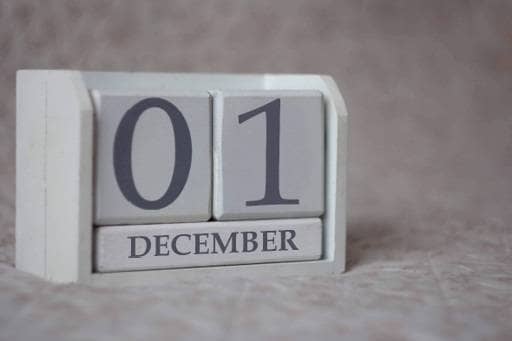
When is the most Popular time to put the Christmas Tree Up
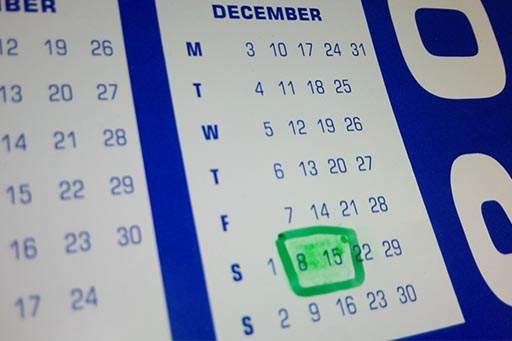
The two most popular times for putting a Christmas tree up in the home are on the 1st day of December or the first weekend in December. Many households like to decking the halls on the 1st of December to mark the first day of advent and start the official countdown to the big day. For practical reasons around work and jobs, the first weekend of December is now the most common choice. You might wish to get your Christmas tree delivered a few days earlier and keep it stored in a cool, dry place outdoors so it’s all ready to go when the weekend comes around.

Christmas Tree Care Tips
Remember that real Christmas trees have been living things; the right care and attention will make a big difference to how long they last. Keep it away from heat sources such as radiators and open fires and remember to top up the tree stand before it drops below the base of the trunk. By following these simple care steps, Nordman Fir trees will last up to 5 weeks in the home and Norway Spruce Christmas trees up to 3 weeks.
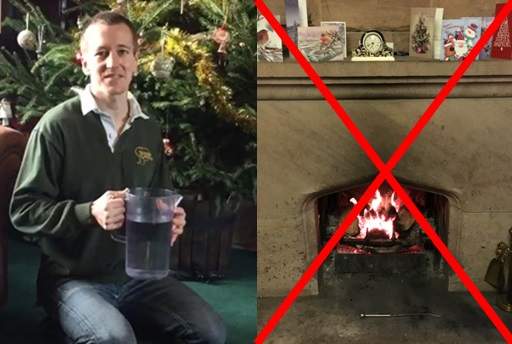
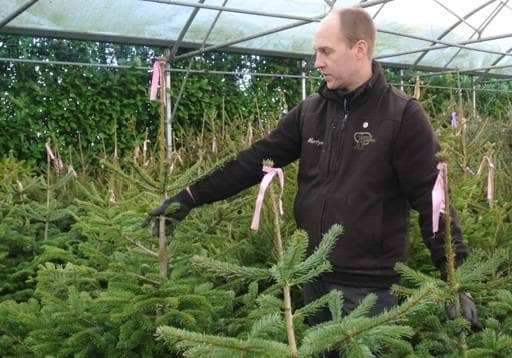
If you're buying a Nordmann Silver Fir Christmas tree, you'll have no problem buying and installing it in the home in late November. For Norway Spruce trees, we recommend waiting until mid-December before bringing it into the home. Of course, in both cases, you can pre-order your tree as early as you wish.
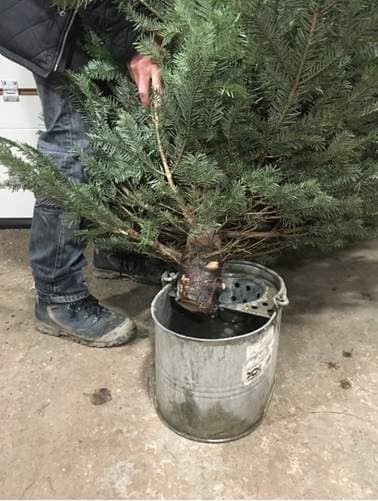
Many people do put their tree up in the home immediately after bringing it home or having it delivered, but this doesn't have to be the way. If you're buying early due to commitments on other weekends, there is no harm in keeping your tree in a cool, dry place such as a shed or outbuilding with the trunk dunked in a buck of water for as long as you need to. Traditionally Roman Catholics waited under the afternoon on Christmas Eve to put up their tree.
Most people opt for the first weekend in December to install their tree. We normally still have plenty of stock left in the second weekend of December too. We would recommend buying before the third weekend in December where possible, especially if demand has been high earlier in the month.
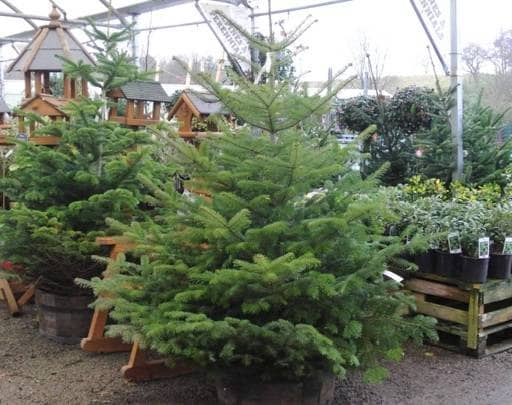
If you're eager to set up in mid to late November consider a Nordmann Fir Christmas tree, which are famed for their needle retention. They'll last better indoors for extended periods than traditional Norway Spruce trees. Nordmann Firs are a bit more expensive than Norway Spruce trees for larger sizes as they are slower growing.
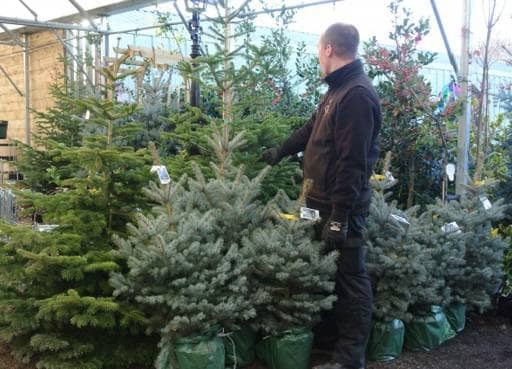
If you're looking to choose a Spruce, particularly the Norway Spruce, we ideally recommend waiting until December to minimise the amount of care it will need over the Christmas period.
Buying Advice
It's vital cut trees are fresh when bought. Pay special attention to make sure the needles are not dry and dull or branches brittle, particularly if buying in mid to late December. At Jackson's Nurseries we grown many of our own trees on site which are cut regularly throughout December, so you can rest assured that you're getting a freshly cut tree whenever you choose to buy.
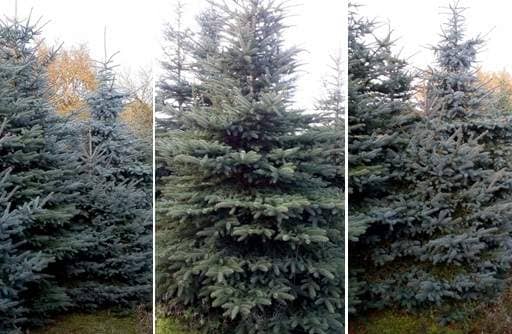
Needles on the outer part of the tree should not fall off when the tree is gently shaken. Some loss of internal needles is normal as these are naturally shed over the life of the tree.

To check a tree's freshness, pull your hand along a couple of the branches to the ends or drop the tree onto its base from 1 foot (30cm) above the ground. Needles on a healthy tree should not fall off.
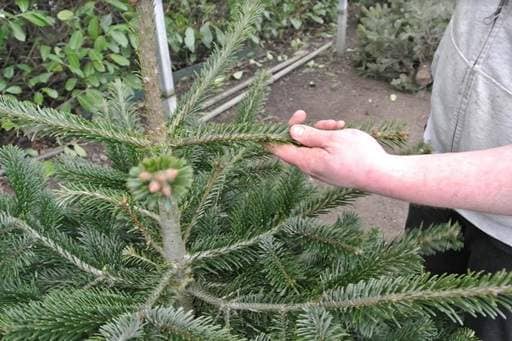
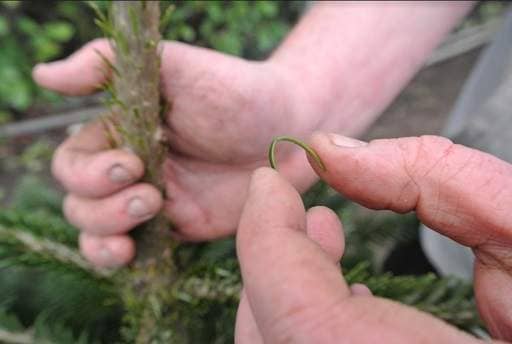
If choosing your own tree from a nursery, bend a needle between your thumb and forefinger. It should form a "U" shape without breaking, unless the needles are frozen.
If you're buying from a local nursery, compare the weights of different trees. The best trees will be heavier (not as dried out), “full” without gaps or irregularities and have a straight central stem or "leader".
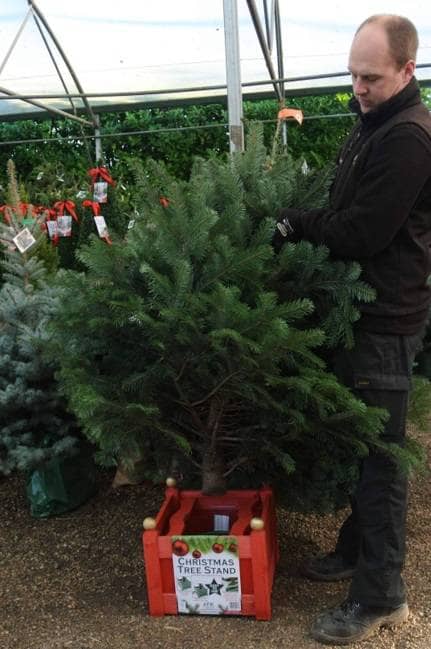
For more information on how to choose a real Christmas tree please click on the link.
Share this page: